The Rise of Private Real Estate: The Opportunity for Investors to Look Beyond Public Markets

The Rise of Private Real Estate: The Opportunity for Investors to Look Beyond Public Markets
Real Estate has been an important asset class for investors to invest in for many decades. The market has evolved in terms of how investors are accessing it. What was once a specialized investment alternative has evolved into an integral component of an institutions portfolio. According to UBS, allocations for real estate have hovered around 11%, indicating the importance this asset class has played when compared to traditional investments such as equities and fixed income.
The asset class has traditionally been out of reach for retail investors given the expensive nature to acquire real estate, however, the growth of private funds has made it possible for investors to participate that would have otherwise been difficult to access individually.
What Is a Private Real Estate Fund?
At its core, a private real estate fund brings together capital from a group of investors to acquire and manage real estate according to a defined investment strategy.

As McMillan LLP explains in its discussion of Canadian private equity real estate funds, the typical fund structure is through a vehicle called a limited partnership. In this arrangement, investors participate as a limited partner (LP) while the general partner (GP) handles the day-to-day operations. As a limited partner, you enjoy the benefit of limited liability and are only exposed to the amount of capital contributed.
Instead of each investor carrying out all the activities independently (sourcing, financing and managing), the capital is pooled and led by an investment manager similar to a fund manager for an investment portfolio invested in the public markets. This allows for economies of scale.
Having said that, a fund can have varying degrees of strategy. For example, one may focus on acquiring stabilized properties while another may look for value add opportunities by turning over tenants or making leasehold improvements.
This flexibility is one of the unique characteristics of private real estate.
Why Has It Become More Important?
One important consideration is diversification.
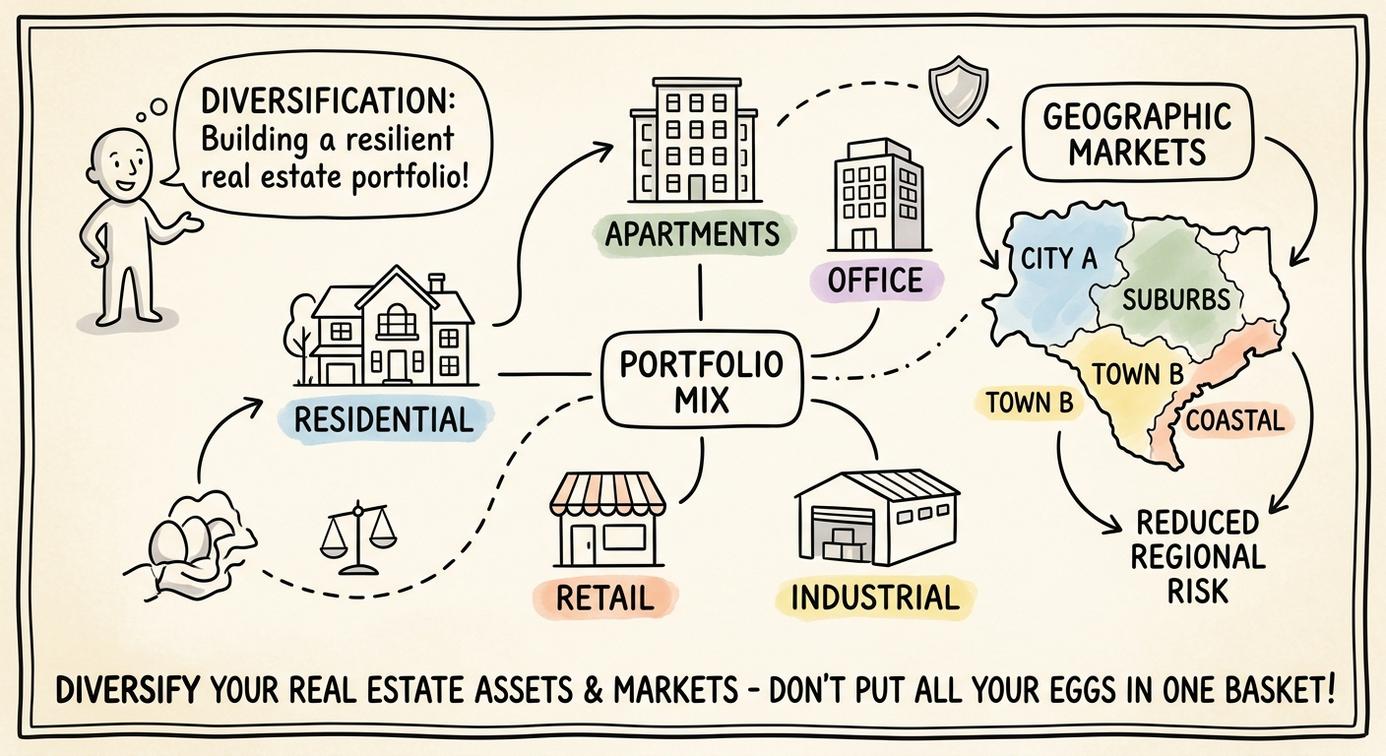
Investing in real estate indirectly through a fund created a new window of opportunity for investors. Investors can gain exposure to all the underlying characteristics and performance factors which include rental income, occupancy, replacement costs, population growth and local supply/demand without putting all their eggs in one basket.
As real estate is brick and mortar, it provides something tangible that can be continuously improved. The combination of income, diversification and long-term capital appreciation is key variables that investors look for.
A property does not necessarily have to be purchased and passively held. You can leverage the experience of a manager that would employ different strategies to increase value in terms of the net operating income (NOI) of the underlying asset by making improvements to the underlying assets or changing the suite or tenant mix, etc.
This makes it distinctively different to simply gaining exposure versus placing capital behind an active manager.
The Role of the General Partner
As explained earlier, the roles in a private real estate fund are typically split into two categories.
The LPs provide the capital but do not participate in the funds day to day operations. The GP is the one responsible for executing the business plan.
The typical responsibilities of a GP would include sourcing deals, conducting due diligence, arranging financing, negotiating with the vendor, managing the development and leasing, and ultimately deciding on when an investment should be refinanced or sold.
Therefore, investors have to make two important decisions – the first is the asset or strategy of the fund and the second is deciding which team is most capable to execute this strategy.
This makes the experience and track record of the manager very important. Two funds may invest in similar properties but produce very different outcomes depending on how those properties are acquired, financed and operated.
A Long-Term Investment Horizon
Private real estate funds are generally designed as long-term investments.
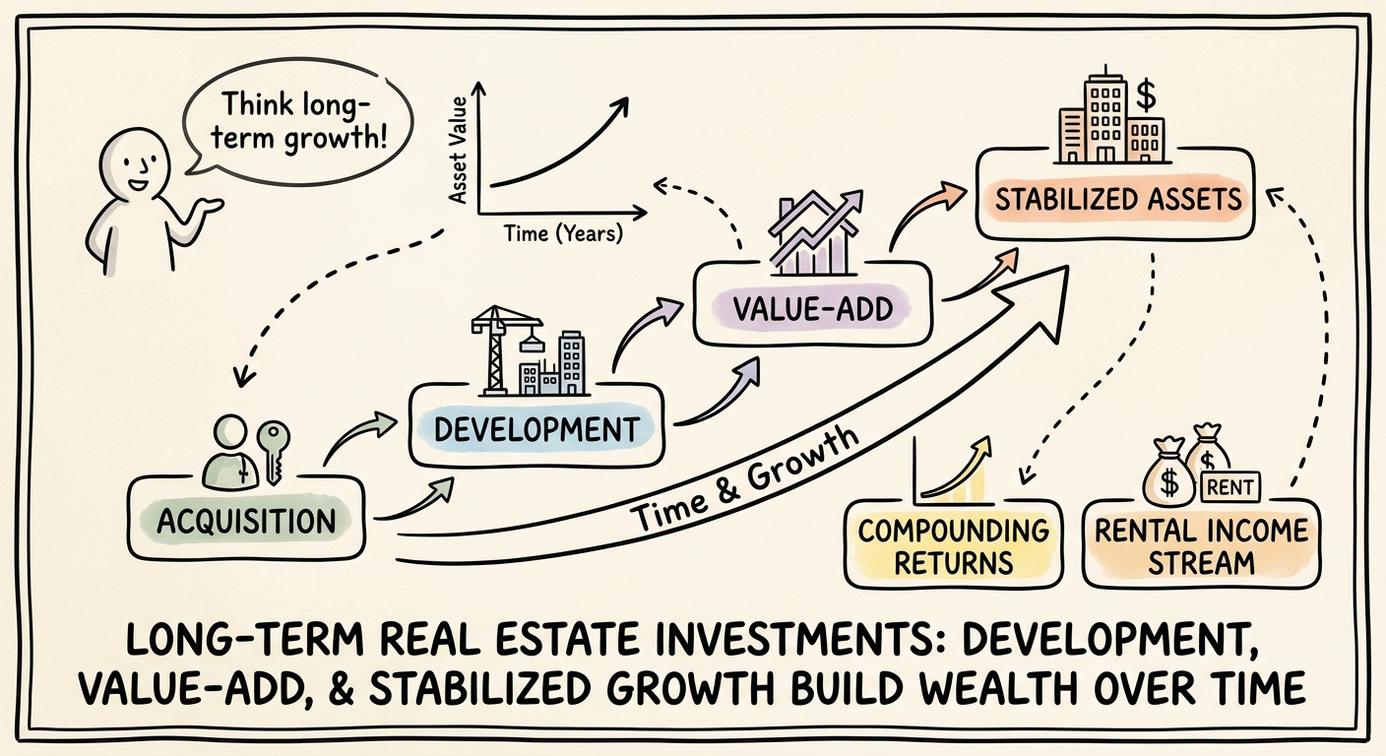
Funds can be either close-ended or open ended. In a closed-ended fund, the life cycle of the fund can range anywhere between 5 to 12 years depending on the strategy.
This longer time horizon is intentional as the business plan can take years to execute. There are different phases involved. For example, a development needs to move through city approvals and construction. A value-add play may require renovations or extensive lease-up. Even a stabilized asset may need time for rental growth and operational improvements to deliver higher property values.
A closed-ended structure gives the manager time to execute that strategy without being forced to sell assets simply because investors want immediate liquidity.
For investors, however, this creates an important consideration: capital committed to a private real estate fund should generally be viewed as long-term capital.
The Possible Advantages of Investing Through a Fund
A fund gives investors access to deals they would have not otherwise been able to participate in.
The asset class has a high barrier to entry because of the significant capital requirements, time and expertise. Investors would need to source properties, negotiate deals, arrange financing and oversee the assets after closing.
Investing through a fund can centralize those responsibilities within a professional investment platform.
Comingling capital enables a fund to chase larger deals and diversify across several properties, markets or investment strategies. Instead of having all the capital tied to one property, an investor could indirectly participate in a broader portfolio.
Another advantage is specialization. Experienced managers bring established relationships to the table with brokers, lenders, developers and property owners that let them identify opportunities that are not otherwise accessible to the wider market/
Understanding the Trade-Off
The risk is not off the table with private real estate.
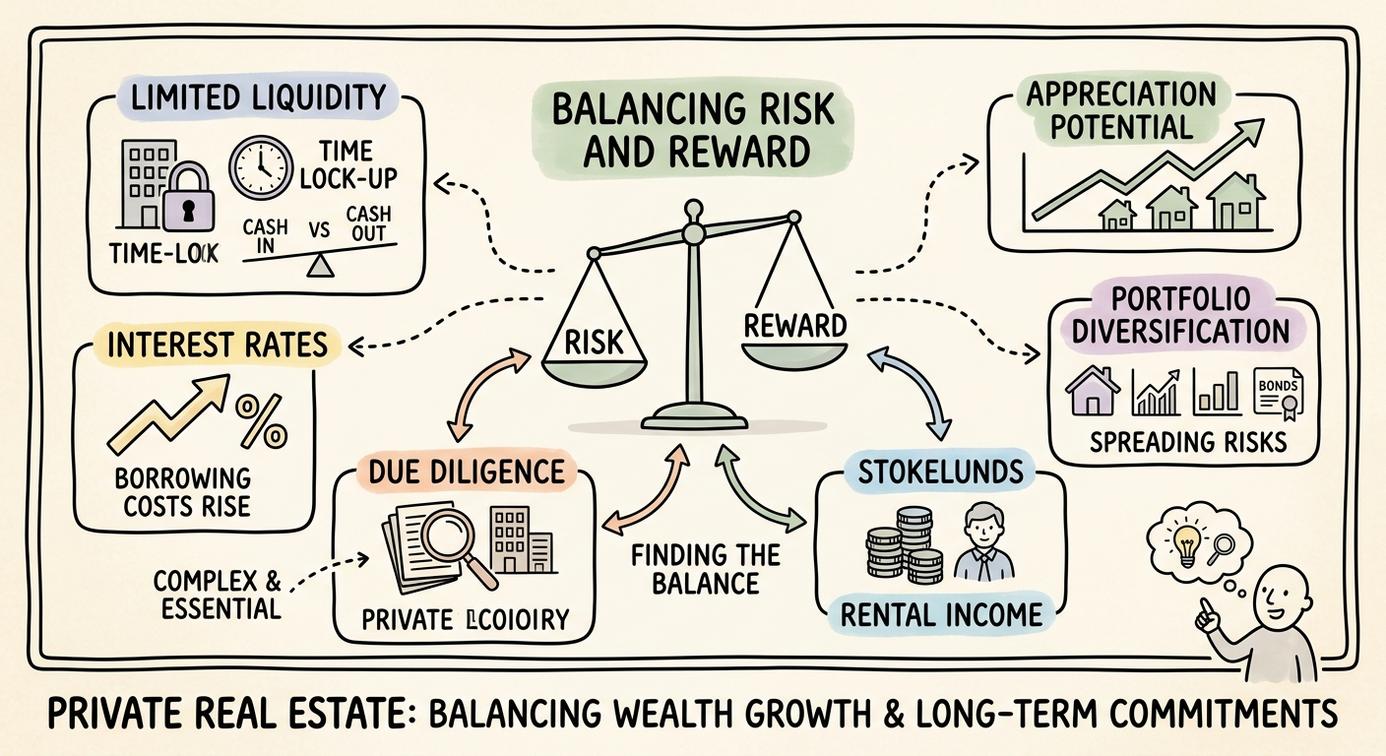
The same structure that gives a manager time to execute a long-term strategy also means that investors generally have limited liquidity. Real estate values can decline. Interest rates can affect financing costs and property valuations. Development projects can experience delays and cost overruns, and leasing assumptions may not materialize as expected.
The economics matter as well. Management fees, carried interest and other expenses affect the return ultimately received by investors.
These considerations make due diligence particularly important. Investors need to understand not only what a fund intends to buy, but also who will be managing their capital, how investment decisions will be made, how much leverage may be used and how the interests of the general partner and limited partners are aligned.
Real Estate Is Only Part of the Investment
Perhaps the most useful way to think about private real estate investing is that an investor is making two investments at the same time.
The first is an investment in the underlying real estate.
The second is an investment in the manager's ability to execute.
A strong property poorly managed can lead to disappointing results. In comparison, an experienced manager may be able to identify opportunities that others overlook and create value through better financing, leasing, development or asset management.
That is ultimately what makes private real estate different from simply buying exposure to an asset class.
As institutional allocations to real estate have grown, the private fund model has become an increasingly established way of connecting investor capital with specialized real estate expertise. For investors willing to accept a longer investment horizon and the risks associated with private markets, it can provide access to real estate opportunities and active value-creation strategies that are difficult to replicate through public markets alone.
This article is for general informational purposes only and does not constitute investment, legal, tax or financial advice.

Zain Nathoo
Co-founder & COO at Leni, writing about the systems, data, and AI behind better investment decisions.

Curious About AI?
Join the largest AI community for real estate online. Get bite-sized, real-world use case videos, plus practical tips and proven strategies from top industry experts on adopting AI effectively.
MEET LENI
AI SuperAgent Purpose Built for Investors and Operators.
Experience how professionals and teams in your domain are getting the edge using AI.
