8 Best Real Estate Software for Investors (2026 Rankings)

8 Best Real Estate Software for Investors (2026 Rankings)
The landscape of real estate software for investors has evolved dramatically in 2026, driven by the increasing complexity of investment portfolios, regulatory demands, and the need for real-time decision-making capabilities. According to market analysis by Fortune Business Insights, the real estate software market continues its rapid expansion as institutional investors and sophisticated operators demand tools that go beyond basic property management or spreadsheet analysis. This comprehensive ranking examines the eight most powerful platforms available to real estate investors today, each serving distinct needs within the investment workflow from initial deal sourcing through portfolio management and investor reporting.
1. Leni: AI-Powered Investment Analysis Platform
Leni represents a fundamental shift in how real estate software for investors approaches the entire investment lifecycle. Unlike traditional platforms that function as databases, dashboards, or workflow management tools, Leni operates as a real estate-native AI analyst layer that connects disparate data sources, executes complex multi-step analytical tasks, and delivers verifiable, source-linked outputs.
Comprehensive Investment Workflow Integration
The platform's strength lies in its ability to handle the full spectrum of investment activities within a single, coherent system. Leni's AI capabilities extend across:
Underwriting automation that processes rent rolls, operating statements, and market data
Market research generation pulling from multiple data sources and property records
Investment committee memo drafting with cited sources and analytical backup
Portfolio monitoring with automated anomaly detection across holdings
Recurring report generation for investors, executives, and stakeholders
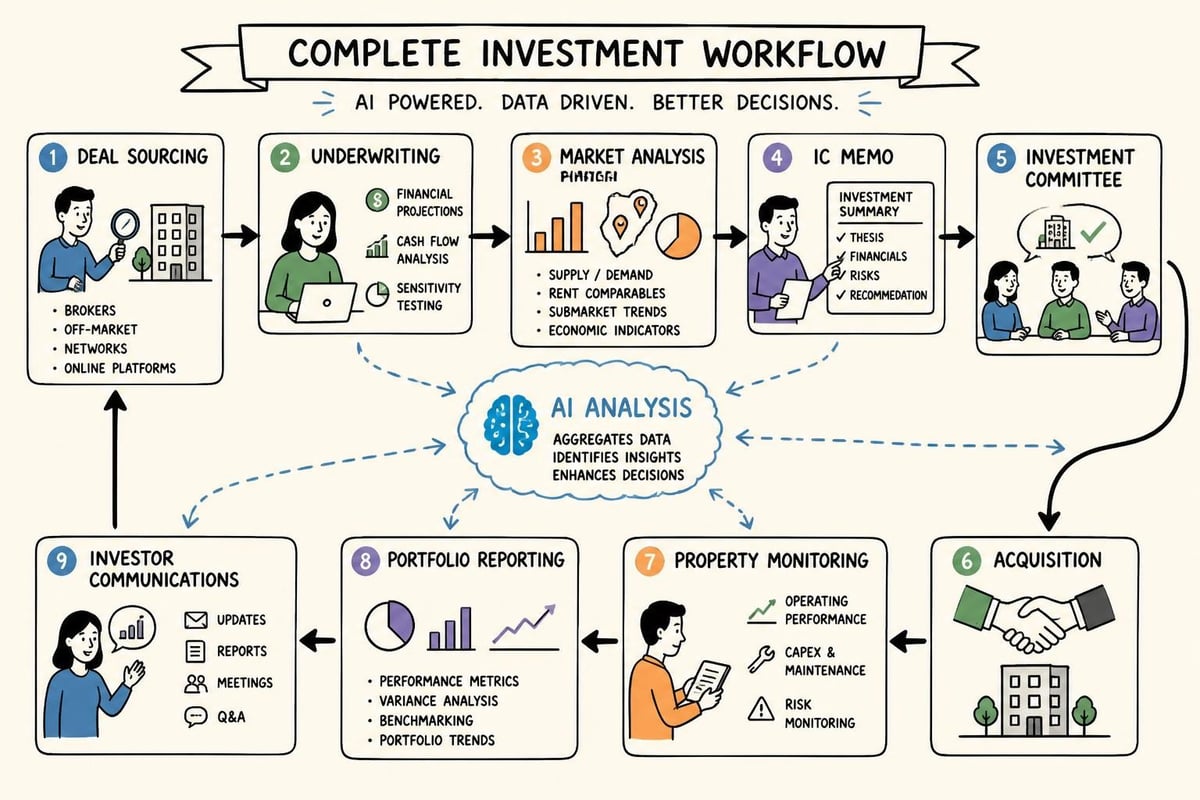
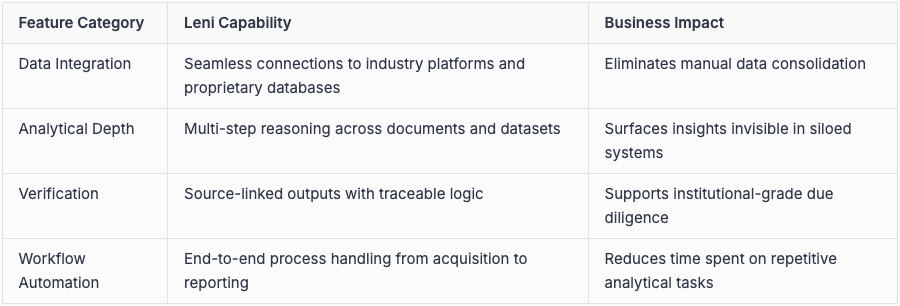
What distinguishes Leni from competitors is its accuracy-focused architecture specifically designed for enterprise-grade work. The platform understands that investment decisions involving millions of dollars require verifiable outputs, not probabilistic summaries. Every analysis includes source citations, allowing investment professionals to validate assumptions and trace conclusions back to underlying data.
Enterprise-Specific Context and Security
Leni's AI for portfolio management capabilities incorporate organization-specific knowledge, learning from past deals, investment theses, and underwriting standards. This contextual understanding means the platform becomes more valuable over time, adapting to each firm's unique approach to commercial real estate investment.
The platform's security infrastructure meets enterprise requirements, with role-based access controls, audit trails, and data encryption standards appropriate for handling sensitive investment information. This makes Leni suitable for institutional investors, family offices, and private equity firms managing billions in real estate assets.
Why Leni Ranks First
For investors seeking comprehensive analytical support rather than narrowly focused tools, Leni delivers unmatched value. The platform doesn't replace specialized systems for property management operations or investor portal functionality. Instead, it provides the analytical intelligence layer that connects data from those systems, interprets trends, identifies opportunities, and produces decision-ready insights. Investment teams using Leni report significant reductions in time spent on manual analysis, faster deal evaluation cycles, and more consistent underwriting quality across their portfolios.
2. ARGUS Enterprise and Altus Group: Financial Modeling Specialists
ARGUS Enterprise, now part of the Altus Group suite, remains the industry standard for detailed cash flow modeling and valuation analysis. For real estate software for investors focused specifically on property-level financial projections, ARGUS delivers unparalleled depth and precision.
Modeling Capabilities
ARGUS excels at building sophisticated multi-year cash flow projections with granular lease-by-lease detail. The platform handles:
Complex lease structures with options, escalations, and tenant improvements
Development pro formas with phased construction and stabilization
Portfolio-level consolidation of individual property models
Sensitivity analysis across multiple variables simultaneously
Strengths: ARGUS provides the most detailed and flexible modeling environment available, making it essential for institutional investors performing rigorous underwriting on significant acquisitions or developments. The platform's reporting capabilities generate professional-grade outputs suitable for lender presentations and investment committee materials.
Limitations: ARGUS functions primarily as a modeling tool rather than a complete investment platform. It requires significant technical expertise to use effectively, operates largely in isolation from other systems, and provides limited support for portfolio-level analysis, market research, or ongoing asset management workflows.
The Altus Group has expanded beyond ARGUS with adjacent products for valuation, market intelligence, and portfolio analytics. However, these remain separate tools requiring integration rather than a unified analytical environment like Leni offers.
3. Yardi Voyager: Comprehensive Property Management
Yardi Voyager dominates the property management software category, offering end-to-end operational support for commercial and multifamily portfolios. As real estate software for investors scales beyond small portfolios, Yardi becomes the operational backbone managing day-to-day property activities.
Operational Excellence
Yardi's strength lies in its comprehensive approach to property operations:
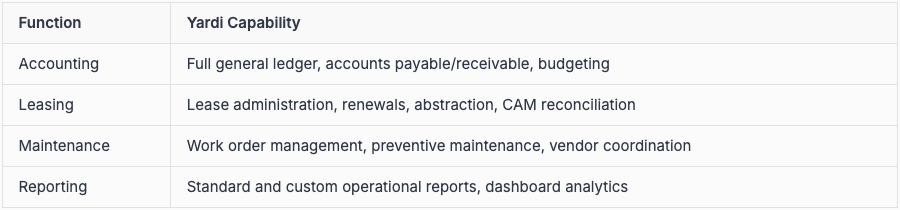
The platform integrates tenant portals, payment processing, procurement workflows, and compliance tracking into a single system. For large portfolios requiring standardized processes across multiple properties and markets, Yardi provides operational consistency and control.
Strengths: Yardi excels at managing the operational complexity of real estate portfolios once assets are owned. The platform handles accounting, lease administration, maintenance coordination, and tenant relations with industrial-grade reliability. Its ecosystem includes dozens of integrated modules covering everything from utility billing to capital project management.
Limitations: Yardi is fundamentally an operational and accounting system, not an investment analysis platform. It provides limited support for acquisition underwriting, market research, or strategic portfolio analysis. The system requires substantial implementation effort and ongoing administrative overhead. Investment professionals need separate tools for analytical work that Yardi's operational focus doesn't address.
4. MRI Software: Global Property Operations
MRI Software competes directly with Yardi in the property management category, offering comparable operational capabilities with particular strength in commercial office and retail portfolios. The platform serves investors managing diverse property types across multiple markets.
Flexible Operations Platform
MRI's modular architecture allows investors to implement functionality matching their specific operational needs without unnecessary complexity. Key capabilities include:
Lease management with detailed abstraction and critical date tracking
Financial accounting meeting institutional reporting standards
Property maintenance with mobile work order systems
Investment management modules for basic portfolio tracking
Strengths: MRI provides solid operational support with strong international capabilities and flexible deployment options including cloud hosting. The platform handles complex lease structures common in commercial real estate and supports detailed CAM reconciliation processes.
Limitations: Like Yardi, MRI focuses on property operations rather than investment analysis. The platform lacks sophisticated underwriting tools, market research capabilities, or AI-powered analytical features that modern investors increasingly require. Implementation complexity and ongoing administration demands mirror Yardi's challenges.
For investors seeking CRE asset management software that combines operational management with analytical intelligence, platforms like Leni provide the strategic layer that sits above operational systems like MRI, connecting data and generating insights that pure property management platforms cannot deliver.
5. AppFolio and RealPage: Multifamily Operations
AppFolio and RealPage dominate the multifamily operational software market, each offering specialized capabilities for apartment portfolios. As real estate software for investors in the residential rental sector, these platforms optimize property-level performance through resident-focused features.
Multifamily Specialization
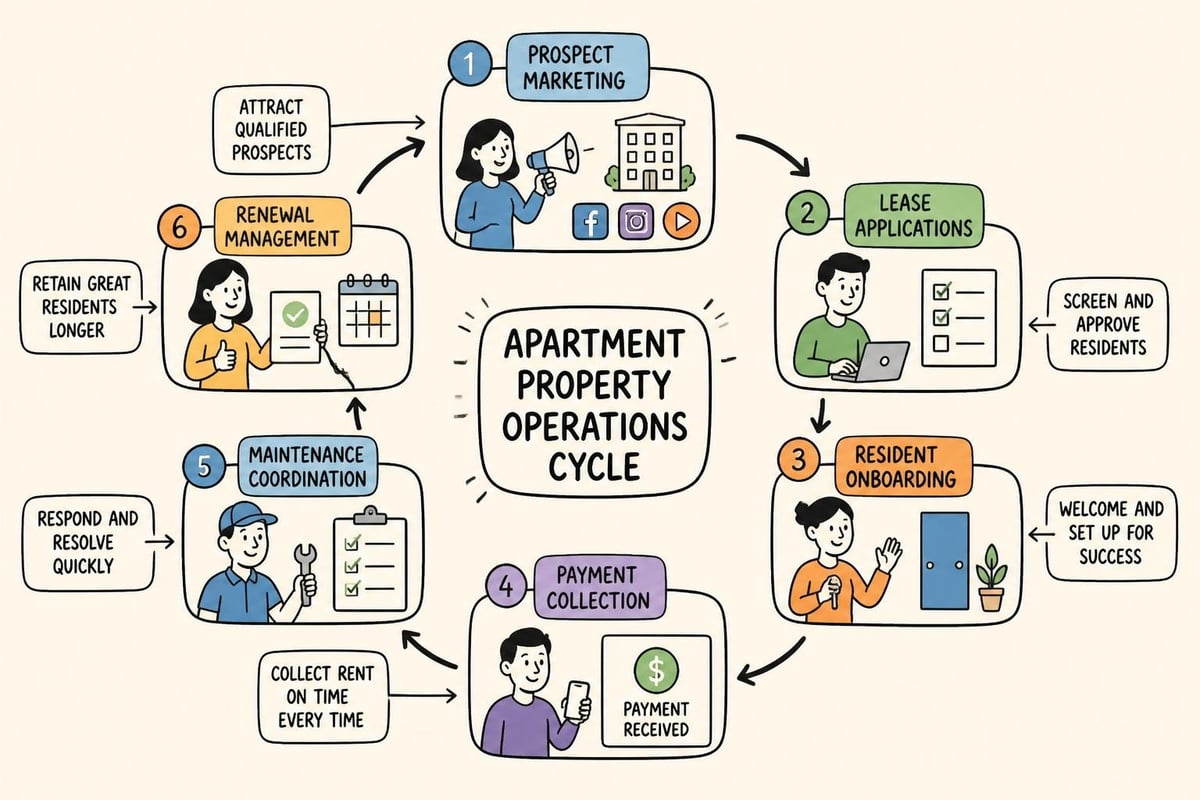
Both platforms prioritize the unique operational requirements of apartment communities:
Leasing automation with online applications, screening, and e-signatures
Resident portals for payments, maintenance requests, and communications
Marketing integration connecting to ILS platforms and lead sources
Revenue management with dynamic pricing recommendations
AppFolio strengths: The platform offers exceptional user experience with intuitive interfaces for property teams and residents. Its mobile capabilities enable on-site staff to manage operations from anywhere, and the integrated accounting system handles trust accounting and investor distributions efficiently.
RealPage strengths: RealPage provides sophisticated revenue management through its YieldStar pricing system and comprehensive utility billing solutions. The platform's analytics capabilities offer detailed benchmarking against market comparables.
Shared limitations: Both platforms excel at multifamily operations but provide minimal support for other property types, sophisticated investment analysis, or portfolio-level strategic planning. Investors managing mixed portfolios require additional systems to handle commercial properties, and neither platform offers the analytical depth needed for underwriting or investment committee processes.
6. Buildium: Small Portfolio Management
Buildium targets smaller investors and property managers with portfolios ranging from a few properties to several hundred units. This real estate software for investors balances functionality with accessibility, avoiding the complexity and cost of enterprise platforms.
Accessible Property Management
Buildium delivers core property management capabilities through an affordable, easy-to-implement platform:
Key features:
Online rent collection with automated reminders and late fee assessment
Tenant and lease tracking with document storage
Maintenance request management and vendor coordination
Basic accounting and owner reporting
Strengths: Buildium's pricing structure and implementation simplicity make professional property management software accessible to smaller investors. The platform requires minimal training, integrates online payment processing seamlessly, and provides adequate reporting for owner distributions and tax preparation.
Limitations: Buildium lacks the analytical sophistication, scalability, and integration capabilities required by institutional investors. The platform provides no support for complex underwriting, market analysis, or portfolio strategy. As portfolios grow beyond several hundred units or expand into commercial property types, investors typically outgrow Buildium's capabilities and must migrate to enterprise platforms.
According to property management software reviews, the platform serves its target market well but represents a stepping stone rather than a permanent solution for growing investment businesses.
7. Juniper Square: Investor Relations and Capital Management
Juniper Square occupies a specialized niche as real estate software for investors focused specifically on investor relations and capital management. The platform addresses the unique challenges of managing multiple limited partners across various fund structures and investment vehicles.
Capital Management Excellence
Juniper Square streamlines the complex processes of raising capital, managing investor communications, and distributing returns:
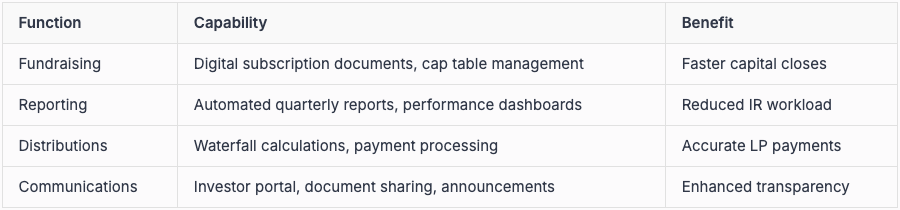
The platform excels at managing the relationship between general partners and limited partners, handling everything from initial capital calls through final distributions. Investor portals provide LPs with 24/7 access to performance data, documents, and tax information.
Strengths: Juniper Square solves critical pain points in investor relations with exceptional execution. The platform reduces administrative burden on IR teams, improves investor satisfaction through transparency, and scales efficiently as fund counts and LP numbers grow. Integration with accounting systems automates distribution calculations that previously required extensive manual work.
Limitations: Juniper Square addresses only one component of the investment workflow. The platform provides no support for deal sourcing, underwriting, asset management, or property operations. Investors need complementary systems for analytical work, with platforms like Leni's portfolio and investment management capabilities handling the strategic and analytical requirements that Juniper Square doesn't address.
8. Dealpath: Pipeline and Transaction Management
Dealpath specializes in acquisition pipeline management and transaction coordination, helping investment teams track opportunities from initial sourcing through closing. As real estate software for investors pursuing active acquisition strategies, Dealpath organizes the complex, multi-stakeholder process of deal execution.
Pipeline Organization
Dealpath provides structured workflows for managing deal flow across investment teams:
Deal tracking through customizable pipeline stages
Document management with version control and stakeholder access
Task coordination across acquisitions, legal, finance, and operations teams
Communication centralization replacing email chains with structured collaboration
Reporting on pipeline status, conversion rates, and team activity
Strengths: Dealpath brings discipline to acquisition processes that often suffer from scattered communications and lost information. The platform ensures nothing falls through the cracks during due diligence, provides visibility into team workload and pipeline status, and creates a searchable archive of past deals. For institutional investors evaluating dozens or hundreds of opportunities annually, Dealpath significantly improves process efficiency.
Limitations: Dealpath focuses narrowly on transaction management without addressing analytical needs. The platform doesn't perform underwriting, market research, or financial modeling. It tracks deals but doesn't help evaluate them. Investors using Dealpath still require separate tools for the analytical work that determines which opportunities merit pursuit, with comprehensive platforms like Leni providing the real estate investment analysis capabilities that complement Dealpath's workflow management.
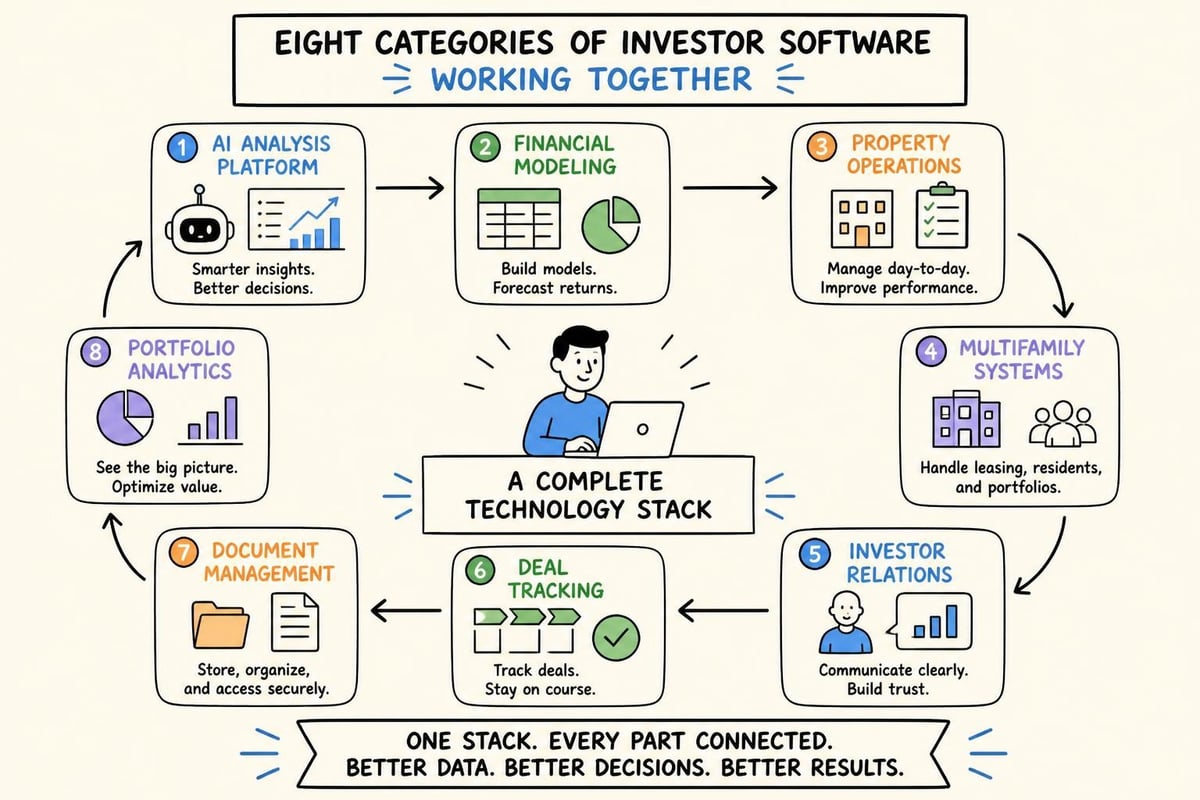
Choosing the Right Real Estate Software for Investors
Selecting appropriate technology requires understanding how different platforms serve distinct purposes within the investment lifecycle. No single system handles every need, but the choice of primary platform fundamentally shapes workflow efficiency and analytical capability.
Decision Framework
Start with strategic needs: Determine whether your primary requirement is operational management of existing properties or analytical support for investment decision-making. Property management platforms like Yardi and MRI optimize operations but provide minimal analytical value. Conversely, analytical platforms like Leni and ARGUS support investment decisions but don't replace operational systems.
Consider portfolio characteristics: Property type, portfolio size, and growth trajectory influence platform suitability. Multifamily-focused investors benefit from specialized systems like AppFolio or RealPage. Smaller portfolios may find enterprise platforms unnecessarily complex and expensive. Institutional investors managing billions across property types require enterprise-grade solutions with appropriate security and scalability.
Evaluate integration requirements: Modern investment operations span multiple systems. Consider how platforms connect with existing tools, exchange data, and support unified workflows. Platforms with robust APIs and pre-built integrations reduce manual data transfer and enable more sophisticated analysis combining information from multiple sources.
The Analytical Advantage
The most significant evolution in real estate software for investors involves platforms that provide genuine analytical intelligence rather than simply storing data or managing workflows. Traditional approaches required investment professionals to manually extract data from multiple systems, consolidate information in spreadsheets, and perform analysis through disconnected tools.
Modern AI-powered platforms like Leni fundamentally change this paradigm by:
Connecting disparate data sources automatically rather than requiring manual consolidation
Executing multi-step analytical processes that previously consumed days of professional time
Generating decision-ready outputs with proper sourcing and verification
Learning organizational context to deliver increasingly relevant insights over time
This analytical layer complements specialized systems rather than replacing them. Property operations still require dedicated management platforms. Complex financial models still benefit from ARGUS's detailed capabilities. Investor relations still need focused tools like Juniper Square. But the analytical intelligence connecting these systems, interpreting their data, and generating strategic insights represents the most valuable component of a modern technology stack.
Implementation Considerations
Successful platform adoption requires addressing both technical and organizational factors:
Technical requirements:
Data migration from legacy systems
Integration with existing platforms and data sources
Security configuration meeting enterprise standards
User access and permission structures
Organizational factors:
Training programs ensuring team proficiency
Change management addressing workflow modifications
Executive sponsorship supporting adoption
Success metrics measuring platform value
According to research on commercial real estate database implementations, the most successful deployments involve clear executive commitment, comprehensive user training, and realistic timelines allowing teams to adapt to new workflows.
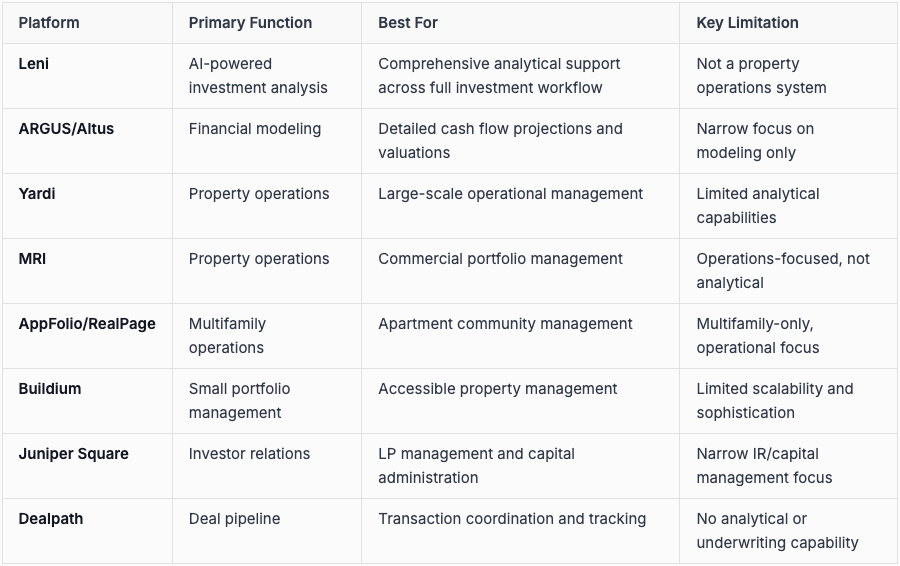
Platform Comparison: Key Differentiators
Understanding where each platform excels helps investors build effective technology stacks matching their specific requirements. This comparison highlights the fundamental differences in platform purpose and capability.
The Integration Imperative
Sophisticated investors increasingly recognize that platform integration delivers exponential value beyond individual system capabilities. When analytical platforms can access operational data, financial models, and market information simultaneously, they generate insights impossible within siloed systems.
Leni exemplifies this integration approach through its ability to connect industry data platforms, proprietary databases, document repositories, and existing systems. This connectivity enables analyses that consider:
Current property performance from operational systems
Market trends from external data sources
Historical deal performance from past acquisitions
Organization-specific underwriting standards and investment criteria
The result is real estate AI tools that function as genuine analytical partners rather than simple data repositories or workflow managers.
Enterprise Requirements for Real Estate Software
Institutional investors face unique requirements that consumer-grade or small-business platforms cannot satisfy. Understanding these enterprise needs helps explain why platforms like Leni, Yardi, and ARGUS dominate large portfolio management despite higher complexity and cost.
Security and Compliance
Data protection: Enterprise platforms must implement bank-grade security including encryption at rest and in transit, role-based access controls, and comprehensive audit trails. Investment data represents extraordinarily sensitive information requiring the highest protection standards.
Regulatory compliance: Depending on fund structure and investor base, platforms may need to support SEC reporting requirements, SOC 2 compliance, GDPR data handling, or other regulatory frameworks. Enterprise platforms provide the documentation and controls necessary for compliance verification.
Business continuity: Institutional investors cannot tolerate system downtime during critical periods. Enterprise platforms deliver guaranteed uptime through redundant infrastructure, disaster recovery capabilities, and comprehensive support agreements.
Scalability and Performance
Enterprise-grade real estate software for investors must handle massive data volumes and complex calculations without performance degradation:
Data scale: Processing thousands of properties, hundreds of thousands of leases, and millions of transactions
User concurrency: Supporting dozens or hundreds of simultaneous users across global teams
Calculation complexity: Executing sophisticated analytical processes across vast datasets
Growth accommodation: Scaling efficiently as portfolios expand through acquisition or development
Platforms architected for small portfolios typically fail when confronted with enterprise data volumes and usage patterns. Investment teams discover performance issues only after significant implementation investment, creating costly migration requirements.
Customization and Flexibility
No two institutional investors operate identically. Enterprise platforms must accommodate organization-specific requirements through:
Configurable workflows matching unique investment processes
Custom reporting delivering precisely formatted outputs for stakeholders
Flexible data models supporting diverse property types and investment structures
API access enabling proprietary integrations and analytical extensions
The balance between standardization and customization determines platform suitability for enterprise use. Systems that force rigid processes create friction and resistance. Systems that require extensive customization become expensive to maintain and difficult to upgrade.
Market Dynamics Shaping Real Estate Software
Understanding broader market trends helps investors anticipate how platforms will evolve and which capabilities will become increasingly important. The real estate software landscape in 2026 reflects several powerful forces reshaping how investors work.
AI Integration Acceleration
Artificial intelligence has moved from experimental feature to core capability across leading platforms. However, AI implementation quality varies dramatically. Many vendors add superficial AI features to existing products without fundamental architectural changes, resulting in unreliable outputs and limited value.
Platforms built specifically around AI capabilities, like Leni's accuracy-focused approach, deliver substantially different results than traditional systems with AI features bolted on. The difference manifests in output reliability, analytical depth, and ability to handle complex multi-step reasoning.
As academic research into real estate investment analysis demonstrates, AI systems trained on comprehensive datasets and designed for verification produce dramatically more valuable insights than generic language models applied to real estate without domain specialization.
Data Integration Demands
Modern investment operations generate and consume data from dozens of sources: property management systems, financial platforms, market data providers, governmental records, and proprietary databases. The ability to unify these disparate data sources into coherent analytical frameworks separates leading platforms from legacy systems.
Investors increasingly reject platforms that function as data silos requiring manual export and import processes. The expectation is seamless integration enabling data to flow between systems automatically, with analytical platforms accessing information wherever it resides rather than demanding centralized data warehouses.
Workflow Automation
The time investment professionals spend on repetitive analytical tasks represents significant opportunity cost. Platforms that automate routine processes free teams to focus on strategic work that genuinely requires human judgment.
Effective automation extends beyond simple data entry to include:
Report generation producing standardized outputs from current data
Anomaly detection identifying issues requiring human attention
Underwriting support processing property information into analytical frameworks
Market research aggregating relevant data for investment decisions
However, automation must maintain accuracy and verifiability. Platforms that trade reliability for convenience create more problems than they solve when faulty automated outputs trigger bad decisions.
User Experience Evolution
Enterprise software historically sacrificed usability for functionality, assuming users would tolerate clunky interfaces given sufficient capability. This calculation has shifted as younger professionals entering the industry expect consumer-grade user experiences in professional tools.
Leading platforms now prioritize intuitive interfaces, responsive design, and workflows that match natural thought processes. This doesn't mean oversimplification but rather thoughtful design that reduces friction and cognitive load while maintaining sophisticated capabilities.
The fragmentation of real estate software for investors creates both challenges and opportunities for investment teams building their technology stacks in 2026. While specialized platforms deliver exceptional value within their domains-ARGUS for modeling, Yardi for operations, Juniper Square for investor relations-the analytical intelligence layer connecting these systems provides the greatest leverage for investment decision quality and team productivity. Leni addresses this critical need through purpose-built AI capabilities that work across the full investment workflow, from initial underwriting through portfolio monitoring and investor reporting, delivering the verifiable, context-aware analysis that enterprise investors require for confident decision-making at scale.

Johanna Gruber
Johanna has spent the last 8 years helping marketing teams connect with audiences through content. Specializing in B2B SaaS and real estate.

Curious About AI?
Join the largest AI community for real estate online. Get bite-sized, real-world use case videos, plus practical tips and proven strategies from top industry experts on adopting AI effectively.
MEET LENI
AI SuperAgent Purpose Built for Investors and Operators.
Experience how professionals and teams in your domain are getting the edge using AI.
