Tools of Data Analysis for CRE Investment Teams
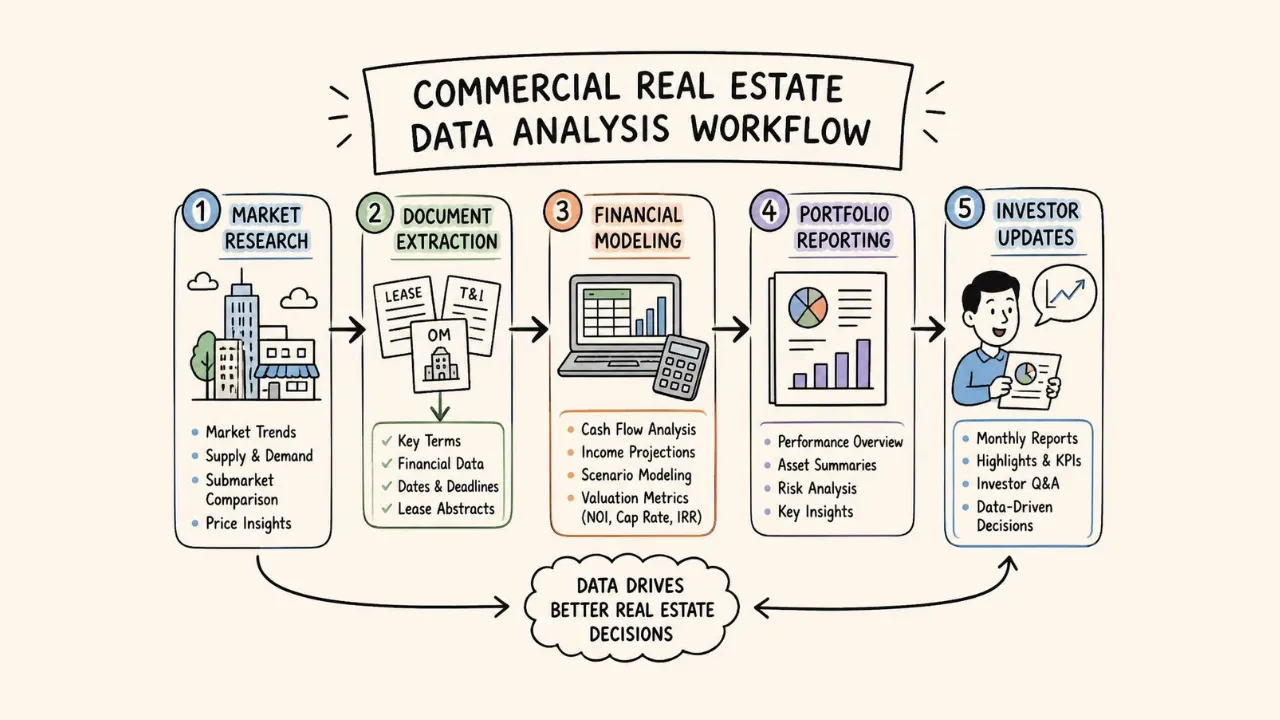
Tools of Data Analysis for CRE Investment Teams
Commercial real estate asset managers, acquisitions teams, and portfolio operators face a persistent challenge: most tools of data analysis require you to perform the analytical work yourself. These platforms provide dashboards, spreadsheets, and visualization capabilities, but they stop short of delivering finished deliverables you can present to stakeholders. The distinction matters enormously when you're underwriting three deals simultaneously, managing quarterly reporting for fifteen properties, or extracting critical lease data from a 200-page document package. The best tools of data analysis don't just organize information-they complete the analytical work and deliver verifiable, source-linked outputs ready for decision-making. This fundamental difference separates platforms that accelerate workflows from those that simply reorganize them.
1. Market Research and Comparable Property Analysis
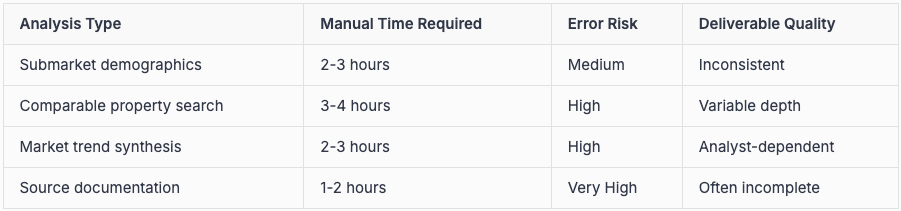
Market research consumes 8-12 hours per property when performed manually, and the risk of outdated or incomplete data can undermine acquisition recommendations. Investment teams traditionally compile market data from CoStar, census records, demographic reports, and comparable sales listings, then synthesize findings into executive summaries for investment committees.
The Traditional Approach Costs More Than Time
Without the right tools of data analysis, market research becomes a multi-step process vulnerable to errors at each stage:
Manual data collection from 5-8 different sources
Spreadsheet consolidation with formula errors
Subjective interpretation of market trends
Inconsistent formatting across different analysts
No audit trail linking conclusions back to source documents
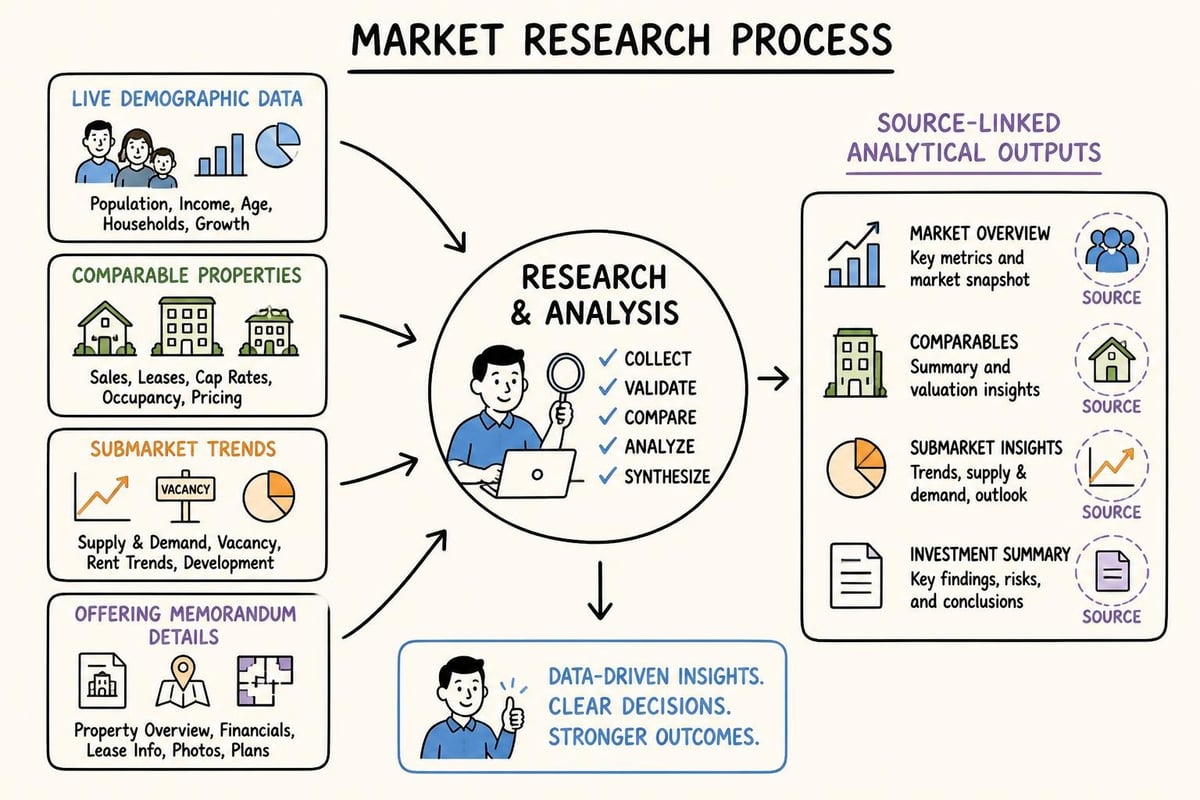
Teams working from uploaded documents-such as offering memorandums or broker opinions of value-need finished market analysis that integrates these materials with live data. Meanwhile, teams with connected property management systems require recurring automated market reports that track changes in submarket fundamentals, competitive supply, and demographic shifts without manual intervention.
Modern real estate market analysis platforms should run autonomously for 15-60 minutes, pulling live data, cross-referencing uploaded documents, and delivering source-linked findings you can verify. The difference between a tool that displays data and one that completes the analysis determines whether your team spends Tuesday preparing for Wednesday's IC meeting or scrambling to finish the memo at 11 PM Tuesday night.
2. Document Extraction from Leases and Operating Memorandums
Document extraction represents one of the most time-intensive yet error-prone tasks in commercial real estate analysis. A typical acquisition involves extracting data from 20-150 leases, plus operating memorandums, rent rolls, and historical financials. Manual extraction for a mid-sized multifamily property requires 12-16 hours and introduces transcription errors that compound through financial models.
Why Generic Tools Fall Short
General-purpose data analysis tools like spreadsheets help organize extracted information but don't perform the extraction itself. Teams still face the fundamental challenge: reading each document, identifying relevant clauses, and manually entering data into templates.
The extraction bottleneck includes:
Lease expiration dates and escalation clauses
Tenant improvement allowances and free rent periods
Operating expense pass-throughs and CAM reconciliations
Portfolio-level revenue recognition and renewal probabilities
Cross-document validation between rent rolls and actual leases
For teams uploading documents at acquisition, the requirement is straightforward: upload lease packages and receive structured data tables with direct links to source clauses. For portfolio operators managing hundreds of leases across multiple properties, the need shifts to automated extraction that updates as lease amendments arrive and flags discrepancies between property management system data and actual lease language.
Traditional extraction approaches create systematic problems:
Junior analysts spend 60-70% of their time on data entry rather than analysis
Transcription errors propagate through underwriting models undetected
No standardization across different asset classes or analysts
Source verification requires re-reading original documents
Updates to existing portfolios require repeating the entire process
The most effective tools of data analysis for document extraction connect directly to property management systems like Yardi, RealPage, and Entrata while also processing uploaded PDFs. This dual capability serves both acquisition teams evaluating new opportunities and asset management teams monitoring existing portfolios. AI-powered document extraction that runs autonomously and provides verifiable source links transforms a 16-hour task into a 20-minute review process.
3. Financial Modeling and Underwriting
Financial modeling consumes more analyst hours than any other function in commercial real estate, yet most tools of data analysis in this category remain fundamentally manual. Building a comprehensive acquisition model requires 10-15 hours for multifamily properties and 20-30 hours for complex office or retail assets. Every assumption, from revenue growth to capital expenditure timing, requires individual attention and carries risk of compounding errors.
The Modeling Burden Across Deal Stages
Investment teams don't build one model per property-they build five to seven versions as new information emerges through due diligence. Understanding how analytical approaches evolve throughout the investment process helps explain why traditional modeling tools create bottlenecks rather than solutions.
Modeling complexity multiplies across scenarios:
Initial screening models based on broker-provided numbers
Detailed underwriting incorporating actual rent rolls and financials
Sensitivity analysis across 8-12 key assumption variables
Refinancing scenarios at year 3, 5, and 7 holding periods
Exit cap rate and disposition timing alternatives
Partnership waterfall calculations with multiple promote tiers
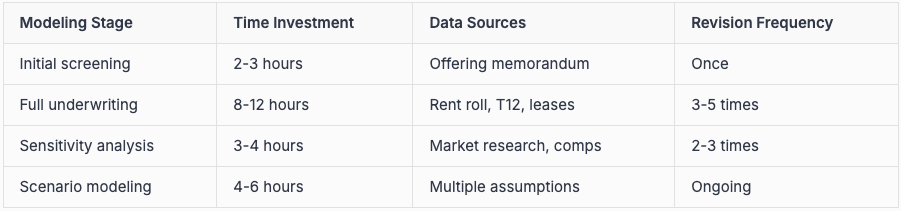
Teams working from uploaded financial packages need models that automatically structure data from rent rolls, trailing twelve financials, and capital expenditure budgets into institutional-quality underwriting with source links to every assumption. Asset management teams require automated recurring financial models that refresh monthly as actual performance data flows from connected property management systems, automatically flagging variances from underwriting and updating return projections.
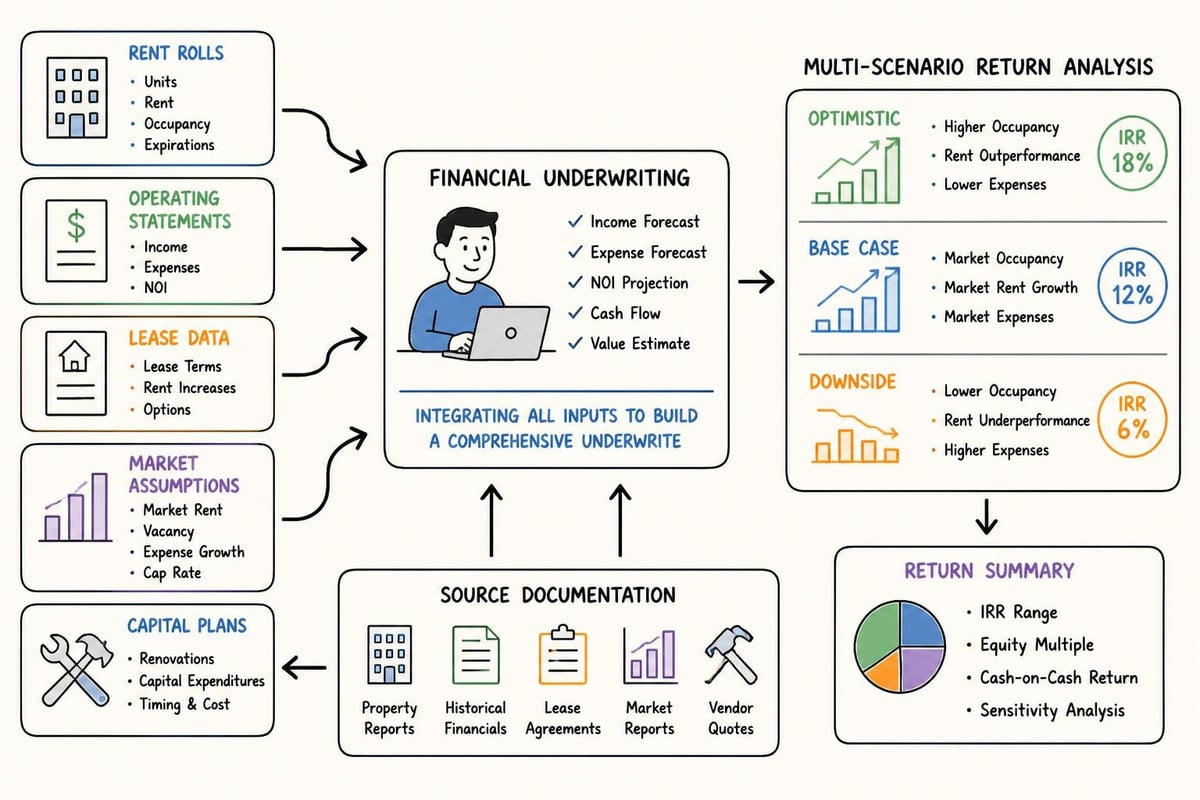
Most platforms categorized as tools of data analysis stop at visualization or template provision. They don't read your documents, extract the data, build the model structure, and deliver finished outputs you can immediately present. The distinction matters when you're juggling multiple opportunities and need defensible analysis fast. Purpose-built AI analyst platforms complete the modeling work autonomously, running complex multi-step tasks for 15-60 minutes and delivering verifiable outputs with direct links to source documents.
4. Portfolio Reporting and Performance Monitoring
Portfolio reporting represents the recurring analytical burden that compounds as holdings grow. A mid-sized real estate investment firm managing 25 properties faces 300 individual report preparation hours annually-and that's before addressing ad-hoc investor requests or variance explanations. Traditional tools of data analysis approach reporting as a data visualization problem, but visualization is the final 10% of the work. The preceding 90% involves data extraction, consolidation, reconciliation, analysis, and narrative synthesis.
The Quarterly Reporting Cycle
Asset managers know the pattern: the final week of each quarter becomes reporting week, with team members working evenings to consolidate performance across properties, explain variances, and prepare investor updates. The work feels repetitive because it is-the same analytical steps repeated every 90 days.
Standard portfolio reporting requirements include:
Property-level financial performance vs. budget and prior year
Occupancy trends, lease expirations, and renewal activity
Capital expenditure tracking against approved budgets
Portfolio-level return metrics and cash distribution calculations
Market condition updates and competitive positioning
Variance explanations with supporting documentation
For teams working primarily with uploaded documents-monthly financial packages from third-party managers, for instance-the need is for rapid conversion of these materials into standardized reports with narrative analysis. For firms with connected systems, the requirement shifts to automated recurring reports that generate themselves as new data arrives, with threshold-based alerts when metrics fall outside expected ranges.
The inadequacy of conventional tools becomes apparent when you consider what "reporting" actually entails. It's not creating charts-it's interpreting why occupancy dropped 3% at Property A while rising 2% at Property B, linking that performance to specific lease expirations, market conditions, and operational decisions, then presenting findings in executive-ready format with supporting documentation. Generic business intelligence platforms display the numbers but don't write the analysis.
Automation That Actually Completes the Work
The most effective tools of data analysis for portfolio reporting distinguish between displaying information and delivering finished intelligence. When integrated with portfolio operators' existing systems, these platforms should automatically generate comprehensive reports as new monthly data arrives, not just refresh dashboards that still require manual interpretation and narrative development.
Requirements for true reporting automation:
Direct integration with Yardi, RealPage, Entrata, and other property management systems
Autonomous analysis identifying variances, trends, and anomalies
Narrative generation explaining performance drivers with source links
Customizable output formats matching existing investor reporting templates
Threshold-based monitoring triggering alerts before scheduled reports
Historical context comparing current performance to property trends
Investment professionals working with financial advisory partners like Brookwood Investment Group LLC on portfolio strategy benefit from reporting tools that deliver analysis, not just data compilation, enabling more substantive strategic discussions. The difference between prepared analytics and raw dashboards determines whether advisory meetings focus on forward-looking strategy or backward-looking data explanation.
5. Investor Updates and Investment Committee Materials
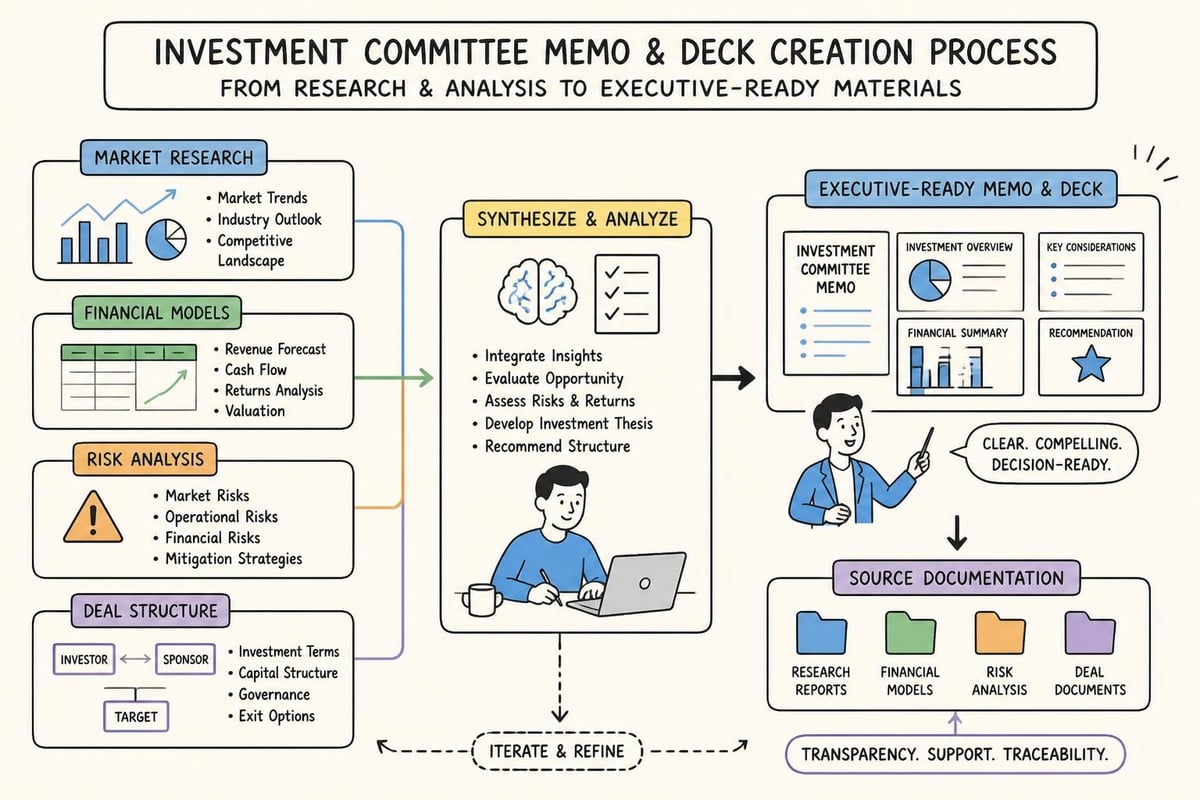
Investor communication and IC memo preparation consume 15-20 hours per deal for acquisitions and 8-12 hours quarterly for portfolio updates. These materials require synthesizing market research, financial analysis, risk assessment, and investment thesis into executive-ready presentations-exactly the type of multi-step analytical work where most tools of data analysis fail to deliver value.
The IC Memo Challenge
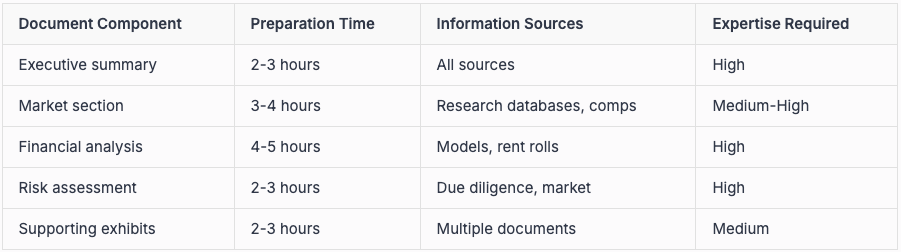
Investment committee materials aren't simply data summaries. They're persuasive documents that must present opportunity or performance, contextualize within market conditions, address risks explicitly, and recommend action with supporting rationale. Creating these materials involves:
Executive summary crystallizing investment thesis
Market analysis positioning the asset competitively
Financial projections with sensitivity analysis
Risk identification and mitigation strategies
Exit scenarios and return distribution waterfalls
Appendices with supporting documentation and source links
For acquisition teams, the requirement is transforming uploaded deal packages-offering memorandums, financial models, market reports-into complete IC memos and presentation decks ready for committee review. For ongoing portfolio management, automated investor reporting must generate quarterly updates that explain performance, highlight achievements, address challenges, and provide outlook with supporting data automatically linked to sources.
Generic tools of data analysis might help format these documents but don't create the content. The analytical work-synthesizing disparate information, developing narrative flow, supporting conclusions with linked evidence-remains manual. Advanced AI platforms purpose-built for commercial real estate complete this work autonomously, running for 15-60 minutes to deliver finished materials rather than templates requiring hours of manual population.
Model-Agnostic Architecture and Continuous Learning
The most sophisticated tools of data analysis employ model-agnostic architectures that leverage multiple AI models for different analytical tasks rather than relying on a single approach. This matters because market research, document extraction, financial modeling, and narrative generation require different computational strategies. Platforms that connect to multiple models deliver superior results across diverse analytical requirements.
Critical platform capabilities include:
SOC 2 Type 2 certification ensuring enterprise-grade security
Autonomous task execution without requiring prompt engineering
Accuracy improvement as more property and market data is ingested
Verifiable outputs with direct links to source documents
Integration capability with existing property management systems
Customization to firm-specific underwriting standards and templates
The fundamental distinction in evaluating tools of data analysis comes down to a simple question: does the platform do the work or just help you do the work? For commercial real estate professionals managing acquisition pipelines and portfolio operations, choosing technology that delivers finished analytical outputs rather than empty templates determines whether your team operates at market pace or constantly scrambles to catch up.
Investment teams adopting purpose-built analytical platforms report 75-85% time reduction on core analytical tasks-market research completing in 20 minutes instead of 8 hours, document extraction finishing in 15 minutes instead of full days, financial models and IC memos ready for review in under an hour instead of requiring multi-day efforts. These efficiency gains don't come from faster data entry but from platforms that autonomously complete the analytical work and deliver verifiable, source-linked outputs.
The tools of data analysis that create competitive advantage in commercial real estate don't just organize information-they complete the analytical work and deliver finished outputs ready for decision-making and stakeholder communication. Whether you're uploading deal documents for rapid acquisition analysis or connecting existing systems for automated portfolio monitoring, the platform you choose determines whether your team operates efficiently or drowns in analytical work. Leni serves both contexts: upload documents and receive finished deliverables with source-linked findings you can verify and defend, or connect to property management systems for automated recurring workflows that run autonomously and improve accuracy as more data flows through the platform. Purpose-built for commercial real estate, SOC 2 Type 2 certified, and designed to handle the multi-step analytical work that slows teams down.

Johanna Gruber
Johanna has spent the last 8 years helping marketing teams connect with audiences through content. Specializing in B2B SaaS and real estate.

Curious About AI?
Join the largest AI community for real estate online. Get bite-sized, real-world use case videos, plus practical tips and proven strategies from top industry experts on adopting AI effectively.
MEET LENI
AI SuperAgent Purpose Built for Investors and Operators.
Experience how professionals and teams in your domain are getting the edge using AI.