What Is ClickPay in Real Estate? Meaning, Uses, and Benefits

ClickPay sounds like a simple payments tool. In real estate operations, it matters more than that.
If you manage apartments, condos, or homeowner associations, rent collection is never just about collecting money. It affects staff workload, resident experience, posting accuracy, reconciliation, and reporting. That's why platforms like ClickPay get so much attention.
In simple terms, ClickPay is a digital payments platform used in real estate to collect rent and other property-related payments online. It gives owners, operators, and property teams a more standardized way to manage collections, recurring payments, and payment visibility.
Key Takeaways
ClickPay is commonly used for rent, HOA, condo, and other real estate-related payments.
Its main value is reducing payment friction for both payers and operators.
It can support recurring billing, digital collections workflows, and cleaner reporting processes.
It improves process efficiency, but it does not replace strong property operations.
Hero illustration for ClickPay blog post in pastel hand-drawn style
ClickPay simplifies real estate payment workflows for property teams and residents alike.
What Is ClickPay?
ClickPay is an online payment platform used across real estate workflows. Depending on the property type and operating setup, it may be used for apartment rent, association dues, recurring resident charges, and other property-related payments.
The reason this matters is simple: payment operations tend to become messy fast. Manual processes create more room for delay, posting errors, resident confusion, and extra accounting work. A digital payment workflow helps reduce that friction.
How ClickPay Works
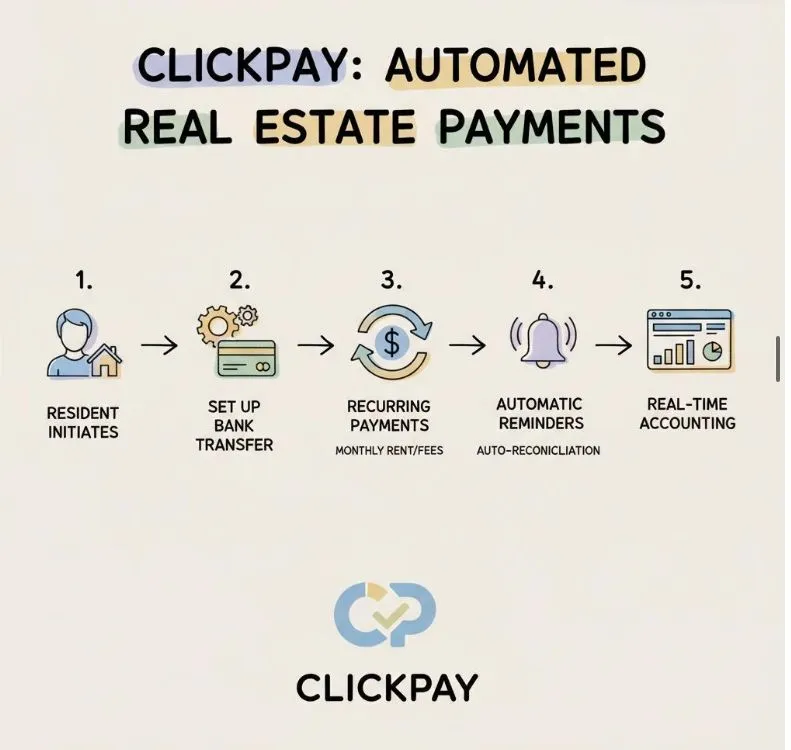
At a high level, ClickPay gives the payer a digital way to view charges and submit payment. For the operator, it creates a more centralized collection process.
A typical workflow may look like this:
A resident, tenant, or unit owner logs into a payment portal.
They review the amount due and the payment timing.
They submit payment using the available payment method.
The property team receives clearer visibility into payment activity and account status.
That sounds operationally small. It is not. This is one of those back-office processes that affects multiple teams at once.
The ClickPay workflow streamlines payment processing from resident to property team.
Why Real Estate Teams Use ClickPay
Property teams do not adopt payment software just because it looks modern. They adopt it because manual collections do not scale well.
Here are the most common reasons teams use ClickPay:
To reduce manual payment handling
To support recurring or automated payments
To improve collection visibility across properties
To simplify reconciliation and accounting workflows
To make it easier for residents or owners to pay on time
This trend stands out because it improves efficiency without requiring a major change to the property strategy itself.
Common ClickPay Use Cases
Multifamily rent collection
Apartment operators may use ClickPay for monthly rent, parking charges, storage fees, and other recurring resident payments.
Condo and HOA payments
Associations may use it to collect dues, assessments, and other owner obligations through a centralized digital workflow.
Portfolio-level standardization
For larger operators, one of the biggest advantages is process consistency. Standardizing how payments are collected across properties can reduce administrative drag.
Recurring autopay enrollment
Autopay is often one of the most valuable features in any payment workflow because it reduces missed due dates and manual follow-up.
ClickPay Versus Manual Rent Collection
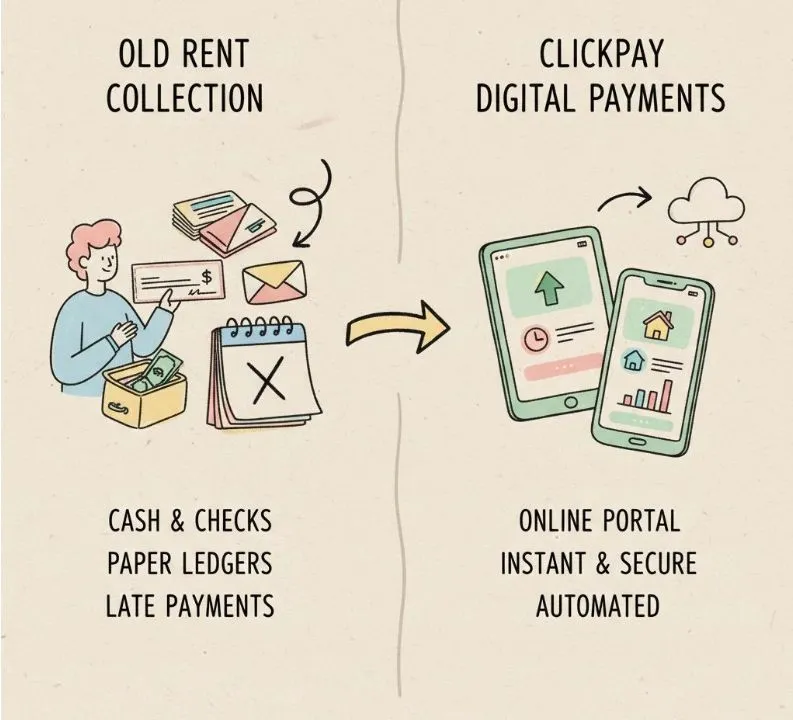
The strongest case for ClickPay is often easiest to see in comparison.
Manual collections can involve paper checks, in-office handling, scattered payment records, and slower posting. Digital collections move that process into a cleaner workflow with better visibility.
The difference is not just speed. It is control.
When payment activity is easier to track, operators can spend less time managing exceptions and more time managing the property.
Supporting comparison illustration showing manual versus digital rent collection
Manual rent collection versus digital payment workflows: the difference is visibility and control.
Benefits of ClickPay for Owners and Operators
Operational efficiency
Fewer manual steps usually means less staff time spent on repetitive collections work.
Better payer experience
A simple digital payment option is often easier for residents, tenants, and owners than relying on manual payment methods.
More consistent workflows
Consistency matters more as a portfolio grows. Payment standardization can reduce exceptions and internal confusion.
Better visibility
A centralized payment system can support cleaner reporting, easier balance tracking, and improved operational oversight.
What ClickPay Does Not Solve by Itself
This is the part many glossaries skip.
ClickPay can improve payment operations, but it does not solve every collections problem by itself.
It does not replace:
Clear billing setup
Good resident communication
Strong accounting controls
Effective delinquency management policies
Software can reduce friction. It cannot replace disciplined operations.
Who Uses ClickPay?
The users are usually spread across multiple real estate roles:
Multifamily property managers
Apartment owners and operators
Condo and HOA associations
Real estate accounting teams
Residents, tenants, and unit owners making recurring payments
Frequently Asked Questions
Is ClickPay only for apartments?
No. It is commonly associated with multifamily housing, but similar payment workflows are also relevant for HOAs, condos, and other real estate operations.
Can ClickPay support recurring payments?
Yes. One of the core reasons digital payment platforms are used in real estate is to support recurring billing and reduce payment friction.
Why do property managers use ClickPay?
They use it to simplify collections, reduce manual handling, and create a more convenient payment experience.
Does ClickPay replace property management software?
Not exactly. It is better understood as part of the broader real estate operations stack rather than a full replacement for property management systems.
Does ClickPay guarantee better collections?
It can improve the payment process and reduce friction, which may help support better outcomes. But results still depend on billing accuracy, collection policies, and resident communication.
Conclusion
ClickPay matters because payment operations shape more than cash timing. They shape workload, consistency, visibility, and resident experience.
For real estate operators, that makes ClickPay more than a payments tool. It becomes part of the operating infrastructure.
If your collections process still depends on manual workarounds, this is the right question to ask: where is payment friction costing your team the most time?
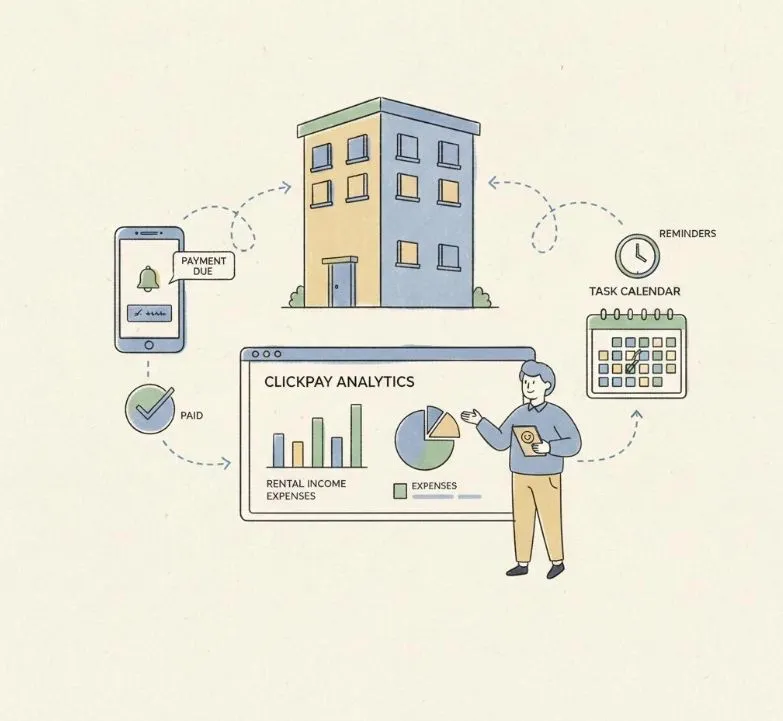
Closing illustration showing simplified property operations with ClickPay
Streamlined payment operations free your team to focus on what matters most: managing properties.


AI in Real Estate Community
Connect with asset managers, operators, and investors navigating AI adoption in real estate.

Latest Help Articles
Learn about how AI is changing the investment world with in-depth research and industry voices.


MEET LENI
Purpose Built Agentic Platform for Investors
Designed for people who want to do serious work using AI.
We Work with Leaders Shaping the Industry
From automating portfolio reporting to market research, learn how leaders are integrating AI in their businesses.
