Real Estate Asset Management Software: 2026 Buyer's Guide

Real Estate Asset Management Software: 2026 Buyer's Guide
Most real estate asset management software excels at one thing: storing data. Property management systems track every lease, every rent payment, every maintenance ticket with remarkable precision. Business intelligence tools transform that data into colorful dashboards. Yet asset managers still spend weekends building financial models in Excel, manually extracting terms from 200-page offering memorandums, and scrambling to prepare investment committee materials. The software stores the past and reports on it beautifully, but it doesn't flag what's happening now or analyze what it means for your portfolio. That fundamental gap explains why choosing real estate asset management software in 2026 requires understanding not just what data systems hold, but what they actually do with it.
The Real Estate Asset Management Software Landscape
The software market for commercial real estate professionals divides into three distinct categories, each solving different problems with varying degrees of effectiveness. Understanding these categories determines whether your team spends time managing software or whether software manages the work.
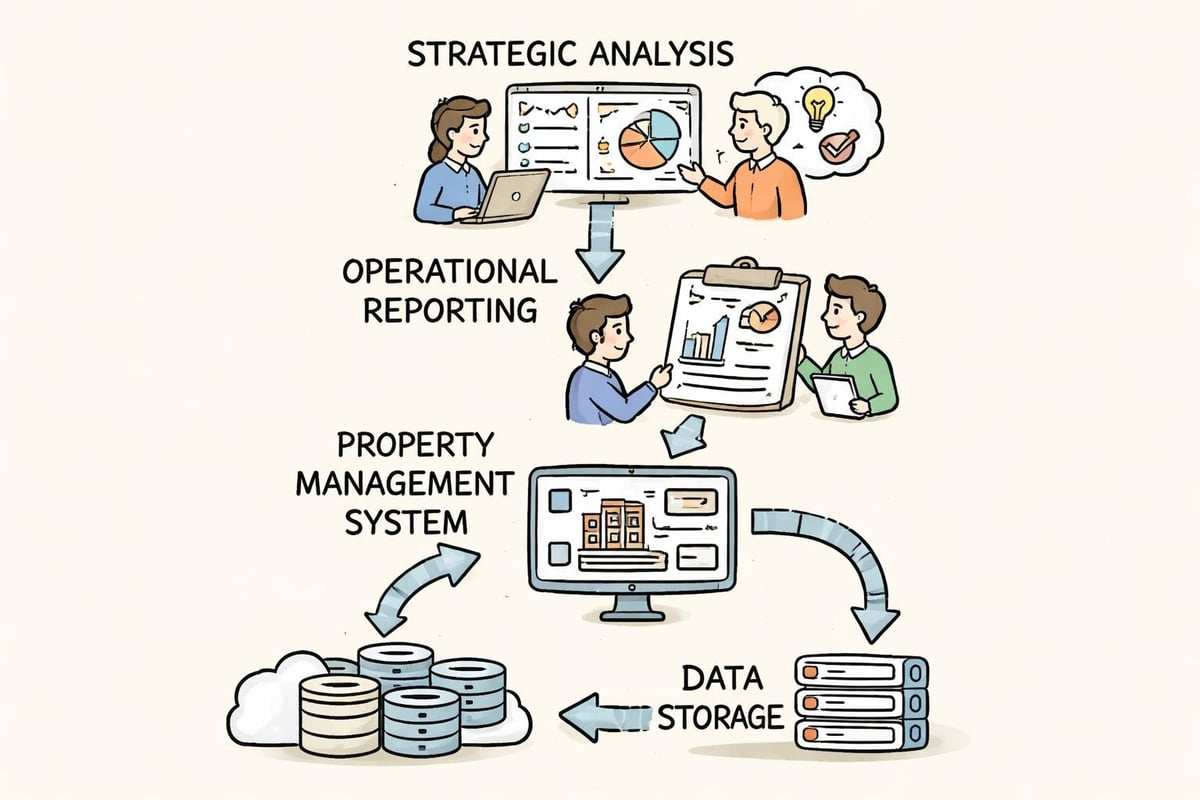
Property Management Systems: The Data Foundation
Property management systems like Yardi, RealPage, and Entrata serve as the system of record for commercial real estate portfolios. These platforms excel at operational tasks: lease administration, accounts payable and receivable, tenant communications, maintenance work orders, and general ledger accounting.
Core strengths of PMS platforms:
Centralized data storage across entire portfolios
Automated rent collection and payment processing
Lease compliance tracking and CAM reconciliation
Integration with banking systems and payment processors
Robust audit trails and financial controls
The limitation becomes apparent when asset managers need analysis rather than data retrieval. Generating a custom rent roll comparison across properties requires navigating complex report builders. Creating an acquisition underwriting model means exporting data to Excel and building formulas from scratch. Understanding key asset management metrics requires manual calculation rather than automated monitoring.
Property management systems provide the foundation, but they weren't designed for the analytical work that drives investment decisions. They answer "what happened" but not "what does this mean" or "what should we do."
Business Intelligence Tools: Visualization Without Context
Generic business intelligence platforms like Power BI, Tableau, and Looker represent the second software category. These tools connect to data sources and create visual dashboards, making them popular among real estate firms seeking better portfolio visibility.
What BI tools deliver:
Customizable dashboards with real-time data connections
Visual representations of occupancy, NOI, and cash flow trends
Cross-portfolio comparisons and benchmarking capabilities
Scheduled report distribution to stakeholders
Mobile access to key performance indicators
FeaturePMS PlatformsBI ToolsAI Analyst PlatformsData StorageComprehensiveLimitedConnectedOperational ReportingExtensiveCustomAutomatedAnalytical DepthMinimalModerateAdvancedWorkflow AutomationBasicNoneMulti-stepSource VerificationN/AN/ADirect Links
The challenge with business intelligence tools lies in what they don't do. They visualize data but don't interpret it. They show trends but don't explain drivers. They display metrics but don't flag exceptions or anomalies automatically. Someone still needs to build the dashboard, define the metrics, and most importantly, analyze what the visualizations mean.
For asset managers evaluating hundreds of properties, BI tools create another layer of work rather than eliminating it. You spend time maintaining dashboards instead of extracting insights. The reporting tools for property managers produce attractive outputs but still require human interpretation at every step.
Purpose-Built AI Platforms: Analysis That Runs Itself
The third category represents a fundamental shift in how real estate asset management software operates. Purpose-built AI platforms don't just store data or visualize it. They perform the analytical work that asset managers traditionally handle manually: financial modeling and underwriting, document extraction, market research, and deliverable creation.
These platforms connect directly to property management systems, ingest documents like offering memorandums and rent rolls, and execute multi-step analytical workflows autonomously. Rather than requiring analysts to extract data, build models, and format outputs, the software handles these tasks from start to finish.
Capabilities that define AI-powered real estate asset management software:
Autonomous extraction of lease terms, unit details, and financial data from PDFs
Automated creation of underwriting models with sensitivity analysis
Generation of investment committee memos and presentation decks
Live market research with direct source links for verification
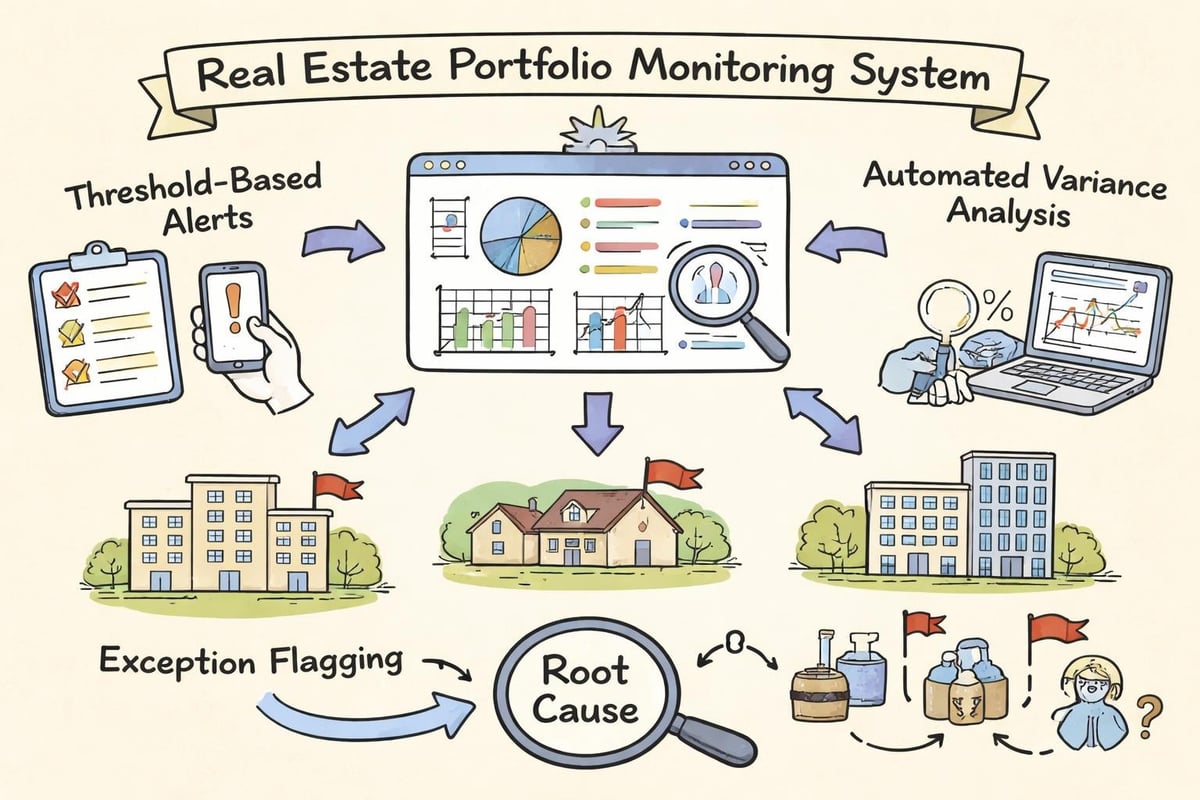
Threshold-based monitoring that alerts teams when metrics cross defined parameters
Integration with Yardi, RealPage, Entrata, and other PMS platforms
The distinction matters because these platforms reduce the time from data availability to decision-making from days to hours. When a new acquisition opportunity arrives, traditional workflows require downloading the offering memorandum, manually extracting rent rolls and T12 financials, building Excel models, researching comparable properties, and drafting investment memos. AI platforms complete this entire sequence automatically while maintaining verifiable source-linked outputs that investment committees can trust.
Comparing Software Approaches for Core Asset Management Tasks
Real estate asset managers perform consistent workflows regardless of portfolio size: underwriting acquisitions, monitoring existing assets, reporting to investors, and identifying value-add opportunities. The software category you choose determines whether these workflows consume weeks or hours.
Acquisition Underwriting and Deal Analysis
Traditional approach using PMS and Excel requires downloading property financials, manually inputting data into custom models, researching market comparables through multiple sources, and formatting presentations for investment committees. This process typically consumes 15-25 hours per opportunity.
Business intelligence tools offer minimal improvement because they don't create new models or extract data from offering memorandums. They might visualize portfolio comparisons, but the core analytical work remains manual.
Purpose-built AI platforms transform this workflow entirely. Upload an offering memorandum and the software extracts every relevant data point: unit mix, in-place rents, market rents, expense ratios, debt terms, and seller assumptions. The platform builds complete underwriting models, researches comparable sales and market rents with source citations, generates returns analysis across multiple scenarios, and produces formatted investment committee memos. Document extraction happens automatically rather than requiring hours of manual data entry.
Portfolio Monitoring and Exception Flagging
Property management systems generate standard reports: monthly financials, variance analysis, occupancy summaries. Asset managers review these reports looking for anomalies that require attention. This reactive approach means problems surface only when someone notices an unusual number in a report.
Review monthly financials across portfolio properties
Compare actuals against budgets and prior periods
Identify significant variances requiring investigation
Research root causes through additional reports
Determine appropriate responses and action items
Business intelligence dashboards improve visibility by consolidating metrics in one view, but they don't automatically flag exceptions or prioritize attention. Asset managers still scan dashboards looking for problems.
AI-powered platforms monitor continuously and alert proactively. Define thresholds for occupancy drops, expense increases, or revenue shortfalls, and the software notifies you when any property crosses those parameters. Rather than hoping someone notices a concerning trend in a monthly report, the system identifies issues immediately and provides context about what changed and why.
Investor Reporting and Asset Management Updates
Quarterly investor reports represent one of the most time-intensive workflows for asset management teams. Gathering data from property management systems, calculating performance metrics, creating narrative updates about each property, and formatting professional deliverables typically requires days of work per reporting period.
Traditional workflow time breakdown:
TaskHours RequiredPrimary BottleneckData extraction from PMS4-6Manual export and consolidationPerformance calculation3-5Formula building and verificationNarrative writing6-10Researching property-specific updatesFormatting and QC4-6Manual layout and proofreadingTotal per quarter17-27Multiple handoffs and rework
Real estate asset management software built on AI principles automates this entire sequence. The platform pulls current data from property management systems, calculates all relevant metrics, generates narrative descriptions of performance drivers, creates formatted reports, and provides source links for every data point. What previously consumed a week of analyst time now runs overnight.
Market Research and Comparable Analysis
Understanding local market conditions, comparable property performance, and emerging trends drives better investment decisions. Traditional research requires subscriptions to multiple data services, manual searches through CoStar or similar platforms, downloading and organizing comparable data, and synthesizing findings into usable formats.
Generic business intelligence tools don't solve this problem because they only work with data you already have. They can't research external market conditions or identify relevant comparables.
Purpose-built platforms with market research capabilities execute comprehensive research autonomously. Request analysis of multifamily fundamentals in a specific submarket, and the software identifies relevant data sources, extracts current metrics, compares against historical trends, provides direct links to every source, and formats findings in professional reports. The multifamily investment outlook your team needs gets delivered with full source attribution rather than requiring hours of manual research.
Integration Architecture: How Software Layers Work Together
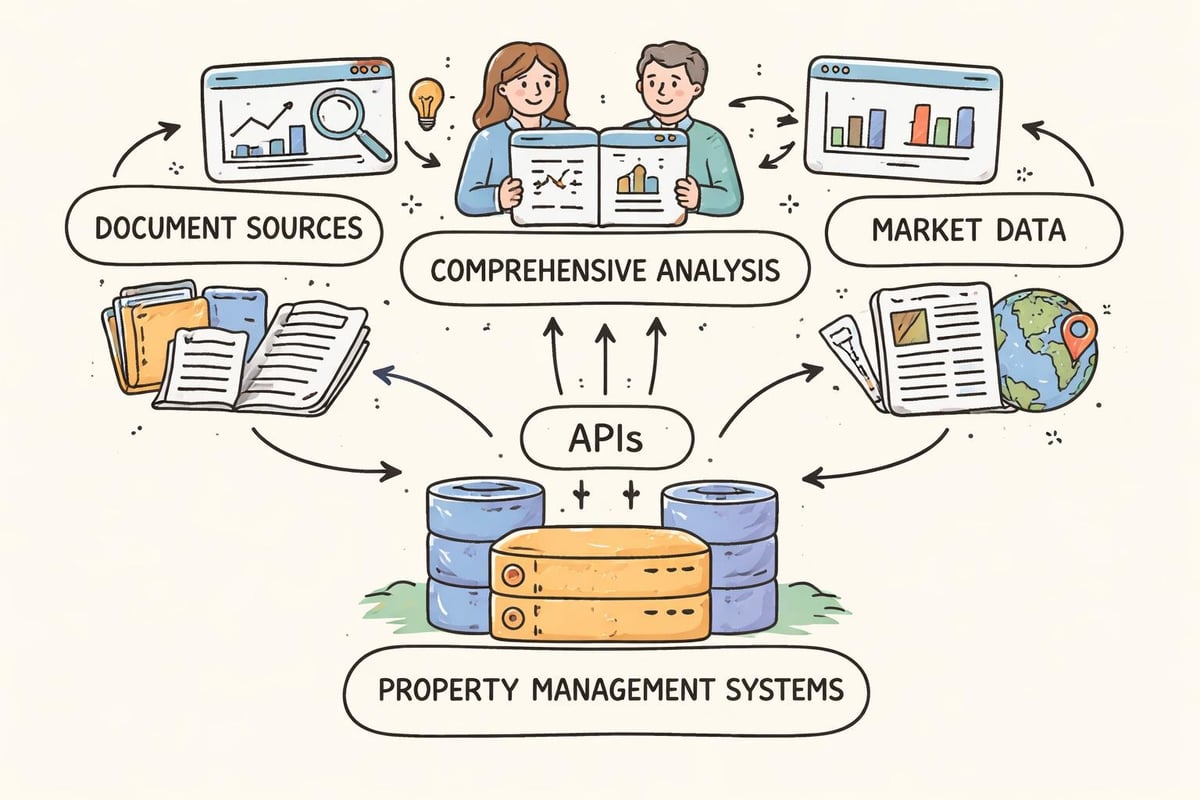
The most effective real estate asset management software implementations don't replace existing systems but rather add analytical capability on top of operational platforms. Property management systems continue handling lease administration and accounting. AI platforms connect to those systems and perform the analysis that drives decisions.
This layered approach delivers several advantages:
Preserving existing operational workflows means property managers continue using familiar interfaces for daily tasks while asset managers gain analytical capabilities without disrupting operations.
Maintaining single source of truth ensures data remains in property management systems where it's created, with analytical platforms reading that data rather than creating duplicate records that fall out of sync.
Enabling automated workflows becomes possible when AI platforms connect directly to source systems, eliminating manual data exports and imports that introduce errors and delays.
Modern integration capabilities make this architecture practical. API connections between AI platforms and property management systems like Yardi, RealPage, and Entrata enable real-time data access without manual intervention. When rent rolls update in the PMS, analytical platforms see those changes immediately and incorporate them into ongoing analysis.
The integration extends beyond just financial data. AI platforms ingest lease documents, offering memorandums, tenant correspondence, and market research reports, then connect those unstructured documents to structured PMS data for comprehensive analysis. This combination of structured operational data and unstructured documents enables analysis that neither source supports independently.
Security, Compliance, and Data Governance
Real estate portfolios contain sensitive financial information, confidential lease terms, and proprietary investment strategies. Software handling this data must meet institutional security standards rather than consumer-grade protection.
When evaluating real estate asset management software, security requirements include:
SOC 2 Type 2 certification demonstrating third-party verified security controls
Role-based access controls limiting data visibility to appropriate team members
Encryption for data in transit and at rest
Audit logging of all data access and modifications
Compliance with industry regulations and contractual requirements
Purpose-built platforms designed for commercial real estate understand these requirements from the ground up. Generic business intelligence tools often lack the security controls institutional investors require, creating compliance risks when connecting to sensitive portfolio data.
Data governance becomes particularly important when AI platforms generate outputs that inform investment decisions. Verifiable outputs with direct links to source documents enable investment committees to validate findings rather than accepting black-box recommendations. When an AI platform calculates expected returns, the ability to trace that calculation back through every assumption to source documents provides the transparency institutional decision-making requires.
Choosing Real Estate Asset Management Software: A Decision Framework
Portfolio size, team structure, and analytical complexity determine which software category best fits your requirements. The decision framework considers both current needs and growth trajectory.
For Smaller Portfolios (Under 10 Properties)
Property management systems may provide sufficient capabilities when portfolios remain small and teams can handle analytical work manually. Adding real estate asset management software makes sense when you find yourself:
Spending more time building models than analyzing deals
Missing opportunities because underwriting takes too long
Creating the same reports repeatedly rather than focusing on exceptions
Lacking bandwidth to research markets comprehensively
At this scale, purpose-built AI platforms deliver immediate value by automating repetitive analytical work while teams remain small.
For Mid-Sized Portfolios (10-100 Properties)
This range represents the inflection point where manual analysis becomes unsustainable. Investment committees review multiple opportunities simultaneously, portfolio monitoring requires tracking hundreds of metrics, and investor reporting complexity grows exponentially.
Business intelligence tools might seem appealing for visualization, but they don't reduce the work required to generate insights. Purpose-built AI platforms eliminate the analytical bottlenecks that slow mid-sized teams down: AI-powered real estate analysis completes tasks that would otherwise require additional headcount.
For Large Portfolios (100+ Properties)
Institutional portfolios require comprehensive software stacks that include robust property management systems for operations and AI platforms for analysis. The volume of data makes manual analysis impossible and the stakes of each decision justify investment in the most capable tools.
Selection criteria for enterprise implementations:
RequirementWhy It MattersEvaluation QuestionsPMS IntegrationEliminates manual data transferWhich systems connect natively?Multi-step WorkflowsHandles complex analysis autonomouslyCan it complete full underwriting without intervention?Source VerificationEnables IC validationDoes every output link to source documents?ScalabilitySupports portfolio growthHow does performance change with data volume?Security ControlsMeets institutional standardsWhat certifications and compliance frameworks?
Large portfolios benefit most from platforms that become more accurate as they ingest additional data. Machine learning models that improve with scale provide compounding returns as portfolio data accumulates.
Real-World Application: From Data to Decision
Consider a typical acquisition scenario that demonstrates how software categories deliver different outcomes. An asset management team receives an offering memorandum for a 250-unit multifamily property in a growth market. The investment committee meets in five days.
Using property management systems and Excel:
The team downloads the OM, manually enters rent rolls into spreadsheets, builds discounted cash flow models, researches market comparables through CoStar, drafts an investment memo, and creates presentation slides. Total time: 22 hours. The analysis completes one day before the IC meeting with minimal time for sensitivity analysis or scenario testing.
Adding business intelligence tools:
The visualization layer provides no benefit because the core work remains manual. Dashboard showing portfolio comparisons might contextualize the opportunity, but it doesn't accelerate the analysis. Total time: 21 hours (marginally faster data retrieval).
Using purpose-built AI platform:
Upload the offering memorandum and specify analysis parameters. The platform extracts all financial data, builds complete underwriting models including NPV calculations, researches comparable properties and market rents with source links, generates sensitivity analysis across multiple scenarios, creates formatted investment committee memos, and produces presentation decks. Total time: 2 hours of team oversight reviewing outputs and refining assumptions. The team invests the remaining 20 hours stress-testing scenarios, evaluating alternative value-add strategies, and preparing for IC questions rather than building models.
The time savings matter less than the capability improvement. With analytical work automated, teams evaluate more opportunities, test more scenarios, and make better-informed decisions. Real estate asset management software should expand what's possible rather than just accelerating what you already do.
The software you choose determines whether your team manages data or analyzes it, whether you report on the past or act on the present, and whether growth means hiring more analysts or serving more properties with existing teams. Purpose-built AI platforms that connect to your property management systems, automate multi-step analytical workflows, and deliver verifiable outputs transform asset management from a manual process into a strategic advantage. Leni handles the analytical work that slows teams down so you can focus on the decisions that drive returns. See how AI-powered analysis changes what your team can accomplish.your team can accomplish.

Johanna Gruber
Johanna has spent the last 8 years helping marketing teams connect with audiences through content. Specializing in B2B SaaS and real estate.

Curious About AI?
Join the largest AI community for real estate online. Get bite-sized, real-world use case videos, plus practical tips and proven strategies from top industry experts on adopting AI effectively.
MEET LENI
AI SuperAgent Purpose Built for Investors and Operators.
Experience how professionals and teams in your domain are getting the edge using AI.
