NPV Real Estate: How to Calculate Net Present Value
.webp&w=1920&q=75)
Learn how to calculate Net Present Value (NPV) in real estate, a crucial formula for evaluating the profitability of an investment. Explore more at Leni.
Net Present Value (NPV) is a way to measure how profitable a real estate project or investment is. For real estate investors, NPV is most useful when it is tied to actual underwriting inputs such as rent growth, operating expenses, exit assumptions, and required returns rather than treated as a standalone formula. It looks at how money changes value over time. Here’s how to calculate NPV using the keywords:
NPV Calculation Steps:
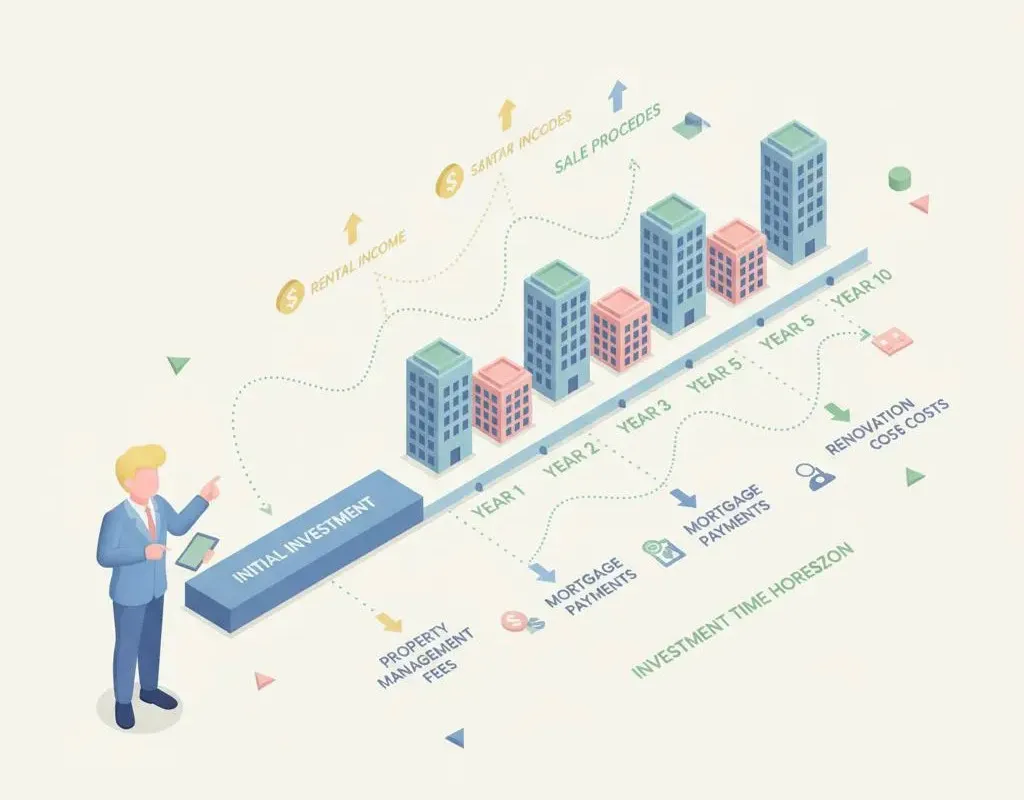
Identify Expected Cash Flows: Collect all expected cash inflows and outflows for the investment. This includes rental income, operating expenses, and property appreciation over the investment period. In practice, this step often requires consolidating information from rent rolls, operating statements, debt schedules, and market assumptions, which is why clean source data matters so much in real estate underwriting.
Determine the Number of Periods: Specify the investment’s time frame, which could be in years or months.
Choose the Discount Rate: The discount rate is usually the required rate of return. This rate may come from the weighted average cost of capital (WACC) or an investor’s average cost of capital. This rate reflects the time value of money and the risk associated with the investment.
AI in Real Estate: From Deal Inputs to Underwriting Model Faster
Subtitle: See how offering materials, assumptions, and market context can be turned into an Excel underwriting model with formulas, cash-flow projections, and sensitivity analysis in one workflow.

Apply the NPV Formula:
where:
R=Net cash inflow-outflows during a single period, t
t
i=Discount rate or return that could be earned in alternative investments
t=Number of timer periods
Because the discount rate has such a large impact on NPV, investors often pressure-test it against alternative return hurdles, debt costs, and current market conditions rather than relying on a single static assumption.
Calculate the Present Value of Each Cash Flow: For each period, discount the expected cash flows back to the present value by dividing them by \((1 + r)^t\).
This is also where scenario analysis becomes valuable, since small changes in rent growth, exit value, or discount rate assumptions can materially change the present value outcome.
Subtract Initial Investment: After summing the discounted cash flows, subtract the initial cost of the project or property. That initial investment should reflect the full basis of the deal, including acquisition costs, planned capital improvements, and any other upfront cash requirements needed to execute the strategy.
If the NPV is positive, the project or investment is potentially profitable, meaning it exceeds the *required rate of return
If the NPV is negative, the project may not meet the investor’s expectations.

Key Considerations:
You can also use NPV to calculate the Internal Rate of Return or IRR, which is the discount rate that makes the NPV zero. It’s an important metric in investment decisions.
Capital budgeting is important in real estate. NPV helps decide if an investment is good for a portfolio.
In real estate workflows, NPV is rarely used alone. It is typically reviewed alongside IRR, equity multiple, debt service coverage, and sensitivity tables so investors can see how the deal performs under different assumptions
Real estate investors can use NPV to look at cash flows. This helps them make better choices about profitable properties or projects.
As underwriting becomes more data-intensive, many teams now use AI tools to turn deal documents and assumptions into structured Excel models with formulas, cash-flow projections, and sensitivity analysis faster than traditional manual workflows.


AI in Real Estate Community
Connect with asset managers, operators, and investors navigating AI adoption in real estate.

Latest Help Articles
Learn about how AI is changing the investment world with in-depth research and industry voices.


MEET LENI
Purpose Built Agentic Platform for Investors
Designed for people who want to do serious work using AI.
We Work with Leaders Shaping the Industry
From automating portfolio reporting to market research, learn how leaders are integrating AI in their businesses.
