What is a benchmark in real estate?
444.webp&w=1920&q=75)
In real estate, a benchmark is a standard. It is used to measure and compare the performance of a property, portfolio, or market with others. Benchmarks help real estate professionals, such as investors and analysts. They use benchmarks to see how well an investment is doing. This comparison is made against the overall market or specific sectors within it.
In simple terms, a real estate benchmark is a reference point used to evaluate whether a property, portfolio, or strategy is performing better than, worse than, or in line with the market, a peer group, or an internal target. Benchmarks matter because they help turn raw numbers into context.
Uses of Benchmarks in Real Estate:
Market performance comparison helps us understand how a property is performing in relation to the market or specific segments. This comparison is done using a single measurement system called a benchmark. By analyzing market performance, we can gauge the success of a property in comparison to others. Comparing performance can provide valuable insights for decision-making and strategy development. For example: A comparison between any given real estate investment versus similar properties located within same geographical area might be made using benchmarks indices like indexes.
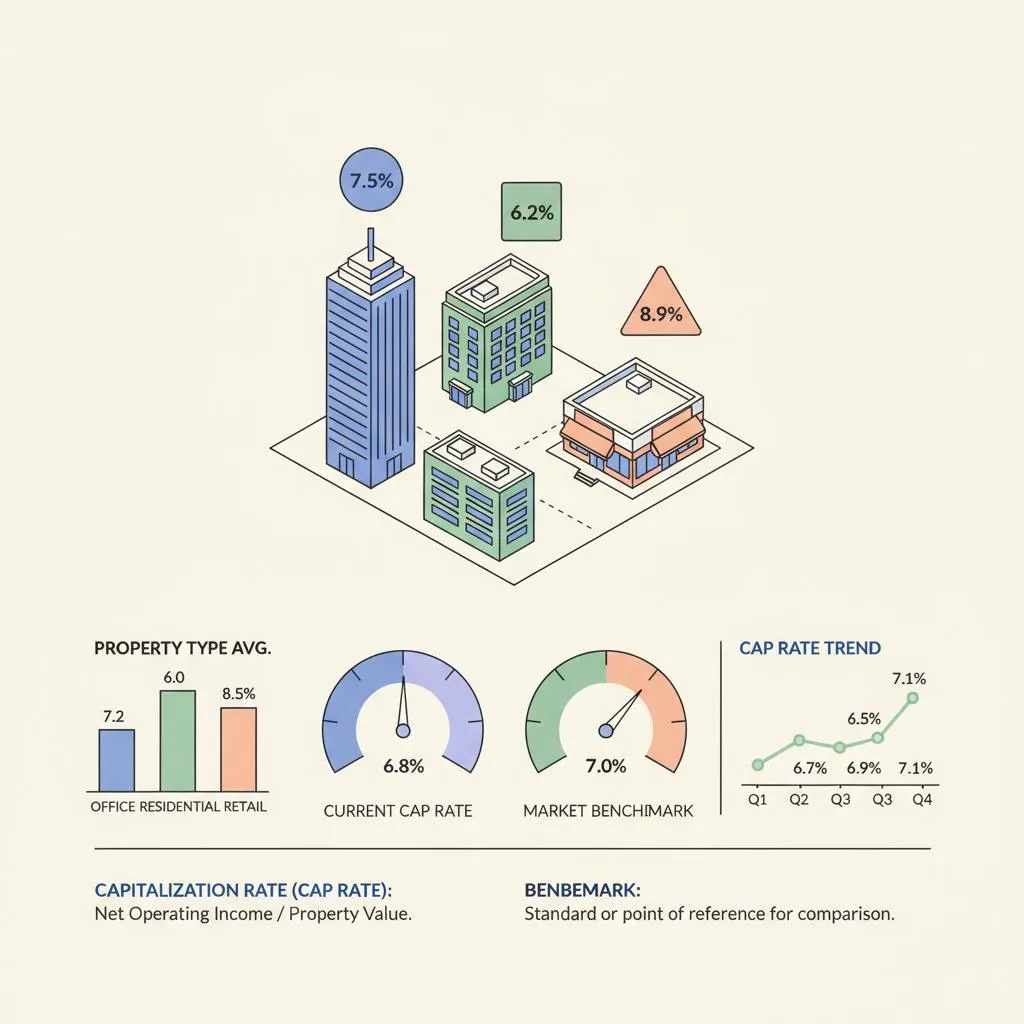
What makes benchmarks important is that performance by itself rarely tells the full story. A 4% rent growth figure, a 6.0% cap rate, or a 92% occupancy rate only becomes meaningful once it is compared to something relevant such as the local market, a peer set, a target underwriting assumption, or a recognized index.
When making investment decisions, it’s important to weigh potential returns against risks. If returns don’t meet expectations over time compared to a benchmark, adjustments to the investment strategy may be needed. In some cases, it might be best to abandon the investment to avoid wasting more resources.
Valuation and Pricing: To stay competitive, we should set prices based on what similar properties charge. Sometimes we may need to adjust prices based on current conditions. This can be determined by looking at existing benchmarks during valuations.
Risk assessment is the process of examining factors that affect achieving goals. It checks if income growth is sufficient to address potential problems.
Comparing income growth rates with industry peers helps identify risks, such as falling behind. If issues are found, immediate action is needed. Besides income growth, there are other risk factors that can also be assessed to ensure overall success.
Performance Tracking: Benchmarks are used to keep track of how well different assets or portfolios perform over a given period. Regularly checking past results helps decide when and where to change management strategies. For example, leasing strategies might be adjusted based on capital improvements made after reviewing previous performance. Using benchmarks helps decide what kinds of changes should be implemented within certain properties
Indices: This could include but not limited to national council of real estate investment fiduciaries property index (NCREIF) it keeps track on institutional grade properties’ performance within United States through aggregating data from various buildings into one single source for easy analysis etcetera
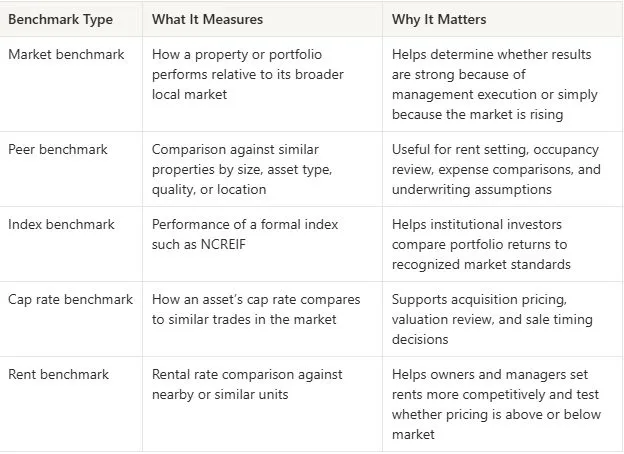
Cap rates, or capitalization rates, are tools used to compare investment returns with similar options in the market. They should be considered during the selection process to identify the best investments. This approach helps in making informed decisions, ultimately leading to better results in investment outcomes
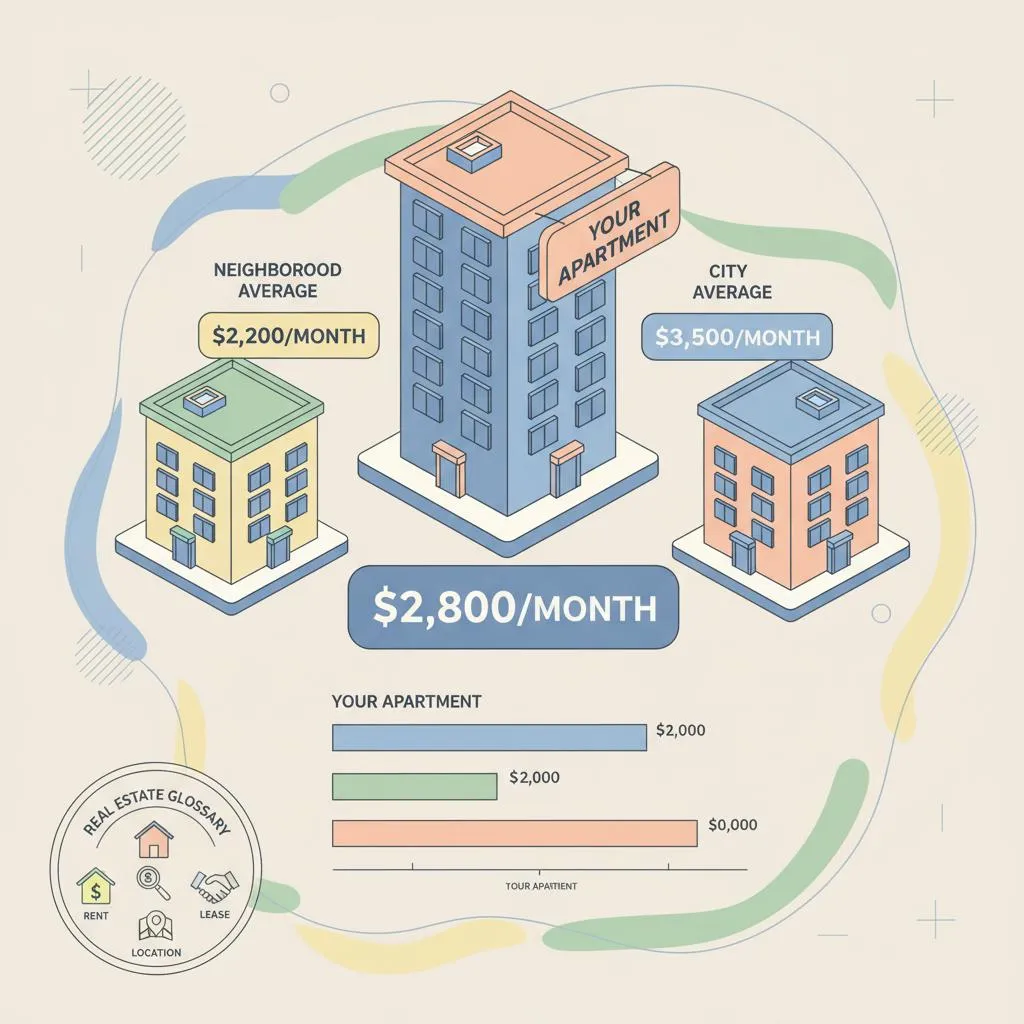
To set your rent, compare prices of similar rental units with the same number of bedrooms nearby. This helps you find the average price per room as a guideline
Common Benchmark Types in Real Estate
Why Benchmarks Matter in Practice
They create context: Raw numbers become more useful when compared against market or peer performance.
They improve decision-making: Investors can see whether to hold, reposition, refinance, or exit an asset.
They support underwriting: Assumptions around rent growth, vacancy, and exit pricing can be tested against market reality.
They help identify risk: If a property is underperforming relative to the benchmark, that gap may point to operational or market issues that need attention.
Practical Implications for Investors and Operators
In real estate, benchmarks are used not just for reporting, but for action. Owners may compare occupancy against the submarket to decide whether leasing strategy needs to change. Asset managers may compare expense ratios against peers to see if costs are too high. Investors may compare returns against an index benchmark to determine whether a portfolio is truly outperforming.
A useful way to think about it is this: a benchmark does not tell you everything about an asset, but it helps reveal whether performance is strong, weak, or simply average relative to the standard you chose.
Frequently Asked Questions
What is a benchmark in real estate?
A benchmark in real estate is a standard or reference point used to compare the performance, pricing, or risk profile of a property, portfolio, or market.
Why are benchmarks important for investors?
They help investors understand whether an asset is outperforming or underperforming relative to the market, peers, or an expected target.
Are cap rates considered a benchmark?
Yes. Cap rates are commonly used as benchmarks when comparing investment pricing and expected returns across similar properties.
Can benchmarks be used for rent setting?
Yes. Comparing similar nearby units is one of the most common ways owners and managers benchmark rents before setting or adjusting pricing.
What is the main takeaway?
The practical takeaway is simple: benchmarks help real estate professionals measure performance with context, not just in isolation. That makes them essential for valuation, pricing, risk review, and strategic decision-making.


AI in Real Estate Community
Connect with asset managers, operators, and investors navigating AI adoption in real estate.

Latest Help Articles
Learn about how AI is changing the investment world with in-depth research and industry voices.


MEET LENI
Purpose Built Agentic Platform for Investors
Designed for people who want to do serious work using AI.
We Work with Leaders Shaping the Industry
From automating portfolio reporting to market research, learn how leaders are integrating AI in their businesses.
