What is a Building Implosion and How Does it Work?
.webp&w=1920&q=75)
Discover how building implosions work using carefully placed explosives. Learn the step-by-step process, safety measures, and benefits of controlled demolition.
In simple terms, a building implosion is a controlled demolition technique that causes a structure to collapse inward by removing its key supports in a carefully timed explosive sequence. It is most often used when a large building must come down quickly and precisely in a dense urban environment.
A building implosion is a demolition method that brings down a structure by making it collapse inward on itself, almost like watching it fold into the ground. It’s done using carefully placed explosives at key structural points, ensuring that the building falls straight down instead of toppling over. This technique is especially useful in crowded cities where there’s little room for error.
How Does a Building Implosion Work?
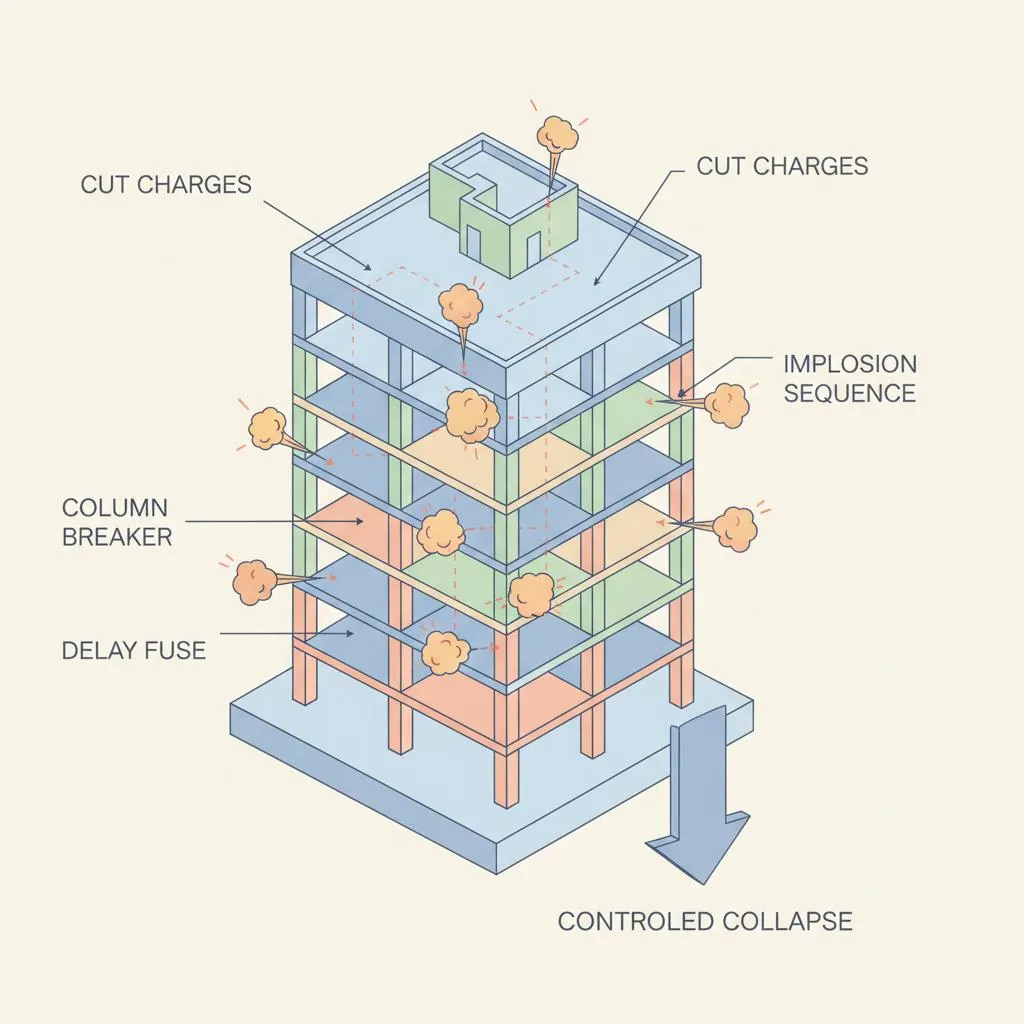
1. Planning and Preparation
Before a single explosive is set, engineers and demolition experts spend weeks sometimes months planning the implosion.
Here’s what that involves:
Structural Analysis: Engineers study blueprints to identify crucial load-bearing columns and supports.
Site Survey: Nearby buildings and areas are inspected to prevent unintended damage.
Pre-Weakening: Crews may remove internal walls or cut structural elements to make the building easier to collapse.
2. Strategic Placement of Explosives
Once the weak points are determined:
Explosives like dynamite are carefully placed along key beams, columns, and supports.
These are programmed to detonate in a specific sequence usually from the bottom up causing the structure to fall inward in a controlled manner.
3. The Implosion (Controlled Detonation)
At the planned moment, the explosives go off in a timed series.
Load-bearing elements fail in a domino effect.
The center of the building often drops first, pulling the rest of the structure inward like a collapsing house of cards.
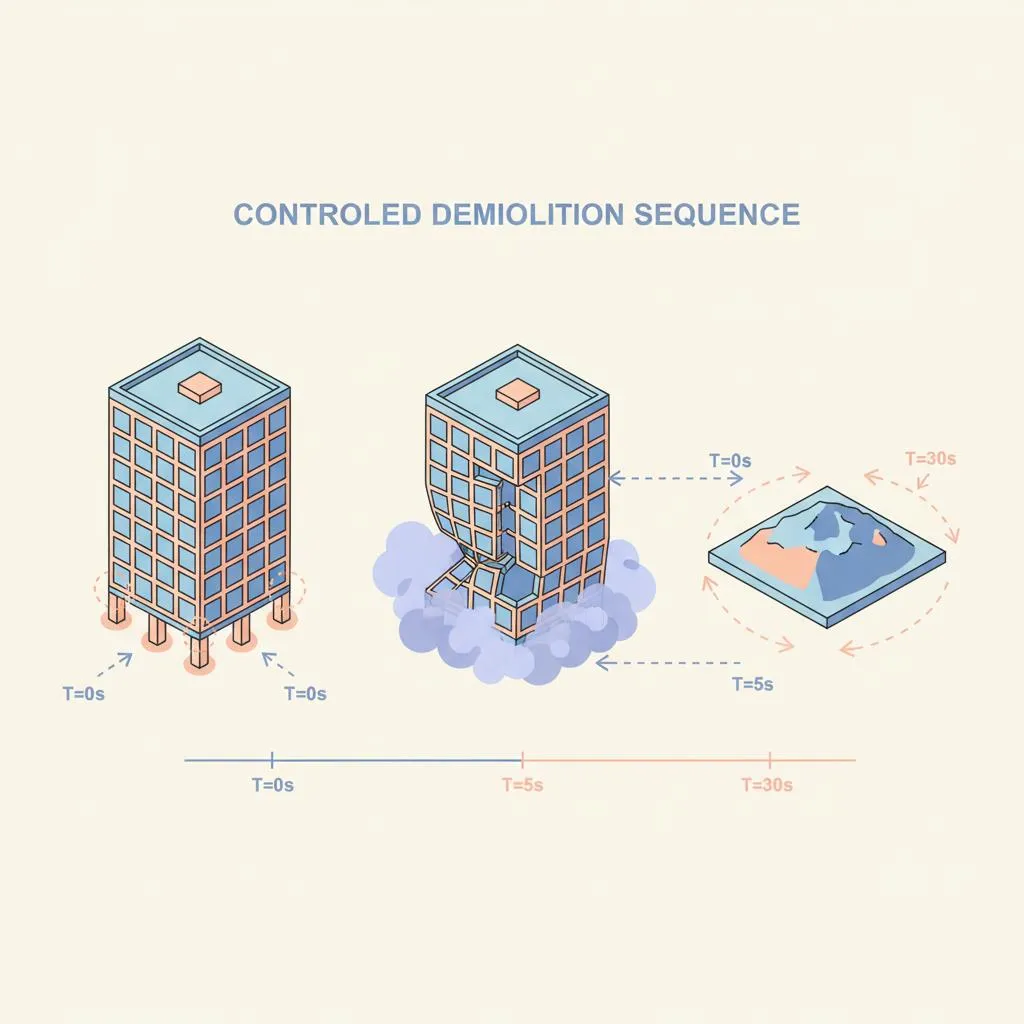
4. Collapse and Cleanup
The goal is a “pancake collapse,” where each floor drops onto the one below.
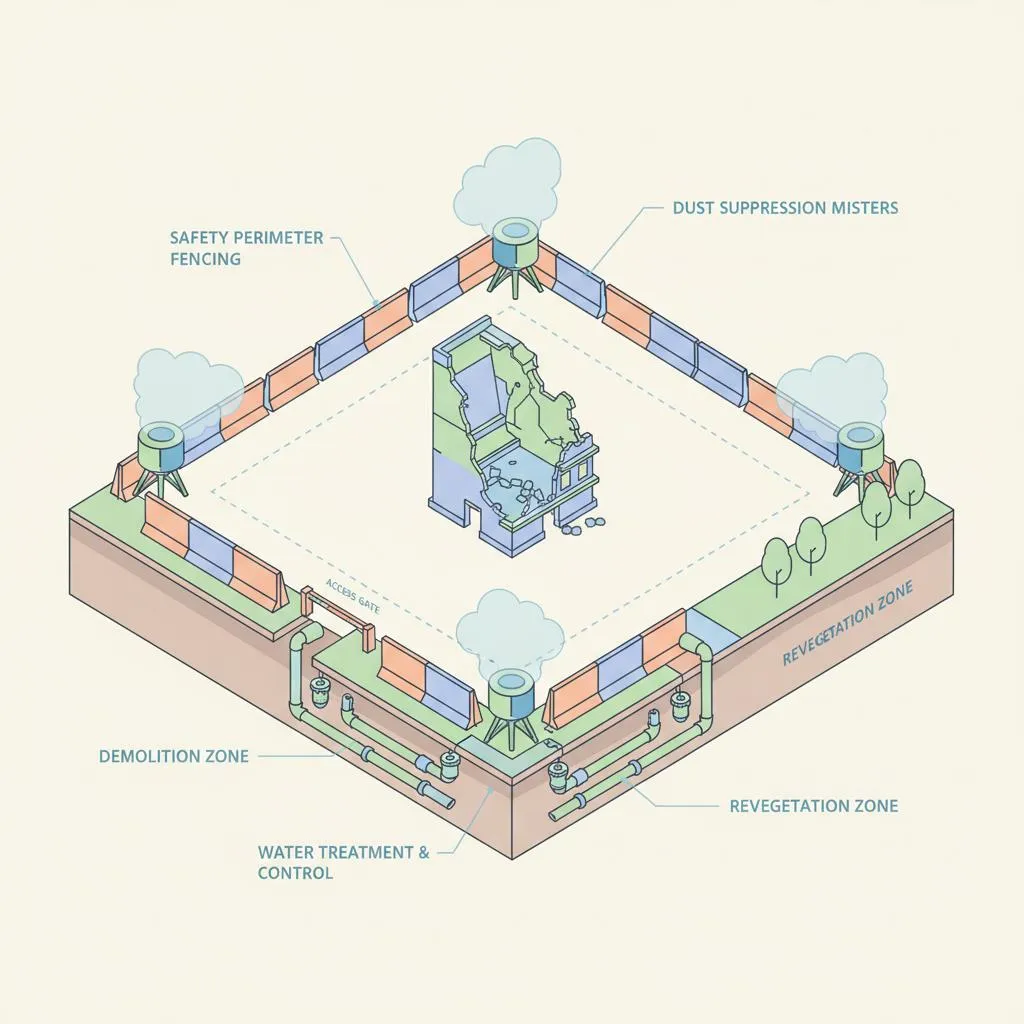
Safety perimeters are enforced around the site.
Dust and debris are managed using water sprays and other environmental controls.
Once the collapse is complete, cleanup crews remove the rubble and assess the area for any residual damage.
Key Considerations
Safety First: Implosions require meticulous planning to protect workers, nearby residents, and surrounding buildings.
Precision Matters: A single error in timing or placement of explosives can result in an unsafe or failed demolition.
Environmental Precautions: Dust clouds and air pollution are common concerns, so water mists, covers, and air monitoring systems are often used.
Why Building Implosion Matters in Real Estate and Urban Redevelopment
Building implosions matter in real estate because demolition is often the first step before redevelopment can begin. In dense urban markets, a controlled implosion can clear obsolete structures faster than slower demolition methods, helping unlock land for new residential, commercial, or mixed-use projects.
This is especially relevant when developers, owners, or municipalities need to remove aging buildings in tight locations where surrounding properties, roads, and utilities leave little room for error. In those cases, implosion is not just a demolition event. It is part of a broader land repositioning and redevelopment strategy.
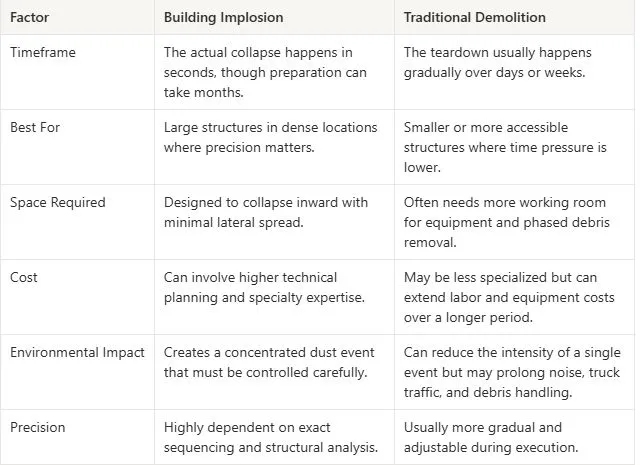
Building Implosion vs Traditional Demolition

Faq’s
1. Is building implosion safe?
Yes, when conducted by experienced professionals, building implosions are highly controlled and safe. Extensive planning, engineering analysis, and safety precautions are in place to protect people, nearby buildings, and the environment.
2. How long does it take to implode a building?
The actual implosion takes just a few seconds. However, the preparation including surveys, planning, permits, and explosive placement can take several weeks to months depending on the size and complexity of the structure.
3. What happens to the debris after an implosion?
After the building collapses, cleanup crews remove the rubble using heavy machinery. Materials like steel, concrete, and other debris are often recycled or disposed of according to local regulations.
4. Why choose implosion over other demolition methods?
Implosion is ideal for large buildings in tight urban spaces where traditional demolition methods might pose risks to surrounding structures. It’s quick, efficient, and minimizes the spread of debris when done correctly.
5. Can any building be imploded?
Not all buildings are suitable for implosion. Factors like construction type, location, surrounding structures, and local regulations determine whether implosion is the best method.
6. How much does a building implosion cost?
Costs vary widely depending on the building’s size, structure, location, permitting requirements, hazardous material removal, and cleanup complexity. The implosion itself is only one part of the total demolition budget.
7. What permits are required for a building implosion?
A building implosion usually requires demolition permits, explosives permits, environmental reviews, safety approvals, and coordination with local authorities, utilities, and emergency services. Requirements vary by jurisdiction and project type.
8. How do implosions affect neighboring properties?
Nearby properties are one of the biggest planning considerations. Vibration, dust, debris risk, road closures, and utility coordination must all be managed carefully before an implosion is approved and executed.
Final Takeaway
Building implosions matter in real estate for the same reason redevelopment itself matters: removing a structure is rarely the end of the story. It is the start of a new investment decision. The real question is not just how a building comes down, but what becomes possible once the site is cleared.
That is where the conversation moves from demolition to strategy. Owners, developers, and investors still need to evaluate timing, zoning, market demand, and redevelopment risk with care. Tools like Leni can help teams work through that analysis faster, but the larger point is simple: an implosion is only valuable if it leads to a better use of the land.


AI in Real Estate Community
Connect with asset managers, operators, and investors navigating AI adoption in real estate.

Latest Help Articles
Learn about how AI is changing the investment world with in-depth research and industry voices.


MEET LENI
Purpose Built Agentic Platform for Investors
Designed for people who want to do serious work using AI.
We Work with Leaders Shaping the Industry
From automating portfolio reporting to market research, learn how leaders are integrating AI in their businesses.
