What is triple net (NNN) vs gross lease in real estate?
_(1).webp&w=1920&q=75)
What is NNN and how does it compare to a gross lease? Learn the key differences to make smarter leasing decisions in commercial real estate.
A triple net (NNN) lease is a commercial lease agreement where the tenant pays base rent plus property taxes, insurance, and maintenance costs. A gross lease, by contrast, is a lease where the landlord covers most or all operating expenses and the tenant pays a single, fixed rent amount.
When leasing commercial real estate, one of the most important decisions for tenants and landlords is choosing between a Triple Net Lease (NNN) and a Gross Lease. These two leasing structures have significantly different financial implications, particularly in terms of who bears the costs of property-related expenses, such as taxes, insurance, and maintenance.
Why This Matters in Commercial Real Estate
Understanding the difference between NNN and gross leases is essential because it directly impacts your bottom line. For tenants, the lease type determines budgeting predictability and operational responsibilities. For landlords, it affects cash flow stability and property management obligations. Choosing the wrong lease structure can lead to unexpected costs, cash flow problems, or disputes between parties.
In this guide, we break down the key differences betweentriple net vs gross lease, their pros and cons, real-life examples, and how to choose the best lease type for your situation.
_(1).webp)
is a Gross Lease?
A Gross Lease, also known as a full-service lease, is a rental agreement where the landlord pays for most or all property-related expenses. This includes:
Property taxes
Building insurance
Maintenance and repairs
Sometimes even utilities
In this type of lease, the tenant pays a fixed monthly rent and fluctuating operating costs. This lease structure is commonly used in office buildings or multi-tenant commercial properties, where shared services and expenses are allocated more easily.
Why tenants prefer it:
Easy to budget
No surprise expenses
The landlord handles maintenance and repairs
What is a Triple Net Lease (NNN)?
A Triple Net Lease (NNN) shifts the responsibility of most property-related expenses to the tenant. In this agreement, the tenant pays:
Base rent
Net taxes (property taxes)
Net insurance (building insurance)
Net maintenance (repairs, upkeep, landscaping)
This lease structure is common in retail spaces, freestanding buildings, and industrial properties with long-term, single tenants.
Why landlords prefer it:
Lower financial burden
Predictable cash flow
Long-term tenant commitment
When Each Lease Type is Commonly Used
Gross Lease:
Multi-tenant office buildings where shared expenses are easier to manage
Startups and small businesses seeking predictable monthly costs
Short-term leases or businesses with limited real estate experience
Properties with unpredictable operating costs
Triple Net Lease (NNN):
Single-tenant retail properties (e.g., fast food chains, pharmacies, banks)
Freestanding commercial buildings
Industrial and warehouse properties
Long-term leases (10+ years) with creditworthy tenants
Investment properties where landlords want passive income
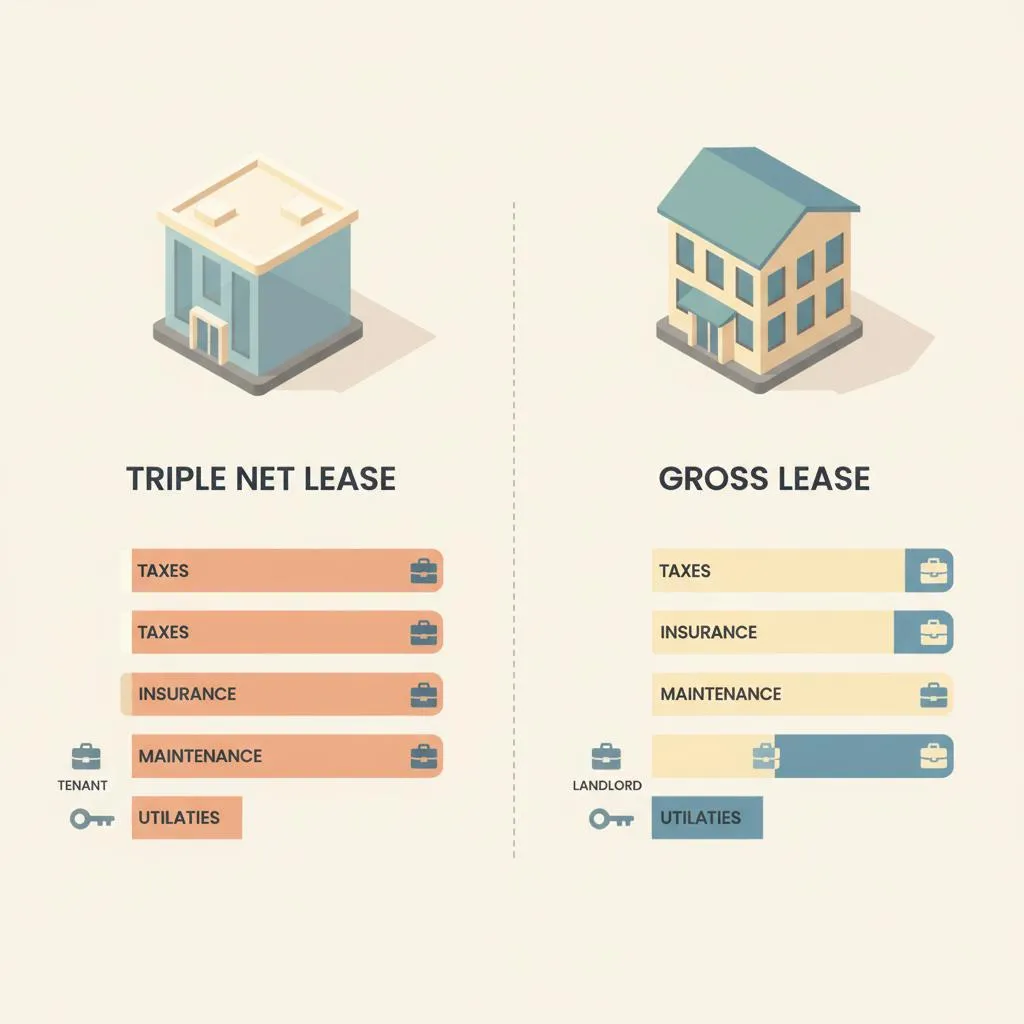
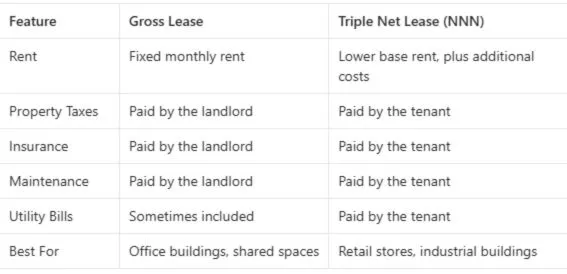
Triple Net vs Gross Lease: Side-by-Side Comparison
Modified Gross Lease and Single Net Lease: The Middle Ground
Not all leases are strictly gross or NNN. Some hybrid options include:
Modified Gross Lease
The tenant pays base rent plus some operating expenses (e.g., utilities, minor repairs), while the landlord handles taxes and insurance. This flexible lease structure is popular when both parties want to share responsibilities.
Single Net Lease (N Lease)
The tenant pays base rent and property taxes. The landlord remains responsible for maintenance and insurance. This is a lighter version of NNN but still shifts some cost to the tenant.
Why These Leases Serve as the Middle Ground
Modified gross and single net leases offer flexibility that pure gross or NNN leases do not. They allow landlords and tenants to negotiate expense responsibilities based on their specific needs, risk tolerance, and the property type. These hybrid structures are particularly useful when neither party wants to assume full responsibility for operating costs, or when market conditions favor a compromise between the two extremes.
Real-Life Example
Let’s compare how a business might pay under each lease:
Gross Lease Example:A tenant pays $5,000/month. That includes rent, taxes, insurance, maintenance, and utilities. The amount is fixed and predictable.
Triple Net Lease Example:A tenant pays $3,500/month in base rent, plus $500 in taxes, $400 in insurance, and $600 in maintenance, totaling $5,000/month. But these extra costs can increase over time based on actual bills.
Practical Implications
For Tenants:
With a gross lease, you can budget with certainty since your monthly payment is fixed
With a NNN lease, you should budget for potential increases in taxes, insurance, and maintenance costs
Always review what CAM (Common Area Maintenance) charges may apply and how they are calculated
Request historical expense data before signing a NNN lease to estimate true costs
For Landlords:
NNN leases provide more predictable net income since operating expenses are passed through to tenants
Gross leases may be easier to market to smaller tenants who prefer simplicity
Consider the tenant's creditworthiness when offering NNN leases, as they must reliably cover variable expenses
Factor in property management costs when deciding which lease structure to offer
Pros and Cons of Triple Net vs Gross Lease
Gross Lease Pros:
Simple budgeting for tenants
Landlord handles all maintenance
Ideal for multi-tenant properties
Gross Lease Cons:
Higher base rent
Less transparency for tenants on real costs
Triple Net Lease (NNN) Pros:
Lower base rent
Tenants control expenses like maintenance
Ideal for long-term leases
Triple Net Lease Cons:
Unpredictable costs
Tenant bears full financial responsibility
More risk for small businesses
Choosing the Right Lease: NNN or Gross?
Here’s how to decide:
Tenants looking for cost stability and low responsibility should choose a gross lease.
Landlords looking to reduce financial risk and responsibility often prefer triple net leases.
Flexible businesses or investors may opt for modified gross leases as a balance.
Decision Framework for Landlords and Tenants
Ask yourself these questions when choosing a lease type:
For Tenants:
How important is budget predictability to my business?
Do I have the resources to manage property maintenance?
How long do I plan to occupy this space?
Can I absorb potential cost increases in taxes or insurance?
For Landlords:
Do I want hands-on property management or passive income?
What type of tenants am I targeting?
How stable are the property's operating costs?
What lease structure is standard in my market and property type?
Final Thoughts
Understanding the difference between triple net (NNN) vs gross lease is key to making smart commercial leasing decisions. Both lease types offer unique benefits depending on the goals and capabilities of the landlord and tenant.
Need help navigating commercial leases or investment strategies? Let our experts guide you toward the right leasing structure for your property.
FAQs – Triple Net vs Gross Lease
Q: What does NNN mean in commercial real estate?
A: NNN stands for Triple Net Lease, where tenants pay for property taxes, insurance, and maintenance in addition to base rent.
Q: Is a gross lease better for tenants?
A: Yes, it offers predictable costs and minimal responsibility, especially good for startups and small businesses.
Q: Can rent be lower in a triple net lease?A: Yes, but since tenants pay additional costs, the total monthly outlay can still be high.
Q: Are NNN leases common in retail spaces?A: Absolutely. Many national retail chains use NNN leases for freestanding buildings.
Q: What is a double net (NN) lease?
A: A double net lease requires the tenant to pay base rent plus property taxes and insurance, while the landlord remains responsible for maintenance and structural repairs. It falls between a single net lease and a triple net lease in terms of tenant responsibility.
Q: Can lease terms be negotiated between NNN and gross?
A: Yes, most commercial lease terms are negotiable. Many landlords and tenants agree on modified gross or other hybrid arrangements that split responsibilities in ways that work for both parties. Always consult with a commercial real estate attorney or broker when negotiating lease terms.


AI in Real Estate Community
Connect with asset managers, operators, and investors navigating AI adoption in real estate.

Latest Help Articles
Learn about how AI is changing the investment world with in-depth research and industry voices.


MEET LENI
Purpose Built Agentic Platform for Investors
Designed for people who want to do serious work using AI.
We Work with Leaders Shaping the Industry
From automating portfolio reporting to market research, learn how leaders are integrating AI in their businesses.
