Property Manager vs Asset Manager: Roles & AI Workflows
.webp&w=1920&q=75)
Property Manager vs Asset Manager: Roles & AI Workflows
The commercial real estate industry operates on two distinct but interconnected tracks: day-to-day property operations and long-term investment strategy. Understanding the property manager vs asset manager distinction is essential for anyone involved in CRE, from investors to executives, because these roles require fundamentally different skill sets, tools, and technology solutions. While both positions aim to maximize property value, their daily workflows, success metrics, and analytical needs diverge significantly. This comprehensive guide breaks down exactly what separates these roles, how their workflows differ, and what modern AI technology can do for each.
Understanding the Core Distinction Between Property Manager and Asset Manager Roles
The property manager vs asset manager debate centers on operational execution versus strategic direction. Property managers handle the daily mechanics of building operations: tenant relationships, maintenance coordination, rent collection, and lease administration. Asset managers focus on investment performance: portfolio strategy, capital allocation, acquisition analysis, and investor reporting.
Property managers measure success through:
Occupancy rates and tenant retention
Rent collection efficiency (days outstanding)
Maintenance response times
Lease renewal percentages
Operating expense ratios
Asset managers track performance via:
Net Operating Income (NOI) variance to budget
Internal Rate of Return (IRR) and cash-on-cash returns
Portfolio-level occupancy trends
Cap rate compression or expansion
Investment thesis validation
According to Forbes Business Council, the distinction becomes critical during investment decisions, where asset managers set strategic direction while property managers execute the operational plan that delivers those returns. The challenge in 2026 is that both roles drown in manual data work that prevents them from focusing on their core responsibilities.
Property Manager Daily Workflow: Operations and Execution
Property managers live in a world of recurring tasks and immediate problem-solving. Their typical day begins with delinquency reports, reviewing which tenants are past due and by how many days. They track leasing activity, coordinate showings, and monitor maintenance requests that come through property management systems like Yardi, RealPage, or Entrata.
The manual work cycle looks like this:
Pull overnight delinquency reports from the PMS
Categorize past-due amounts by aging bucket (30/60/90+ days)
Generate weekly occupancy and leasing activity reports
Compile maintenance spending by category and property
Prepare budget variance reports for ownership review
Respond to tenant communications and coordinate vendor scheduling
This operational rhythm generates massive amounts of data that needs constant monitoring. Property managers spend significant time extracting information from their property management system, formatting it for different stakeholders, and identifying trends that require action. The National Property Management Authority emphasizes that property management success depends on consistent execution of these recurring processes.
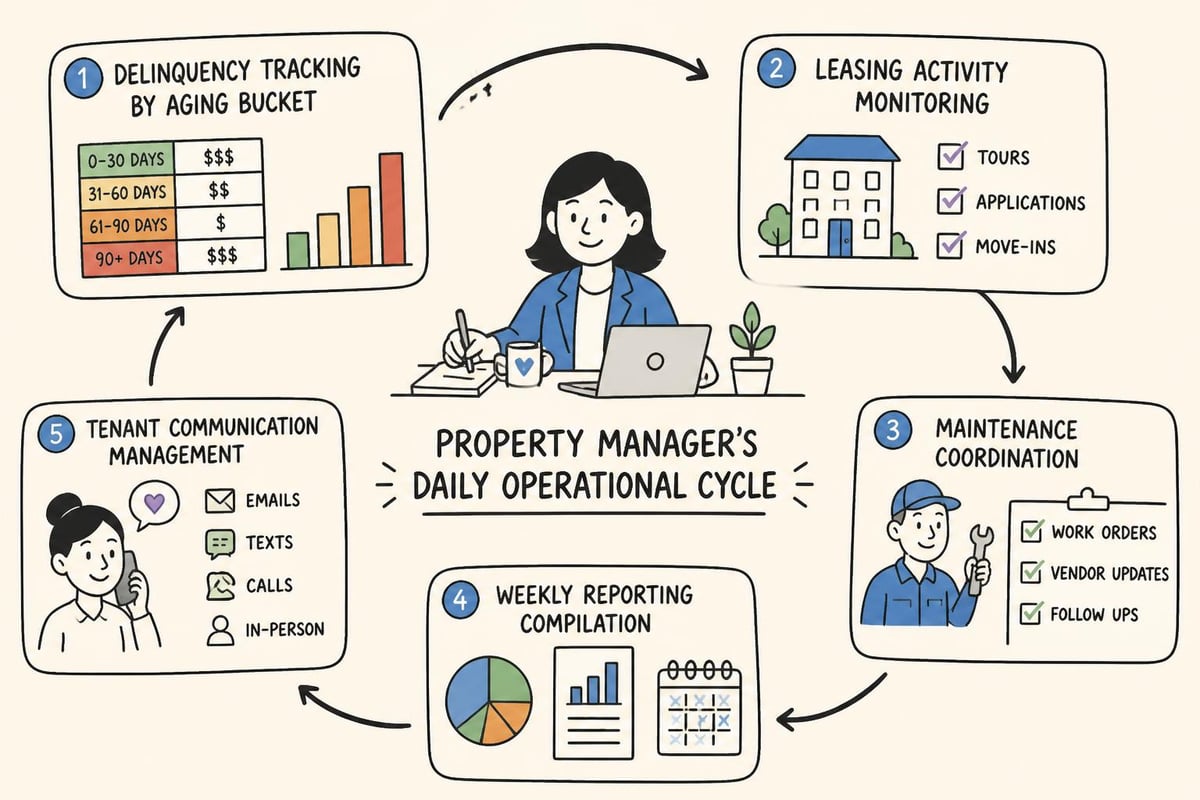
Modern AI platforms designed for property managers automate these recurring reports, monitor delinquency by aging bucket, and flag anomalies via intelligent alert systems. Teams can upload property documents and financial statements without requiring full PMS integration to start automating workflows. When ready for deeper automation, direct connectivity to Yardi, RealPage, and Entrata becomes available.
Asset Manager Investment Cycle: Strategy and Performance
Asset managers operate on a different timeline entirely. Their focus extends beyond individual properties to portfolio-level strategy, market positioning, and investor relations. The asset manager vs property manager workflow distinction becomes most apparent during quarterly reviews, acquisitions analysis, and Investment Committee (IC) preparation.
Strategic Analysis and Market Research
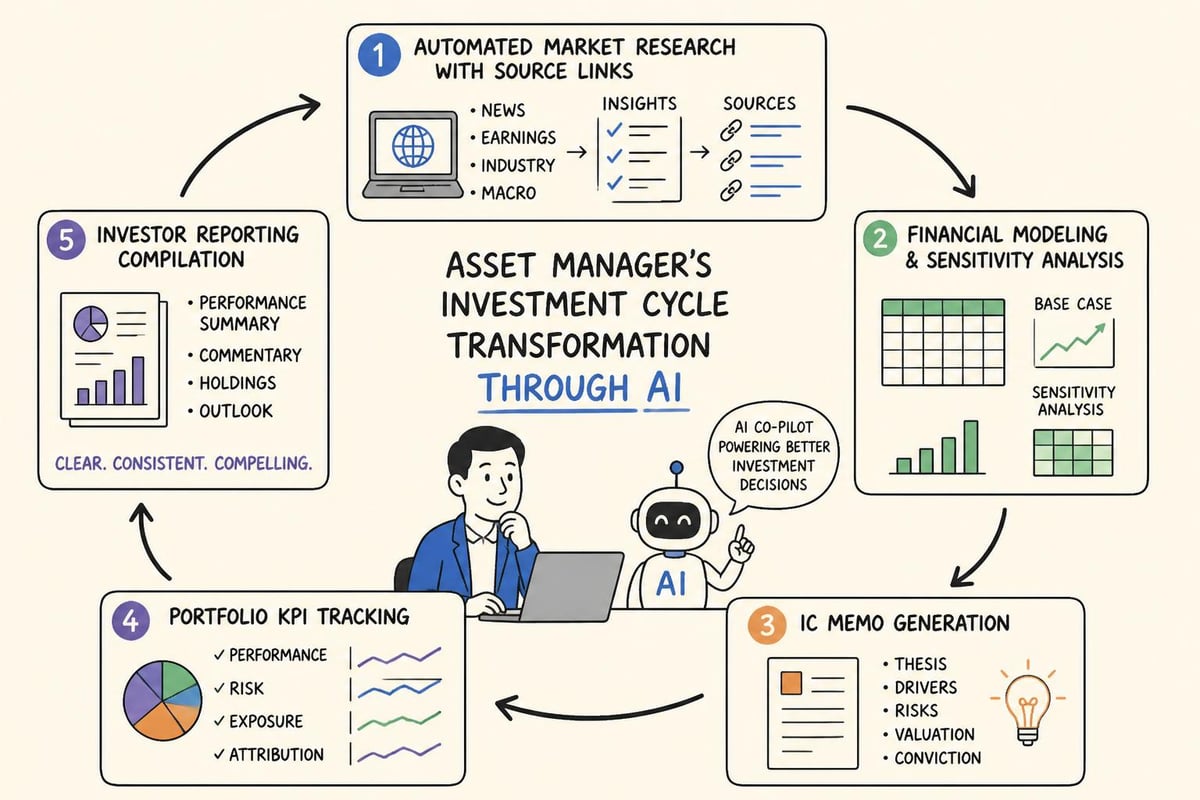
Asset managers spend considerable time on market research and competitive analysis. They need to understand rental rate trends across submarkets, track comparable property sales, monitor cap rate movements, and identify acquisition opportunities that fit their investment thesis.
The typical asset manager research workflow involves:
Pulling comparable rent data from multiple sources (CoStar, Yardi Matrix, local brokers)
Analyzing submarket absorption rates and construction pipelines
Building financial models for acquisition opportunities
Creating sensitivity analyses around key assumptions
Drafting investment memos with market context and risk factors
This work traditionally requires analysts to spend days compiling data from disparate sources, building Excel models, and formatting presentations for senior leadership. Commercial Real Estate Loans notes that asset managers must synthesize both property-specific performance data and broader market trends to make informed investment decisions.
Advanced AI analyst platforms now handle this multi-step analytical work autonomously, running live source-linked market research, building underwriting models, and drafting IC memos with direct citations to source documents. This enables asset managers to focus on strategic decision-making rather than data aggregation.
NOI Variance Analysis and Budget Performance
Every asset manager lives and dies by NOI performance relative to budget and underwriting assumptions. Monthly variance analysis consumes hours of manual work: pulling actuals from property management systems, comparing them to budgeted line items, calculating percentage variances, and investigating material differences.
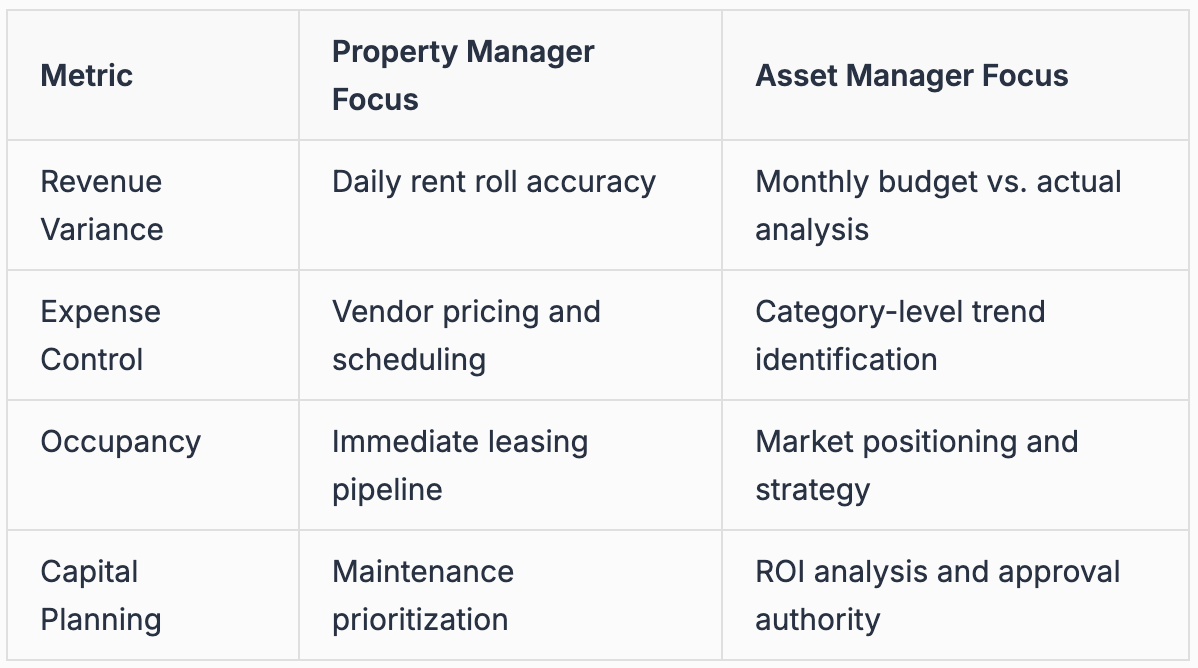
The asset manager needs to understand whether underperformance stems from market conditions, operational execution, or flawed initial assumptions. This requires drilling into property-level details while maintaining portfolio-level perspective. Platforms offering AI multifamily portfolio analytics enable asset managers to track portfolio KPIs automatically, identify outlier properties, and generate variance explanations without manual spreadsheet work.
Where Manual Work Slows Both Roles and What AI Changes
The property manager vs asset manager distinction becomes less important when examining where manual processes create bottlenecks for both. Data extraction, report generation, and analysis consume time that should be spent on strategic thinking and relationship management.
Property Manager Pain Points
Property managers typically spend 15-20 hours per week on reporting and data compilation:
Extracting data from Yardi, RealPage, or Entrata into Excel
Reformatting reports for different owner requirements
Manually categorizing expenses and variance drivers
Creating weekly dashboards for ownership review
Tracking down missing information across lease files and systems
AI automation eliminates these recurring tasks through AI PMS integration that pulls data automatically, formats it according to stakeholder preferences, and delivers alerts when metrics fall outside normal ranges. Property managers can start with document uploads (leases, budgets, financial statements) and receive immediate analytical value without waiting for full system integration.
Asset Manager Bottlenecks
Asset managers face different but equally time-consuming manual work:
Market Research Compilation: Gathering rental comps, sales comps, and market reports from 5-10 different sources
Financial Modeling: Building acquisition models with 15-20 interconnected tabs and multiple scenario analyses
IC Memo Creation: Writing 20-30 page investment memos with market context, risk analysis, and financial projections
Portfolio Monitoring: Updating portfolio dashboards with current performance across 10-50+ properties
Investor Reporting: Preparing quarterly performance reports with property-level detail and portfolio summaries
The Multifamily Executive explores whether these roles have merged, but the reality is that technology can now handle the overlap. Asset managers using AI underwriting platforms can run complete financial models, market research, and IC memo drafts in hours instead of days, with verifiable outputs linked directly to source documents.
How AI Platforms Serve Both Property Managers and Asset Managers
The property manager vs asset manager distinction requires purpose-built AI that understands both operational workflows and investment analysis. General-purpose AI tools cannot handle the multi-step, domain-specific tasks that commercial real estate demands.
For Property Managers: Operational Automation
Property managers benefit from AI that connects directly to their daily workflow:
Automated Delinquency Monitoring: Track past-due amounts by aging bucket with automatic alerts when accounts cross critical thresholds
Leasing Activity Dashboards: Monitor tour activity, application status, and lease execution progress across properties
Maintenance Spend Analysis: Categorize vendor invoices automatically and flag unusual spending patterns
Weekly Reporting: Generate standardized reports for ownership with one-click updates
Anomaly Detection: Receive alerts when key metrics deviate from historical patterns or budget expectations
These capabilities work whether teams upload documents manually or connect directly to property management systems. The reporting tools designed for property managers handle both scenarios, delivering immediate value while enabling deeper automation over time.
For Asset Managers: Strategic Intelligence
Asset managers need AI that handles complex, multi-step analytical tasks:
Market Research and Analysis
Run live searches across multiple data sources with automatic citations
Compile comparable rent and sales data with standardized formatting
Track submarket trends and construction pipeline impacts
Generate market summaries with quantitative support
Financial Modeling and Underwriting
Build complete acquisition models from property documents and market data
Run sensitivity analyses across key assumptions
Calculate returns (IRR, equity multiple, cash-on-cash) with proper timing
Extract lease terms and rent rolls from PDF documents automatically
Investment Committee Preparation
Draft IC memos with executive summary, market analysis, and risk factors
Create presentation decks with property photos, maps, and financial summaries
Link all conclusions to source documents for verification
Update models based on committee feedback and new information
Real estate professionals including Wendy Dean, Esq. Realtor and Associate Broker emphasize the importance of data-driven decision-making in property transactions, and asset managers need tools that deliver verifiable insights rather than black-box recommendations.
The Data Security and Integration Requirements
Both property managers and asset managers handle sensitive financial information, tenant data, and proprietary investment strategies. Any AI platform serving commercial real estate must meet institutional security standards.
Security and Compliance Essentials
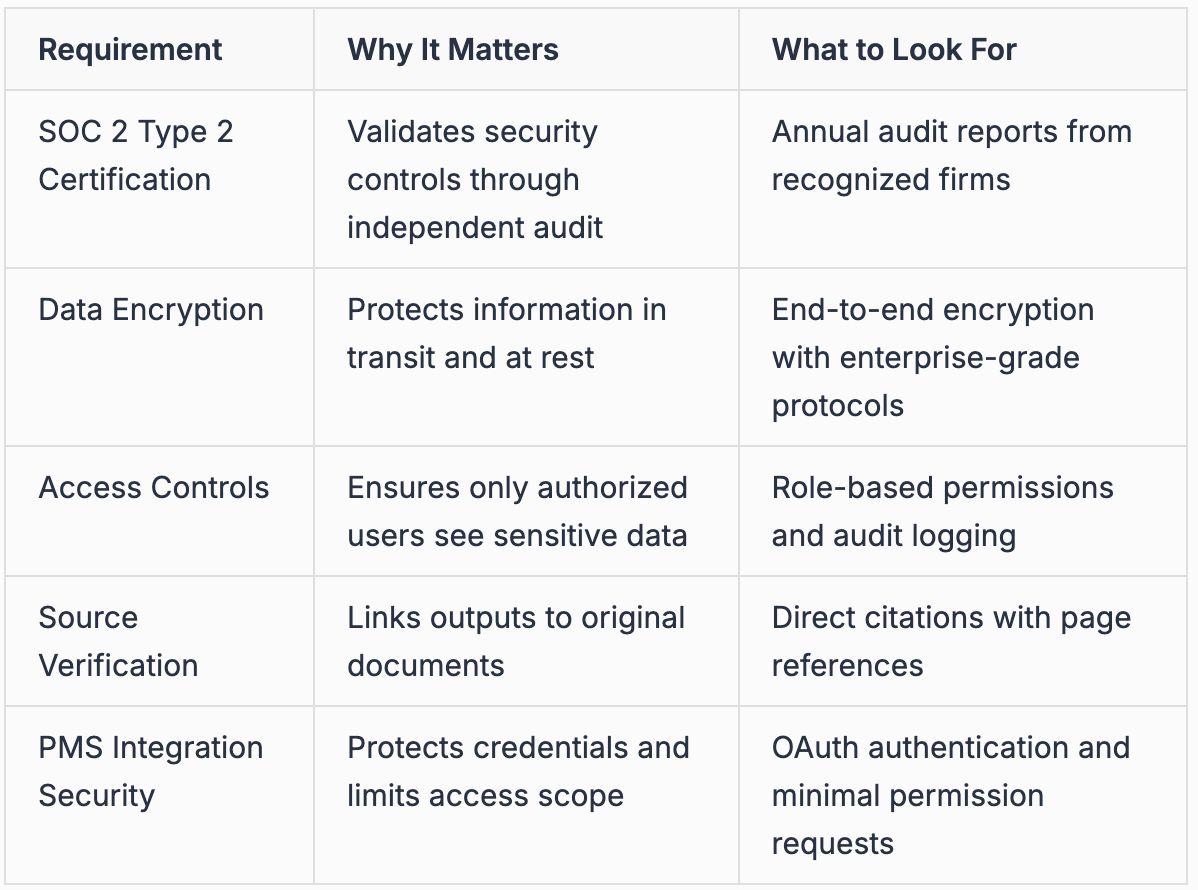
Platforms serving institutional real estate require SOC 2 Type 2 certification at minimum. This third-party validation ensures that security controls actually work as described, not just that policies exist on paper. Asset managers conducting commercial real estate deal analysis cannot risk data breaches or compliance violations.
Integration Approaches: Flexibility Without Compromise
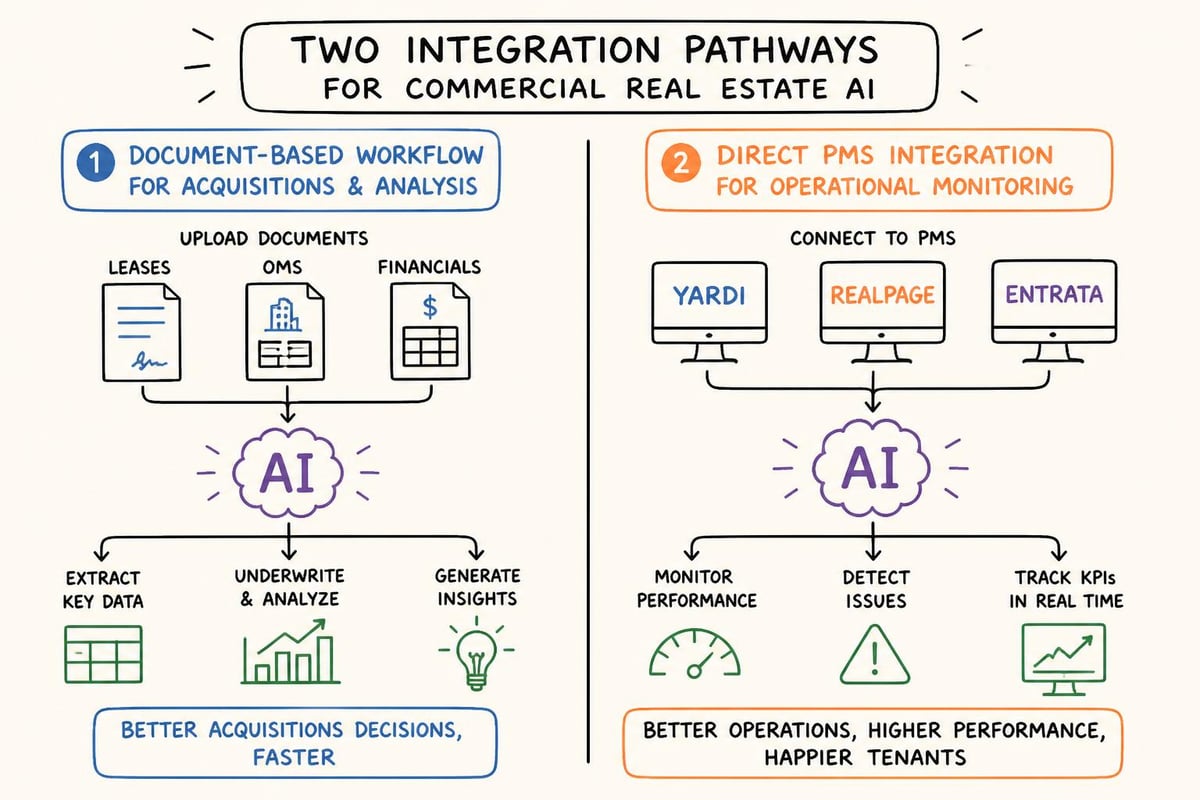
The property manager vs asset manager technology needs differ in integration urgency. Property managers benefit most from direct PMS connectivity, while asset managers often work with documents before property management systems are even involved (during acquisitions).
Document-Based Workflow
Upload leases, rent rolls, operating statements, and offering memorandums
Extract data automatically using AI document parsing
Build models and generate reports without system integration
Ideal for acquisitions teams and early-stage analysis
Direct PMS Integration
Connect to Yardi, RealPage, Entrata for real-time data access
Automate recurring report generation without manual exports
Monitor live performance against budgets and forecasts
Best for property managers and portfolio monitoring
Both approaches should be available, allowing teams to start with document uploads and expand to system integration as needs evolve. The key is ensuring that AI outputs remain verifiable regardless of data source, with direct links back to the original information.
Practical Implementation: Starting with Either Role
Whether you lead property management or asset management, implementing AI successfully requires understanding your specific pain points and starting with high-impact use cases.
Property Manager Quick Start
Identify Your Most Time-Consuming Reports: What do you create weekly that follows the same format every time?
Gather Representative Documents: Collect 2-3 months of the data sources you currently use (PMS exports, budgets, prior reports)
Upload and Test: Start with document uploads to prove value before pursuing PMS integration
Define Alert Thresholds: Set the variance levels and anomaly triggers that should generate notifications
Expand Gradually: Add more properties and report types as you validate accuracy
Asset Manager Implementation Path
Choose a Representative Deal: Select an upcoming acquisition or recent transaction where you have complete documentation
Test Market Research: Run AI-powered market research for that submarket and compare results to what your team compiled manually
Build a Parallel Model: Have AI create the financial model alongside your internal analysis to validate calculations
Review IC Memo Output: Evaluate whether AI-generated memos capture the key points your investment committee expects
Measure Time Savings: Track hours saved on each task to quantify ROI before rolling out to the full team
According to Syndication Attorneys, clear role definition between asset managers and property managers includes understanding which technologies serve each function. The implementation approach should reflect those distinct needs while recognizing opportunities for shared infrastructure.
The Evolution of Property Manager vs Asset Manager Roles
The commercial real estate industry has seen these roles evolve significantly over the past decade. Property managers increasingly need analytical capabilities, while asset managers must understand operational details that drive performance. This doesn't mean the roles are merging, it means both require better tools.
How Technology Changes Role Boundaries
Historically, asset managers remained distant from daily operations, reviewing monthly reports and meeting quarterly with property management teams. Property managers focused exclusively on tenant relationships and vendor management without portfolio-level visibility. Technology has blurred these boundaries in productive ways:
Property Managers Gain Strategic Context
Access to portfolio-level benchmarking shows where their property ranks
Understanding budget constraints helps prioritize capital requests
Market data supports lease negotiation and renewal strategies
Performance trends identify proactive opportunities
Asset Managers Access Operational Detail
Real-time visibility into leasing activity without waiting for monthly reports
Immediate awareness of expense anomalies or variance drivers
Ability to drill from portfolio metrics to individual line items
Direct access to source documents supporting all reported numbers
Tools offering AI data visualization enable both roles to work from the same underlying data with different views and analysis depths. This shared foundation improves collaboration without eliminating the property manager vs asset manager functional distinction.
The Importance of Accurate, Verifiable Outputs
General-purpose AI tools present a significant risk in commercial real estate: they generate confident-sounding answers without reliable verification. Asset managers making multimillion-dollar decisions and property managers managing investor relationships cannot accept outputs that might be hallucinated or based on outdated information.
Verification requirements include:
Direct links to source documents for every data point
Page number references for information extracted from PDFs
Timestamps showing when market data was accessed
Clear indication when information comes from historical records versus current market
Audit trails showing how calculations were performed
Platforms purpose-built for commercial real estate understand these requirements. The more property data and market information these systems ingest, the more accurate their outputs become, creating a compounding advantage over time. Asset managers exploring real estate investment analysis software should prioritize verification capabilities alongside analytical power.
Measuring Success Across Both Roles
The property manager vs asset manager distinction extends to how success is measured and reported. Both roles contribute to property value, but through different mechanisms and timeframes.
Property Manager Success Metrics
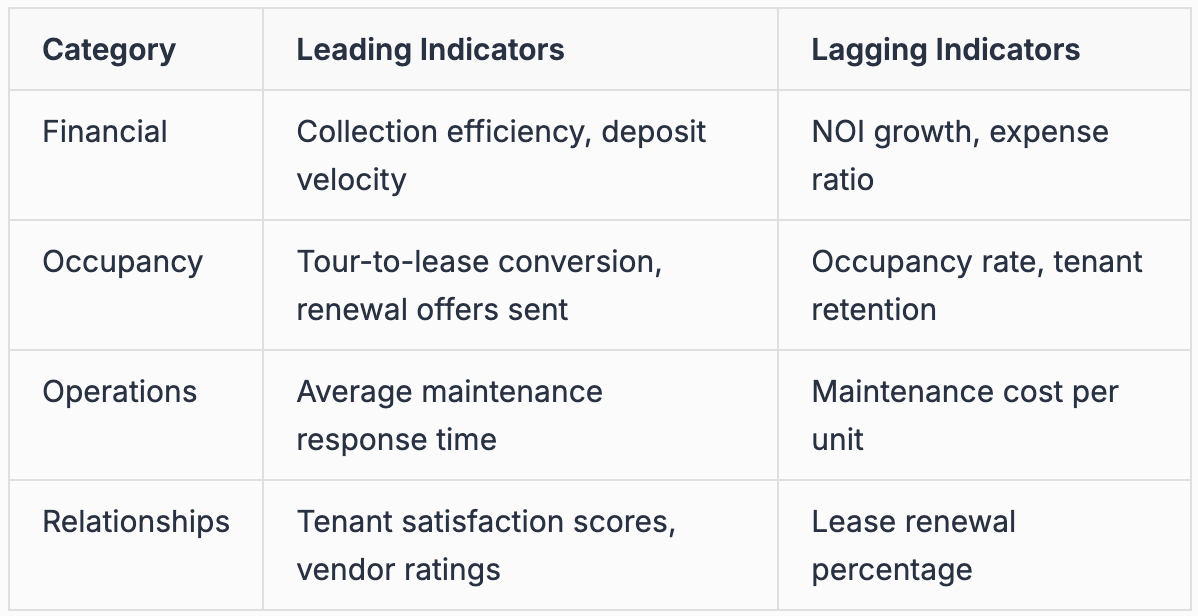
Property managers should track these metrics weekly or monthly, with AI platforms automatically calculating trends and flagging degradation before it impacts financial performance. The goal is early identification and rapid response.
Asset Manager Performance Tracking
Asset managers measure success against investment underwriting and portfolio strategy:
Returns: Actual IRR and equity multiple versus underwritten projections
NOI Performance: Current NOI as percentage of Year 1/stabilized underwriting
Value Creation: Estimated current value versus purchase price plus invested capital
Portfolio Health: Occupancy, renewal rates, and expense ratios relative to market
Strategic Execution: Achievement of value-add milestones and timing targets
These metrics typically operate on quarterly or annual cycles, though modern platforms enable continuous monitoring. Asset managers using AI tools for business analysts can track all properties simultaneously rather than reviewing them sequentially during quarterly business reviews.
Building the Technology Stack for Property and Asset Management
Forward-thinking real estate organizations recognize that property managers and asset managers need different capabilities from the same underlying platform. The solution isn't two separate systems, it's purpose-built commercial real estate AI with role-specific interfaces.
Core Platform Requirements
Data Foundation
Integration with major property management systems (Yardi, RealPage, Entrata)
Document extraction from leases, OMs, appraisals, and financial statements
Market data connectivity for research and comparable analysis
Historical performance storage for trend identification
Analytical Capabilities
Financial modeling and underwriting automation
Portfolio performance monitoring with customizable dashboards
Variance analysis comparing actual to budget and forecast
Market research with live data and automatic citations
Workflow Automation
Multi-step task execution without supervision
Report generation on defined schedules
Alert triggering based on custom thresholds
IC memo and presentation deck creation
Security and Governance
SOC 2 Type 2 certification minimum
Role-based access controls
Complete audit trails
Source verification for all outputs
Organizations implementing real estate automation should evaluate whether platforms truly understand commercial real estate workflows or simply apply general AI to the industry. The difference becomes apparent in output quality, verification capabilities, and ability to handle complex multi-step tasks.
Training AI on Your Portfolio Data
Generic AI tools perform poorly in commercial real estate because they lack domain-specific knowledge and access to relevant data. The solution is AI that learns from your actual portfolio, improving accuracy as it ingests more information about your properties, markets, and investment approach.
Data types that improve AI performance:
Historical financial statements showing seasonal patterns and typical variance
Lease documents revealing common terms and tenant structures
Prior underwriting models demonstrating investment criteria and assumptions
Market research reports indicating credible data sources and analytical frameworks
IC memos establishing preferred narrative structure and risk assessment approach
The more data the platform processes, the better it understands your portfolio characteristics, investment thesis, and reporting preferences. This creates a moat that general-purpose AI cannot replicate.
Understanding the property manager vs asset manager distinction enables real estate organizations to deploy the right tools for each role while recognizing where collaboration creates value. Property managers need operational automation that monitors daily metrics, generates recurring reports, and flags anomalies requiring intervention. Asset managers require strategic intelligence that handles market research, financial modeling, IC preparation, and portfolio tracking. Purpose-built commercial real estate AI platforms serve both functions through role-specific interfaces built on a shared data foundation. Leni delivers exactly this capability: property managers automate reporting and monitoring while asset managers run complex analyses, all with SOC 2 Type 2 certified security and verifiable outputs linked to source documents.

Johanna Gruber
Johanna has spent the last 8 years helping marketing teams connect with audiences through content. Specializing in B2B SaaS and real estate.

Curious About AI?
Join the largest AI community for real estate online. Get bite-sized, real-world use case videos, plus practical tips and proven strategies from top industry experts on adopting AI effectively.
MEET LENI
AI SuperAgent Purpose Built for Investors and Operators.
Experience how professionals and teams in your domain are getting the edge using AI.
