AI in Real Estate: How Teams Are Actually Using It in 2026

AI in Real Estate: How Teams Are Actually Using It in 2026
AI has been in the real estate conversation for a while now. What has changed in 2026 is what teams expect it to do.
A few years ago, most of the discussion was about search, chatbots, automated valuations, and quick summaries. Useful, yes. But also pretty narrow. And when we talk about an industry like Real Estate, the question arises.
Can AI help with the actual work?
I am talking about the work that shows up every week for real estate teams: reviewing deal materials, researching markets, updating underwriting, preparing investment committee materials, monitoring portfolio performance, and getting reports ready for investors or leadership.
That is where AI in real estate is getting interesting.
Most firms already have plenty of information. They have spreadsheets, offering memorandums, rent rolls, leases, T12s, property management data, market reports, lender documents, shared drives, and years of old memos.
Phase #1: The problem was not finding more information. That is solved. We are now at Phase #2, wher the problem is turning that information into something your team can use before the next meeting.
So in this piece, I want to walk through where real estate teams are actually using AI right now, what those workflows look like, and where human judgment still matters.
What AI in real estate means now
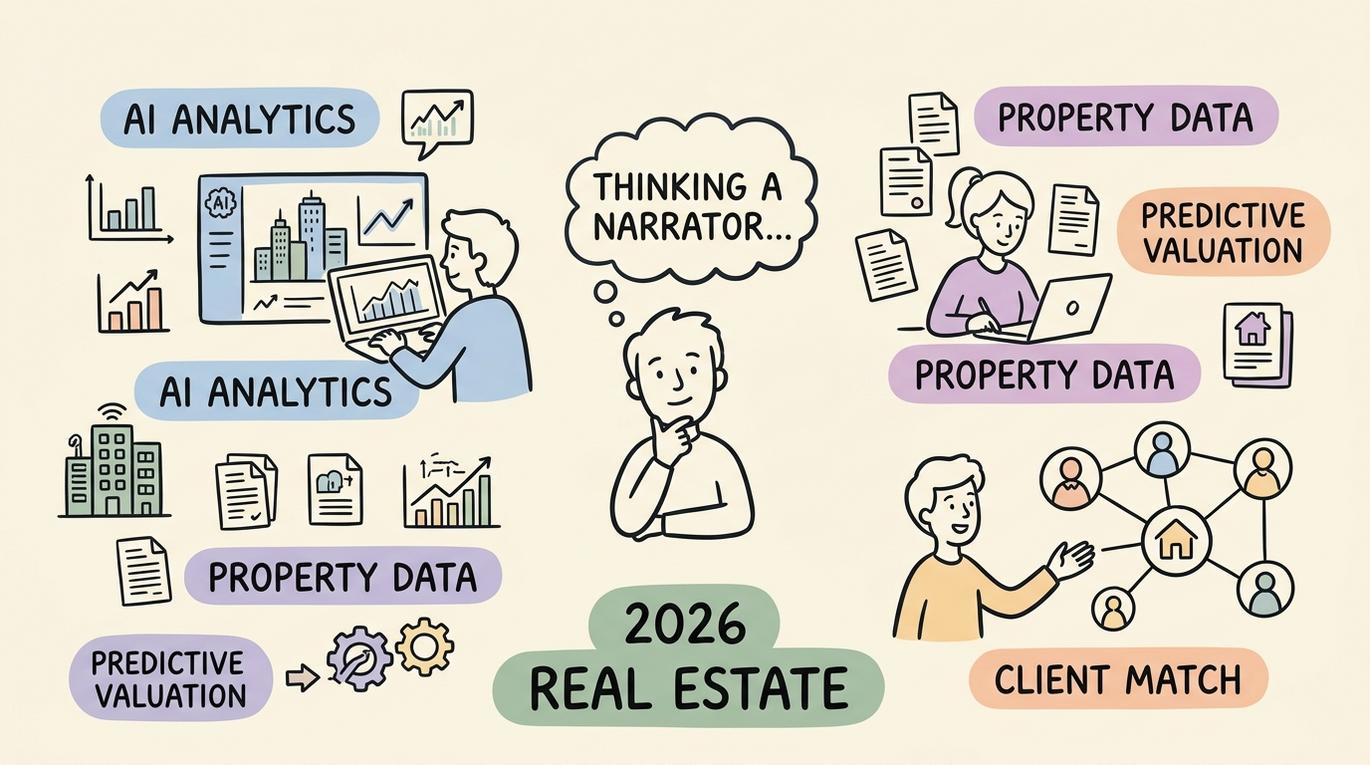
AI in real estate means using artificial intelligence to help read, organize, analyze, and complete work across the real estate lifecycle.
That can start with something simple.
You might ask AI to summarize an offering memorandum, extract lease terms, classify documents, or answer a question about a property.
But the more useful workflows usually involve more than one step.
For example, an acquisitions team looking at a new deal might need to:
Review the offering memorandum
Pull assumptions from the rent roll and T12
Research the submarket
Find comparable properties
Update an underwriting model
Check downside scenarios
Summarize the risks
Prepare the first version of an IC memo
That is the difference I care about.
AI is moving from answering a single question to helping move a workflow forward.
Where teams are using AI in real estate
There is no single use case that fits every company.
An acquisitions team looking at 200 deals a year has different needs than an asset manager overseeing an existing portfolio. A lender, developer, property manager, and investment committee all work with different information.
Still, I keep seeing a few areas come up.
1. Market research
Market research is one of the easiest places to understand the value of AI.
If you have ever researched a market for an investment memo, you know the drill.
You are looking at population growth, employment trends, new supply, rent growth, vacancy, comparable properties, recent transactions, neighborhood plans, and local economic drivers.
That usually means jumping between market databases, broker materials, public sources, spreadsheets, and old internal notes.
AI can help pull that information together and organize it around the actual investment question.
For example, instead of asking for a generic market summary, an analyst might ask:
What supports rent growth in this submarket over the next three years?
That is a better question. It gives the research a job.
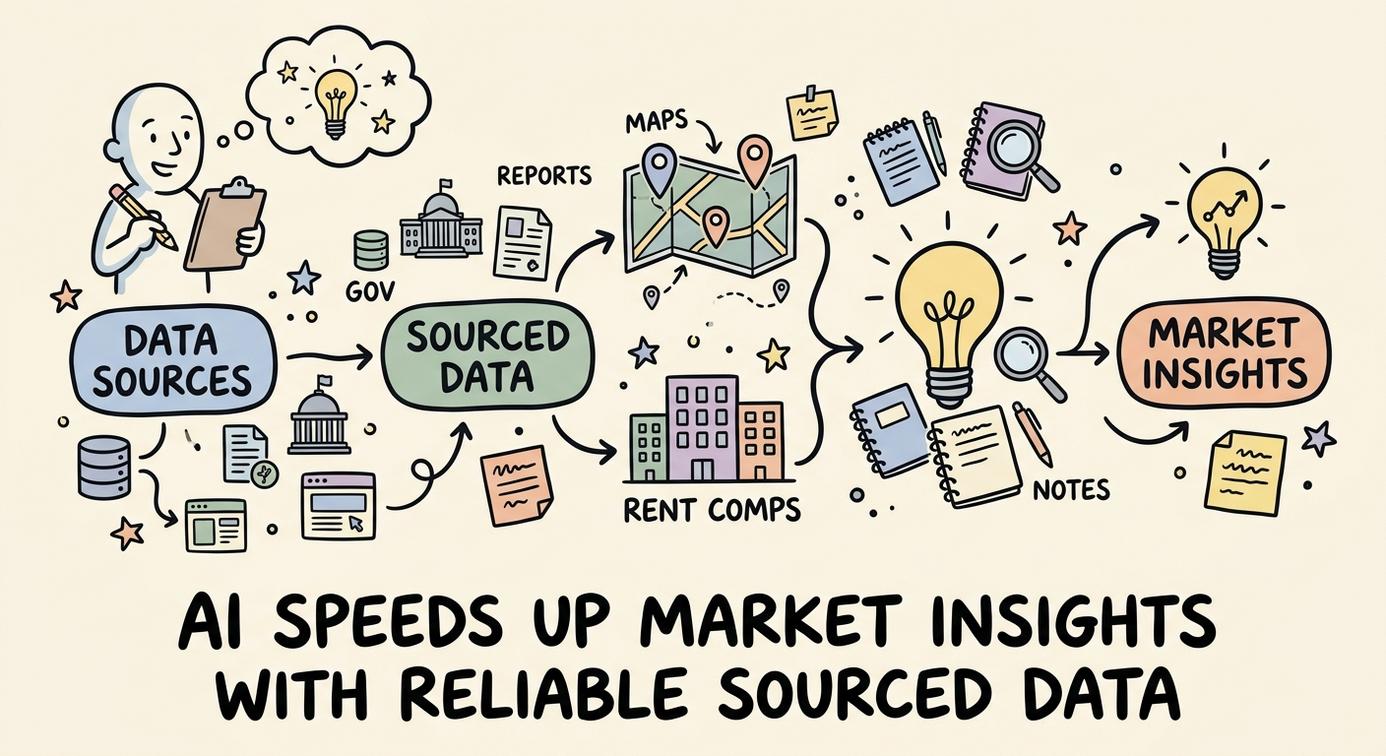
The catch is that market research only works if the sources are visible. A statistic without a source is not something most investment teams can rely on. If AI says a market has 4.2% rent growth, the next question should be simple:
Where did that number come from?
For real estate work, AI research needs to be traceable. You need the source, the date, and enough context to decide whether the information belongs in the analysis.
2. Underwriting
Underwriting is where AI starts to feel less like a writing tool and more like an analyst support system.
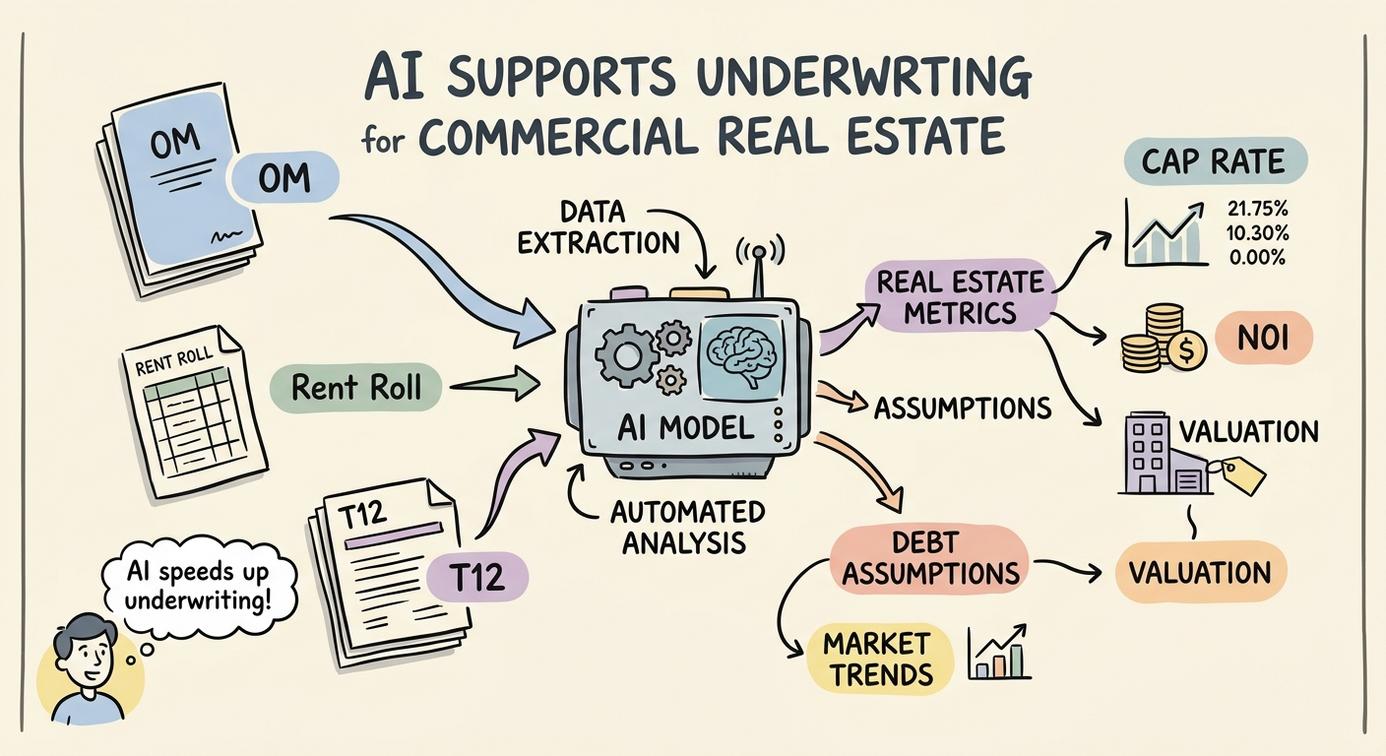
When a new deal comes in, the team may receive an OM, rent roll, T12, debt assumptions, market data, and an internal Excel template.
Before anyone can debate the deal, someone has to turn those inputs into a working analysis.
That setup work takes time.
AI can help extract property and financial data, compare the OM against supporting documents, flag inconsistencies, research assumptions, identify comps, and prepare scenarios for review.
The goal is not to take the investment professional out of underwriting. That would miss the point.
The goal is to spend less time moving information between files and more time questioning the assumptions behind the deal.
Is the rent growth reasonable?
Does the expense load make sense?
Are the comps actually comparable?
Does the business plan fit the asset and the market?
Those questions still belong to people.
But if AI can organize the materials and surface the issues faster, the team gets to the real conversation sooner.
3. Investment committee materials
Getting the numbers together is only one part of an investment decision.
Someone still has to explain what they mean.
Investment committee materials usually combine financial analysis, market research, assumptions, risks, opportunities, and a recommendation. The output needs to match how the firm thinks, not just what the source documents say.
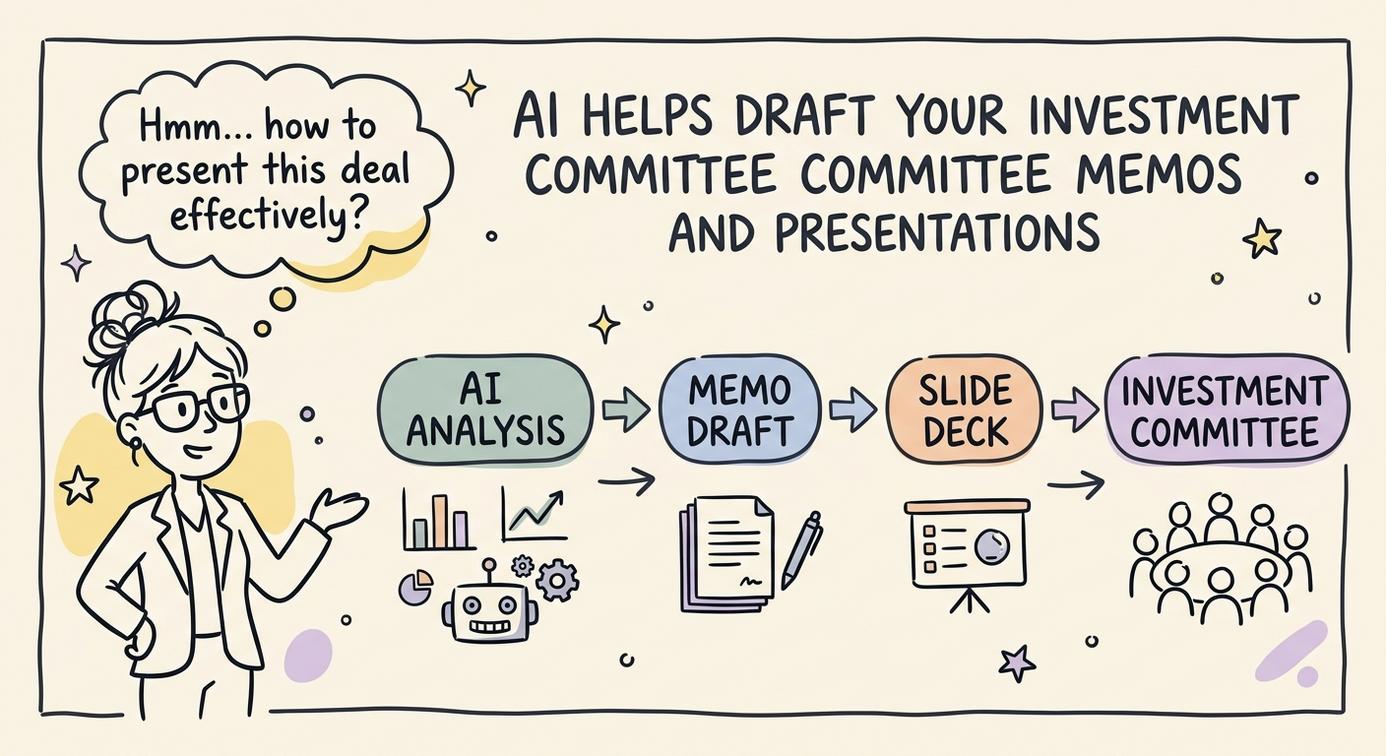
That makes IC memo work a good test for AI.
AI can help assemble the first draft of a memo, but it needs company context to do it well.
What does your committee usually challenge?
Which assumptions need extra support?
How do you calculate specific metrics?
What risks matter most to your strategy?
What belongs in the final memo, and what should stay in the backup?
Two firms can look at the same deal and ask completely different questions. That is why a generic AI summary is not enough.
The better workflow is to give AI the deal materials, the analysis, the template, and the firm's way of evaluating risk. Then it can help build a memo that is much closer to how the team actually works.
4. Portfolio and asset management
After a deal closes, the information does not calm down.
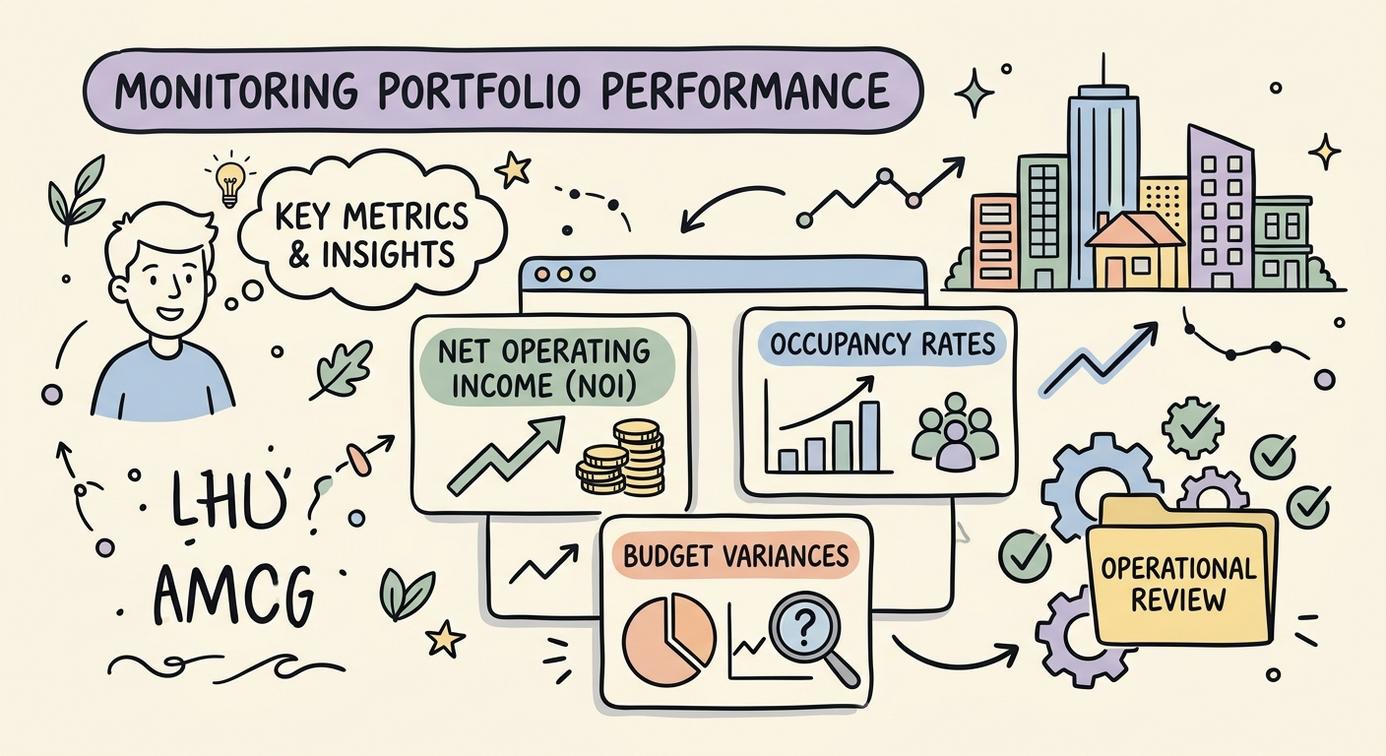
Asset managers still need to watch occupancy, revenue, expenses, leasing activity, budgets, capital projects, debt, and market conditions.
The challenge is knowing what deserves attention.
AI can help review portfolio data and point the team toward changes that might otherwise sit inside a monthly report.
For example, an asset manager could use AI to investigate:
Why NOI is below budget
Which expenses are driving the variance
Whether an occupancy issue is isolated or portfolio-wide
Which properties are drifting away from underwriting
Which assets need attention before the next review
This changes the starting point.
Instead of spending the first part of the process finding the issue, the team can spend more time deciding what to do about it.
That is where AI can be helpful for asset management. It does not need to replace the asset manager. It needs to make the review process faster, clearer, and easier to repeat.
5. Reporting
Reporting might be the least glamorous use case, but it is one of the most practical.
Weekly updates turn into monthly reports. Monthly reports turn into quarterly packages. Someone pulls the same data, updates the same tables, checks the same numbers, and writes another explanation of what changed.
AI can help with a lot of that assembly work.
Once the data sources, reporting rules, and output format are clear, AI can help prepare drafts, identify meaningful changes, explain variances, and write summaries for different audiences.
But reporting cannot become a black box.
If a report is going to investors, lenders, executives, or an investment committee, the person responsible for it still needs to see the underlying data, calculations, and sources.
A good AI reporting workflow should make review easier. It should not make the work harder to trust.
What makes AI useful in real estate
There are a lot of tools that can produce a polished answer.
That does not mean they can handle real estate work.
For AI to be useful in real estate, a few things matter.
First, it needs to understand the documents and calculations teams actually use. Rent rolls, T12s, leases, OMs, debt terms, NOI, occupancy, capex, DSCR, LTV, debt yield, and IC memos are not generic business content.
Second, it needs access to the right information. Real estate data is usually spread across systems and files. If the team has to rebuild the context every time, the workflow will not stick.
Third, the output needs to be verifiable. If AI gives you a number, assumption, comp, or conclusion, you should be able to trace it back to the source.
Fourth, it needs company context. Every firm has its own templates, approval process, investment criteria, reporting standards, and way of talking about risk.
And finally, it needs to produce something people can use.
A chat response might save a few minutes. A sourced market summary, updated underwriting model, portfolio report, or draft IC memo can change the workflow.
Where human judgment still matters
AI can review more material than any one analyst could reasonably read in the same amount of time.
That does not make every output right.
Real estate decisions depend on context.
AI might notice that occupancy dropped. An operator may know a renovation temporarily affected leasing.
AI might flag a deal as attractive based on market and financial metrics. The investment team may see a business plan risk that does not show up cleanly in the numbers.
AI might prepare a report. Someone still needs to decide whether the explanation is fair, complete, and ready to send. At that point, you've already taken steps forward.
That is why I think the best use of AI in real estate is using it to move the starting line further.
It is better preparation.
AI can organize the work, surface issues, and help teams move faster. People still need to question assumptions, review sources, decide which risks matter, and own the final decision.
How to start
If your team is thinking about AI, I would not start by trying to automate the whole company.
Start with one workflow.
Pick something that happens often and takes real time. Monthly portfolio reporting is a good example.
Map how the process works today.
Where does the data come from?
Who updates the tables?
Which calculations get checked?
What does the team review?
What gets flagged?
What does the final report look like?
Then decide which parts AI can handle reliably and which parts need human review.
Once that workflow works, expand from there.
That gives AI a clear job. It also gives your team a practical way to measure whether it is helping.
Where this is heading
The first phase of AI adoption was about access to models. People could open a chat window, upload a file, ask a question, and get a response.
The next phase is about workflows.
AI needs to work with company information. It needs to understand how documents, data, templates, and decisions connect. It needs memory. It needs verification. And in many cases, it needs to choose the right model or system for different parts of the task.
For real estate teams, the future probably looks less like asking a chatbot one question at a time.
It looks more like AI sitting inside the work.
Research feeds underwriting.
Underwriting feeds IC materials.
Approved assumptions feed portfolio monitoring.
Actual performance gets compared against the original business plan.
Lessons from one deal can help inform the next.
That is the part I am watching closely.
How much of the work between information and decision can be completed reliably?
Try Leni for real estate AI workflows
For these kinds of workflows, I use Leni.
Leni is an AI platform for real estate and investment teams. It connects data, documents, systems, and institutional knowledge so teams can run AI workflows with the context of how their organization operates.
Real estate work usually involves multiple sources, firm-specific assumptions, approval standards, and deliverables that need review. Leni is built for that level of complexity.
Teams use Leni across underwriting, research, investment memos, reporting, and portfolio analysis, with outputs grounded in their own data and processes.
If your team is exploring AI for real estate workflows, try Leni with your own data.
Read more about AI for real estate workflows on AI in Real Estate Newsletter
If you want to see more of these workflows, read more on AI in Real Estate Substack.
Together, we'll take a look at practical use cases across underwriting, market research, asset management, reporting, and investment analysis. The focus is on what works, what still needs judgment, and how teams are actually using AI in day-to-day real estate work.
This was my latest entry: I Built an AI System to Monitor My Real Estate Loans

Til next time.
— Marcio

Marcio Sahade
Marcio writes about AI adoption in real estate, drawing on his work with operators, investors, and enterprise teams turning industry problems into practical workflows.

Curious About AI?
Join the largest AI community for real estate online. Get bite-sized, real-world use case videos, plus practical tips and proven strategies from top industry experts on adopting AI effectively.
MEET LENI
AI SuperAgent Purpose Built for Investors and Operators.
Experience how professionals and teams in your domain are getting the edge using AI.
