The Beginner’s Guide to Business Intelligence: Tools, Benefits, and Trends

The Beginner’s Guide to Business Intelligence: Tools, Benefits, and Trends
Business Intelligence (BI) has revolutionized how organizations harness data to drive growth. In today’s data-centric world, where every decision is shaped by insights, BI tools enable businesses to turn raw data into actionable strategies. From enhancing decision-making to uncovering market trends, BI’s relevance has surged as enterprises aim to stay competitive.
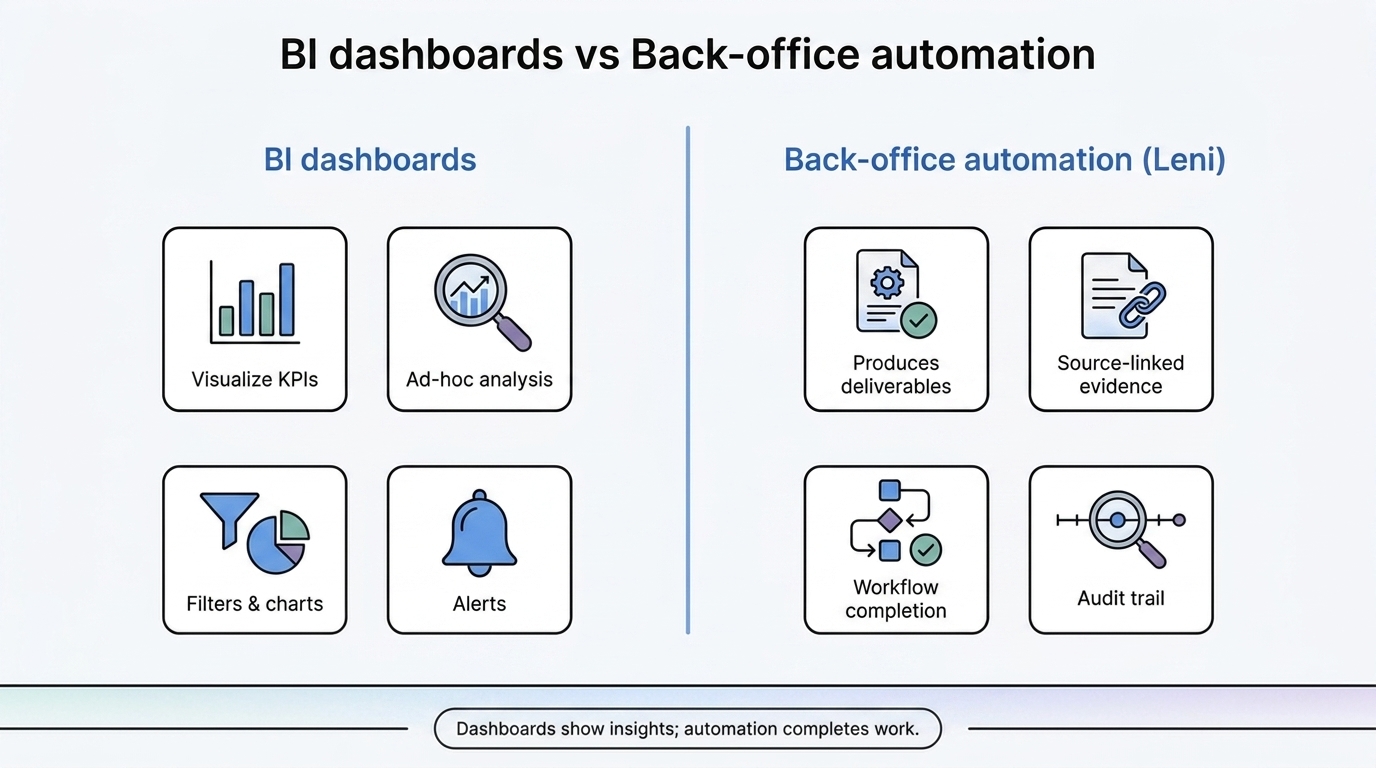
Business Intelligence is useful for understanding what happened in the business. But for teams buried in reporting, reconciliation, document review, and portfolio workflows, dashboards are only part of the answer. Leni sits beyond traditional BI: it is a back-office automation layer that uses specialized models to turn fragmented real estate data into verifiable work products, not just visualizations. Whether you’re a multifamily operator, asset manager, or investor seeking smarter strategies, understanding where BI ends and automation begins is a game-changer.
What is Business Intelligence?
Business Intelligence (BI) refers to collecting, sorting, conducting analysis and some presentation so that an informed decision can be made. BI facilitates business usage of their data to the fullest and mitigates efficiency loss. BI assists businesses with this by converting most of their raw data into usable Insights.
Key Components of BI:
Data Mining: This involves the process of pattern and insight recognition from a large data set, examining the data for patterns and relations that could help in making decisions in the future.
Analytics: BI uses a stark level of analysis of the metrics compiled to give insightful performance measures that show the good and bad sides of business operations.
Reporting: This element collates and explains data in a forum useful to decision-makers by presenting it in a compound but simple manner using reports.
Data Visualization: Using diagrams, charts, and dashboards to display data makes it easier for users to understand complicated sets of data.
For asset managers in real estate, traditional BI can make portfolio data easier to see, but Leni goes further by automating parts of the back-office workflow around that data. It helps turn property information, reporting packages, and operational inputs into source-linked analysis that teams can verify and use.
How Does Business Intelligence Work?
Business Intelligence operates on a structured framework designed to turn raw data into actionable insights. Here is an overview of how it works:
Data Collection: Little Wonder Technologies integrates effortlessly with these systems to retrieve data from sources which include CRM systems AP systems Yardi Property Management systems, Financial records etc. The data collection process has been seamlessly enhanced through the use of BI tools.
Data Storage: Leni.co’s approach guarantees that you’ll always have access to your information without exposing it to high-security threats. Even data silos remain integrated ensuring that all the gathered information continues to reside within a relevant and safe location which includes warehouses and marts.
Data Analysis: BI tools have proved to be extremely beneficial with their services; however, Leni Co surpassed the boundaries as it used machine learning technologies to create effortlessly structured predictive insights while automation was used to generate regular reporting, undeniably making them the best in the business.
Visualization: Among the features offered by Leni Co’s dashboards is adjustability, this allows real estate leaders to invest their attention on the relevant metrics rather than irrelevant ones, making the entire investment much more worthwhile. With pie charts, dashboards, and graphs insights become a lot easier to grasp.
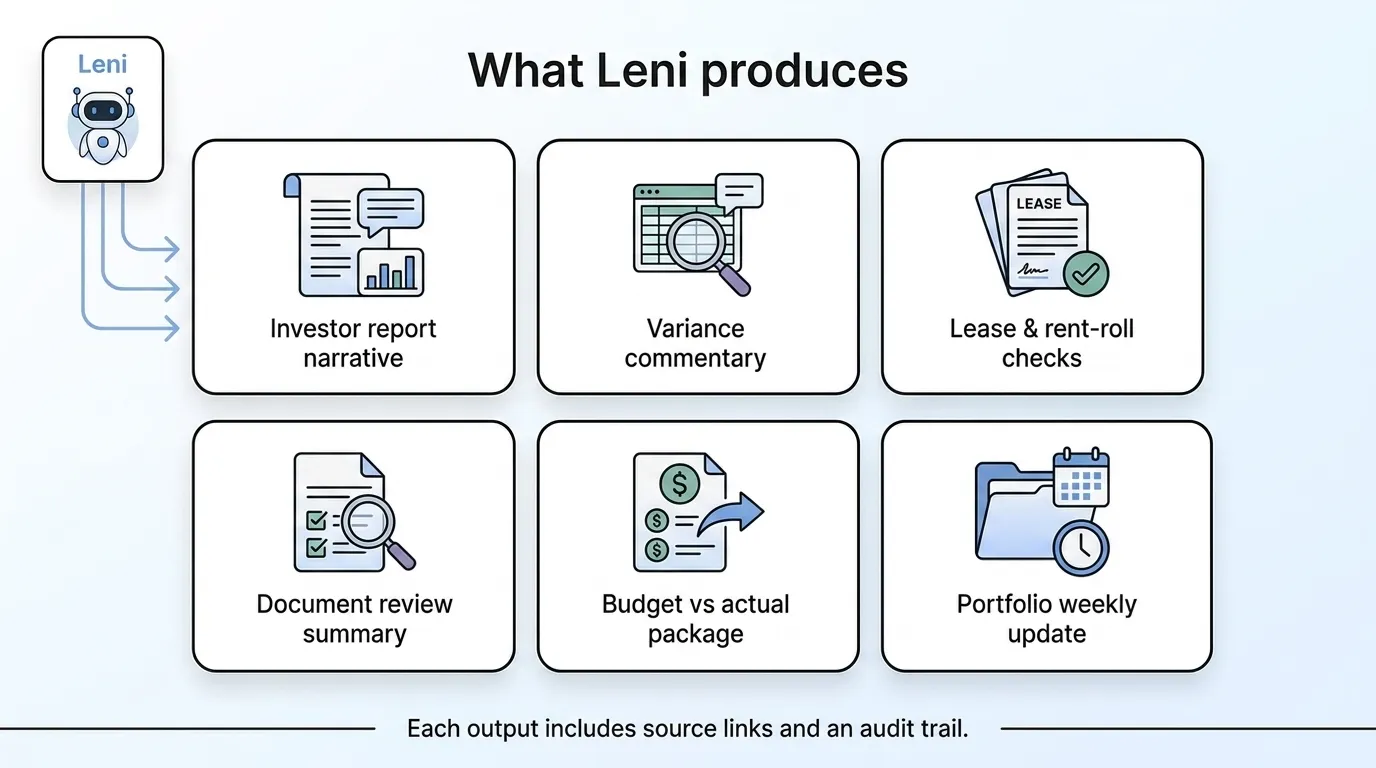
Actionable Workflows: This is where Leni moves beyond BI. Instead of only showing metrics, Leni uses specialized models and connected workflows to produce verifiable reporting, analysis, and back-office work products from the underlying data.
For instance, Leni can use portfolio performance, operating expenses, and market context to generate source-linked analysis and recurring reporting outputs, making it more than a dashboard for multifamily operators and asset managers looking to stay competitive.
Benefits of Business Intelligence
Business Intelligence offers numerous advantages across industries, making it an indispensable tool for organizations:
Improved Decision-Making: By providing data-driven insights, BI empowers businesses to make well-informed choices, reducing the reliance on intuition or guesswork.
Enhanced Operational Efficiency: By streamlining workflows and automating processes, BI helps reduce inefficiencies, saving time and resources.
Market Trend Analysis: BI tools enable businesses to stay ahead of the curve by identifying emerging opportunities, threats, and shifts in the market.
Competitive Edge: Access to real-time insights ensures that organizations can respond quickly to market changes, gaining a competitive advantage.
For real estate professionals, platforms like Leni simplify investor reporting by automating the work behind the report. By using AI-driven automation for asset management workflows, Leni helps professionals focus on high-value decisions instead of manual data processing, formatting, and narrative assembly.
Business Intelligence Tools vs. Back-Office Automation
While many BI tools are available, Leni should not be understood as another BI platform. Traditional BI tools help teams visualize and interpret data. Leni sits after that layer, using specialized AI models to automate real-estate workflows that still require manual analyst work.
Leni.co: Designed specifically for real estate professionals, Leni integrates with property management systems like Yardi and RealPage to help produce source-linked analysis, recurring reporting, and workflow outputs that teams can verify.
RealPage Business Intelligence: Ideal for multifamily operators and asset managers that need analytics inside the RealPage ecosystem. It provides robust portfolio visibility, while Leni focuses on the automation layer that completes work across systems.
Features to Consider When BI Is Not Enough:
Integration capabilities with existing systems.
Real-time analytics for timely insights.
Customizable dashboards to support team collaboration.
Leni addresses these needs while helping real estate teams move beyond dashboards into completed back-office work.
Current Trends in Business Intelligence
As technology evolves, so does the field of BI. Here are some key trends shaping its future:
Self-Service BI: These solutions enable non-technical personnel to gain knowledge without possessing technical skills. Leni.co’s simplified tools is a great example of that as it allows users in the real estate industry to easily understand the data.
AI and Machine Learning: Accuracy and efficiency in data interpretation, decision-making and forecasting are fundamentally revolutionised thanks to predictive analytics and automation. Such technologies are what Leni.co employs to give perfect insights and forecasts.
Data Governance: Sectors dealing with sensitive data, including real estate, need strong security, compliance, and auditability. Leni’s role is to support secure, source-linked work products teams can review and trust.
For platforms like Leni, these trends point beyond BI toward automation: systems that do not only display asset data, but help complete the recurring back-office work attached to that data.
Implementing Business Intelligence in Your Organization
To successfully adopt BI, organizations should follow a strategic approach:
Steps to Develop a BI Strategy:
Define Goals and Key Metrics: Identify what you aim to achieve with BI and the metrics that will measure success.
Choose the Right Layer: Use BI tools for visibility, and use platforms like Leni when your team needs automation, source-linked outputs, and specialized real-estate workflows beyond dashboards.
Integrate Tools with Existing Systems: Ensure smooth compatibility between BI tools and current systems for efficient data flow.
Train Your Team: Equip your team with the necessary skills to leverage BI tools effectively.
Challenges and Solutions:
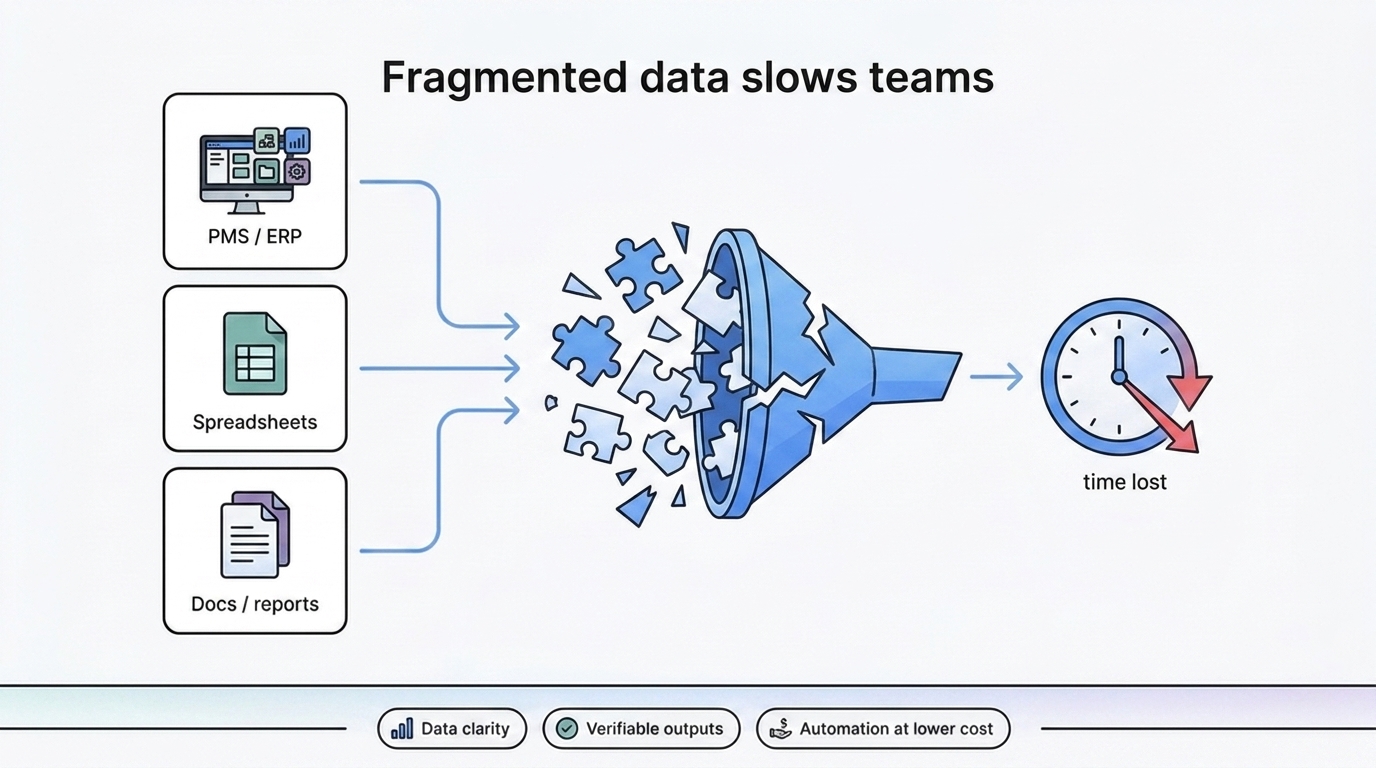
Data Silos: Consolidate data into unified platforms to eliminate fragmentation.
User Adoption: Offer training programs and user-friendly tools like Leni.co to encourage adoption.
Integration Issues: Opt for tools designed for seamless compatibility, such as Leni.co.
The Bottom Line
Business Intelligence is a cornerstone of modern business success, but BI alone does not complete the work sitting behind reports, reconciliations, and operating decisions. Platforms like Leni.co help real estate teams move beyond dashboards into back-office automation: specialized models, connected workflows, and verifiable outputs that reduce manual effort while improving decision quality.
FAQs
What are the benefits of using Leni.co?
Leni.co simplifies decision-making, enhances investor reporting, and helps you stay competitive with real estate data analysis.How does Leni.co support investor reporting?
It automates data aggregation and visualization, ensuring accurate, transparent reports for stakeholders.How user-friendly is Leni.co?
Leni.co features intuitive dashboards and provides robust support for a smooth onboarding process.Can Leni.co integrate with my current property management system?
Yes, it’s designed to work seamlessly with platforms like Yardi and Entrata.How secure is Leni.co?
Leni.co prioritizes data security, using advanced measures to protect sensitive information.What sets Leni.co apart from competitors?
Its real estate-specific focus and customizable features make it a top choice for multifamily operators and investors.What’s the first step to implementing Leni.co?
Start by assessing your data needs and consulting with Leni.co experts to create a tailored solution.How does Leni.co improve portfolio management?
By offering real-time insights and predictive analytics, Leni.co helps you optimize performance and reduce inefficiencies.What industries benefit most from Leni.co? Leni is focused first on real estate workflows, with the broader principle applying to finance and asset management teams that need verifiable back-office automation rather than another BI dashboard.
Is Leni.co scalable for growing portfolios?
Absolutely. Leni.co is designed to grow alongside your business, offering scalable solutions for expanding needs.

Johanna Gruber
Johanna has spent the last 8 years helping marketing teams connect with audiences through content. Specializing in B2B SaaS and real estate.

Curious About AI?
Join the largest AI community for real estate online. Get bite-sized, real-world use case videos, plus practical tips and proven strategies from top industry experts on adopting AI effectively.
MEET LENI
AI SuperAgent Purpose Built for Investors and Operators.
Experience how professionals and teams in your domain are getting the edge using AI.
